
Pull to refresh
Logo
Hidden immune hubs in the skull may fight brain cancer

Hidden immune hubs in the skull may fight brain cancer

New Capabilities

WashU researchers find lymph node-like structures in skull bone marrow that respond to brain tumors within days

Today: Hidden immune organ in skull revealed

Overview

Updated 1 hour ago

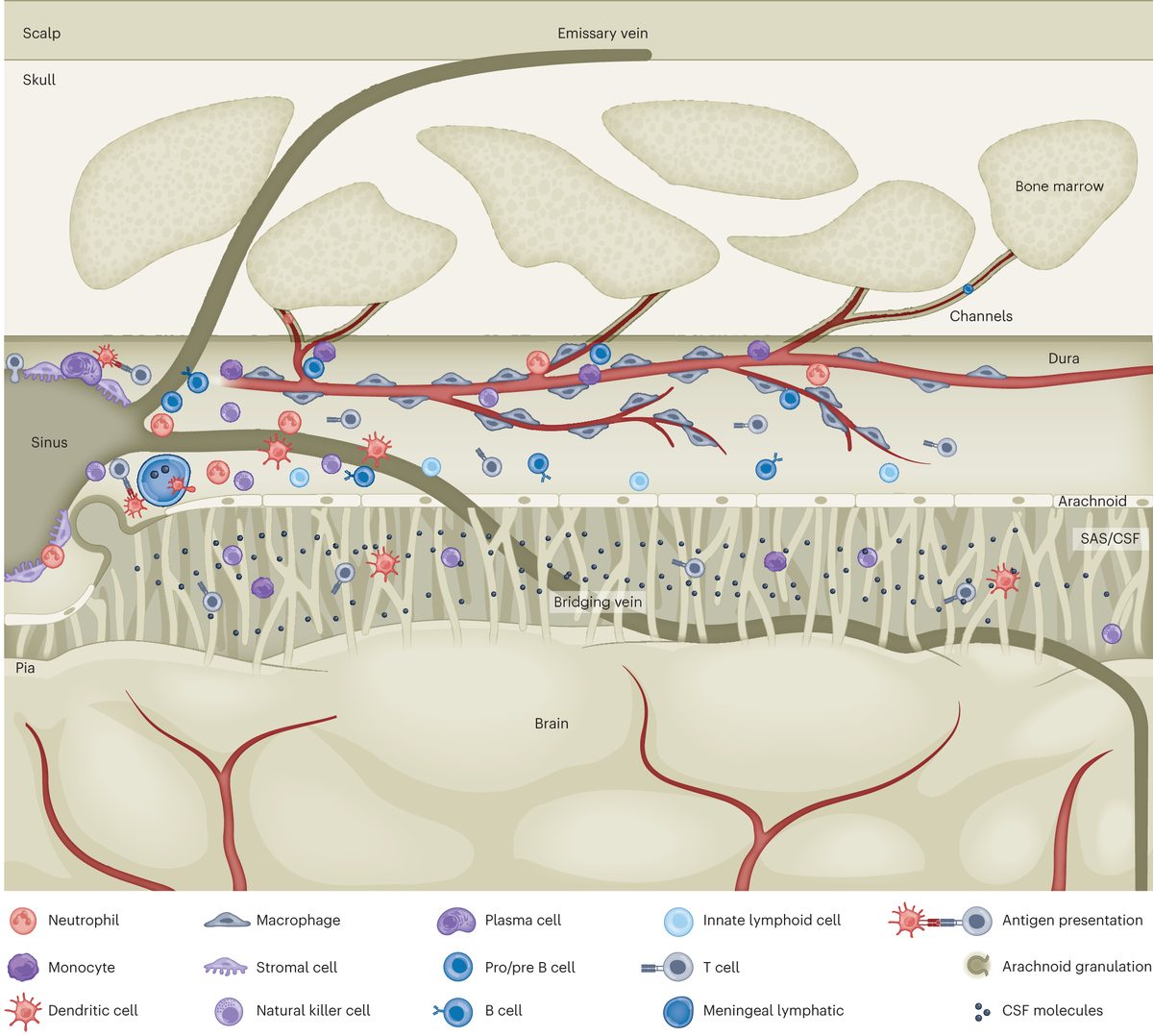
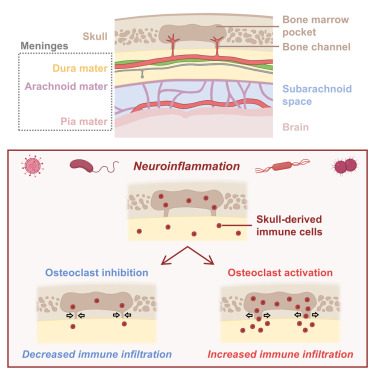
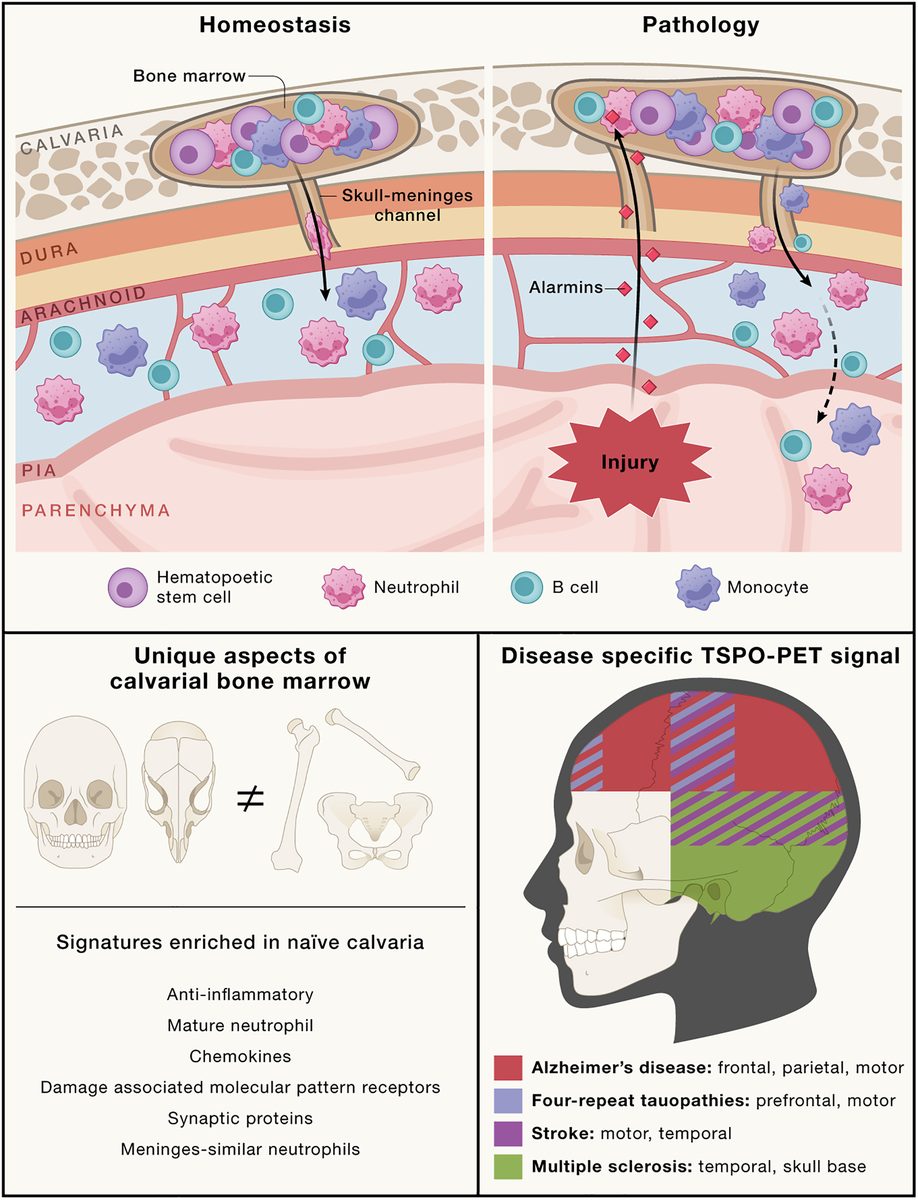
For decades, textbooks treated the brain as 'immune privileged' - isolated from the body's defenses. Researchers at Washington University School of Medicine in St. Louis found lymph node-like structures inside the skull bone marrow of mice. These hubs respond to brain cancer within two days, before lymph nodes anywhere else stir.

A hydrogel applied under the scalp carries three immune-boosting proteins. It supercharged the skull hubs and helped mice with glioblastoma reject tumors and live longer. The results appear in Nature.

Why it matters

The skull's newly found immune hubs may let doctors fight brain cancer locally, without broadly altering the body's immune system.

Questions about this story

Free account needed to ask — your question is kept and asked for you right after sign-up. Answers are public.

No questions yet — be the first to ask.

Key Indicators

3
Immune-boosting proteins in the treatment gel
A CD40 agonist, IL-21, and IFNγ, delivered via hydrogel under the scalp.
2 days
Days before skull hubs responded to a tumor
Skull marrow showed immune activity before cervical lymph nodes, spleen, or other bone marrow.

Voices

Curated perspectives — historical figures and your fellow readers.

Ever wondered what historical figures would say about today's headlines?

Sign up to generate historical perspectives on this story.

People Involved

Organizations Involved

Timeline

1 event Latest: Today
  1. Hidden immune organ in skull revealed

    Today Scientific Publication

    WashU Medicine researchers announce lymph node-like structures in skull bone marrow that rapidly fight brain cancer; study appears in Nature.

Scenarios

1

Human trial tests skull-directed immune gel for brain cancer

Possible Resolves by End of 2028

Discussed by: WashU researchers; Kipnis called translation 'potentially' possible but too early to confirm

A phase 1 trial registers to test the hydrogel or a similar skull-directed immune therapy in glioblastoma patients. Human skull bone marrow contains similar immune cells, and the team aims to confirm these structures organize and respond as they do in mice. Success depends on reproducible manufacturing and safety data from animal toxicology studies.

2

Independent labs confirm skull lymphoid structures

Likely Resolves by Q2 2028

Discussed by: Neuroimmunology community; the Nature paper is a single-group mouse study

Another research group publishes peer-reviewed confirmation of lymph node-like structures in skull bone marrow that surveil the central nervous system. Replication would cement the discovery beyond the WashU lab and validate the mechanism as a general feature of mammalian neuroimmunology.

3

Skull-targeted immune approach extends beyond cancer

Possible Resolves by End of 2029

Discussed by: Kipnis and colleagues, who note the hubs could influence immune activity in neurological diseases

Researchers test the skull-directed immune boosting concept in models of Alzheimer's disease, multiple sclerosis, or other CNS conditions. Because the hubs sit directly next to the brain, the approach could modulate immune activity locally in neurodegenerative and autoimmune contexts, moving the treatment concept past oncology.

Historical Context

2 moments from history that rhyme with this story — and how they unfolded.

August 2012

Glymphatic system discovery (2012)

Iliff, Nedergaard, and colleagues at the University of Rochester showed cerebrospinal fluid flows through brain tissue along blood vessels, clearing waste from the organ. The brain, they demonstrated, does have a clearance system.

Then

Triggered a wave of research on how the brain manages waste and whether 'immune privilege' was an accurate model.

Now

Opened the field of glymphatics, reshaping research on sleep, Alzheimer's disease, and brain clearance.

Why this matters now

Both discoveries undermine the textbook claim that the brain is disconnected from the body's maintenance and defense systems.

June 2015

Meningeal lymphatic vessels identified (2015)

Louveau and Kipnis, then at the University of Virginia, found lymphatic vessels in the meninges draining fluid and immune cells to cervical lymph nodes.

Then

Directly challenged brain immune privilege with visual confirmation of lymphatics at the brain's border.

Now

Established the meninges as an immune-active boundary and led Kipnis's lab to ask what immune structures might sit even closer to the brain.

Why this matters now

The 2015 finding set up the question that produced this study: how close can immune organs get to the brain? The answer is inside the skull itself.

Sources

(5)