
Dormant breast cancer cells hide behind protective cellular shields
New CapabilitiesA new tumor map reveals why treatment-resistant cells survive chemotherapy and reawaken later
Yesterday: Widespread coverage of protective shield findingNew here? Follow stories to track developments over time. Create a free account to get updates when stories you care about change.
Overview
Updated 1 hour agoResearchers at the Medical Research Council Laboratory of Medical Sciences, Imperial College London, and University College London have produced the most detailed cellular map yet of breast tumors. It reveals pockets of dormant cancer cells, cells that can survive chemotherapy and reawaken years later to cause recurrence.
The dormant cells sit inside protective neighborhoods of immune cells and connective tissue cells that appear to shield them from treatment. The findings, published in the journal Genome Medicine, suggest future cancer therapies may need to attack both fast-growing tumor regions and the hidden dormant zones that cause relapse.
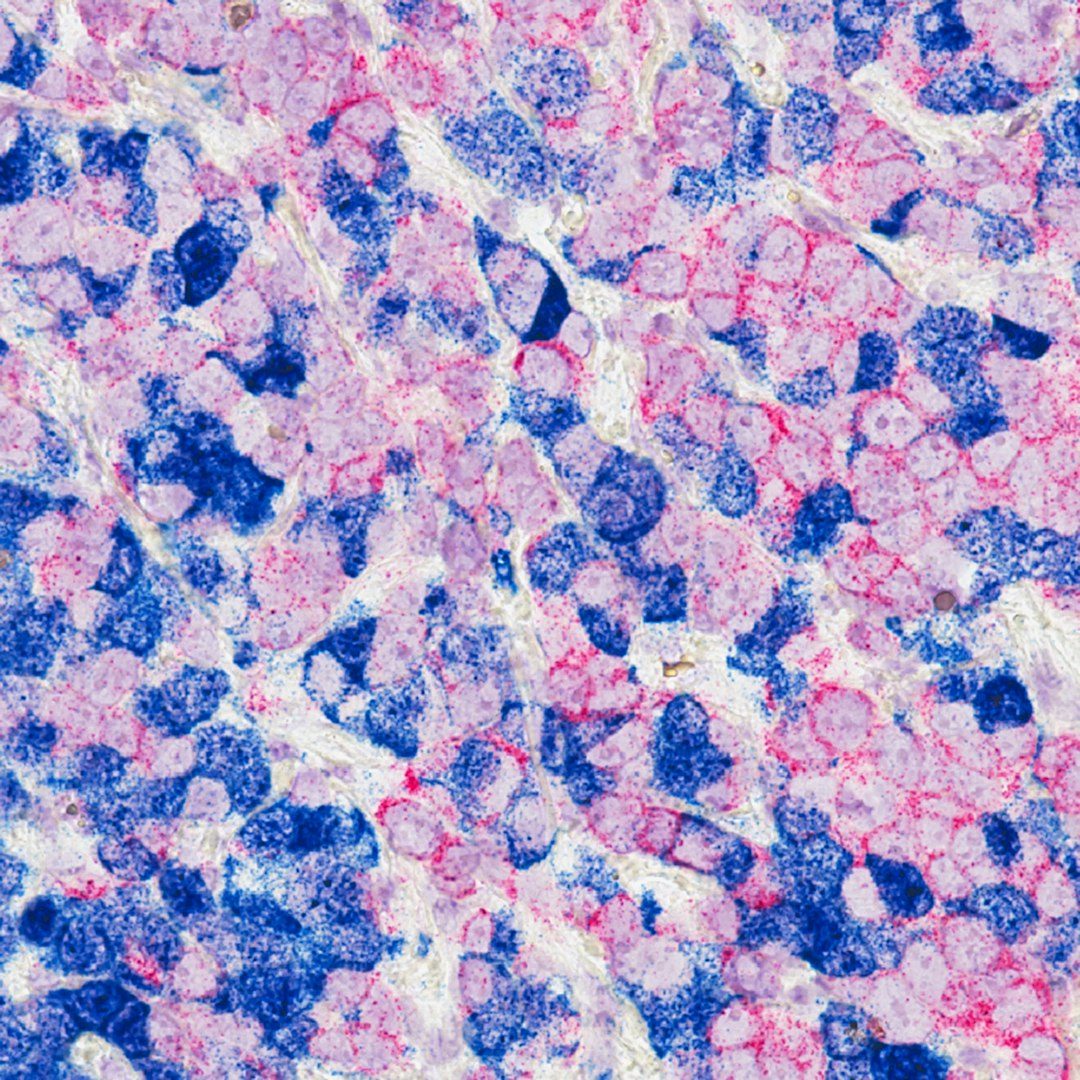
Combining single-cell RNA sequencing with spatial transcriptomics, the team mapped not just the cancer cells but their neighbors. Dormant cells consistently clustered near two support cell types: CXCL10-positive macrophages (a class of immune cell) and myofibroblastic cancer-associated fibroblasts (tumor-supporting connective tissue cells). The researchers describe these clusters as shields. They also found elevated activity of the complement pathway, a part of the immune system, within these dormant niches — a vulnerability that targeted drugs might exploit.
Why it matters
Dormant cancer cells survive chemotherapy and cause relapse. Mapping where they hide could enable drug combos that kill both active and sleeping tumor cells, preventing recurrence.
Questions about this story
Free account needed to ask — your question is kept and asked for you right after sign-up. Answers are public.
No questions yet — be the first to ask.
Key Indicators
Voices
Curated perspectives — historical figures and your fellow readers.
Play
Exploring all sides of a story is often best achieved with Play.
Higher or Lower
A number from this story, against one from elsewhere in the news — guess which is bigger, then keep the chain going. 5 rounds, 3 strikes; a miss costs a strike and resets your streak.
Keyboard: ↓/L lower · ↑/H higher
0 points — sign up to put that on the leaderboard.
Connections
Sixteen names from the news. Find the four hidden groups of four. Four mistakes max.
Sign up to keep a daily streak — a new puzzle lands every day.
Exit debate?
Your progress in this debate will be lost.
- 1 Two AI personas square off on this story.
- 2 You predict who'll win each round — correct picks earn XP.
- 3 One crossfire question is yours to fire. Pick it carefully.
Couldn't generate a topic
Select Your Champions
Choose one persona for each side of the debate
DEBATE TOPIC
Choose personas with different perspectives for a more dynamic debate.
Select debater for this side:
No debate personas available right now.
Select debater for this side:
No debate personas available right now.
Who's Got This Round?
Make your prediction before the referee scores
The referee scores both sides on
Round Results
Set the Crossfire
Pick the question both personas must answer in the final round
Debate Oracle! You called every round!
Sharp Instincts! You know your debaters!
The Coin Flip Strategist! Perfectly balanced!
The Contrarian! Bold predictions!
Inverse Genius! Try betting the opposite next time!
XP Breakdown
Prediction History
People Involved
Organizations Involved
UK government-funded medical research institute focused on understanding disease mechanisms at the cellular level.
University College London research center focused on computational genetics and genomics.
Timeline
July 2026 September 2026
-
Widespread coverage of protective shield finding
Latest Media coverageMultiple outlets report that dormant cells hide behind macrophage and fibroblast shields, explaining chemotherapy resistance.
-
ScienceDaily reports findings to broad audience
Media coverageThe study gains wider attention as ScienceDaily and other outlets cover the protective shield discovery.
-
Dormant tumor cell map published in Genome Medicine
PublicationUK researchers publish first integrated map of proliferating and dormant breast tumor regions with surrounding support cells.
Historical Context
2 moments from history that rhyme with this story — and how they unfolded.
Cancer stem cell theory (1990s–2000s)
Researchers identified a small population of cancer cells within tumors that resist treatment and drive tumor regrowth. John Dick's group at the University of Toronto showed acute myeloid leukemia is organized hierarchically, with a rare subset of cells capable of initiating and maintaining the disease.
The discovery shifted cancer research toward studying tumor heterogeneity and rare resistant cell populations. It also sparked controversy over whether solid tumors follow the same hierarchy as blood cancers.
Cancer stem cell research led to the concept of minimal residual disease, the idea that a few surviving cells after treatment explain relapse. The field eventually recognized that many cancer cells can acquire stem-like properties dynamically, rather than only a fixed stem cell population existing permanently.
The dormant cell map builds on this foundation by locating where treatment-resistant cells physically reside and identifying the support cells that protect them. Unlike stem cell theory, which focused on cell-intrinsic properties, this work emphasizes the tumor microenvironment's role in preserving resistant populations.
Tumor microenvironment research (2000s–present)
The tumor microenvironment became a major research focus as studies showed cancer cells do not act alone. Douglas Hanahan and Robert Weinberg's 2011 'hallmarks of cancer' update included tumor-promoting inflammation and active stroma as enabling characteristics, placing the surrounding tissue at the center of cancer biology.
This spawned intensive research into cancer-associated fibroblasts and tumor-associated macrophages, revealing both promote tumor growth and suppress immune attack.
Multiple therapies targeting the tumor microenvironment were developed, including anti-angiogenic drugs and immune checkpoint inhibitors. However, most therapies still focus on proliferating cells, leaving dormant populations poorly understood.
This study extends the microenvironment framework by showing that specific support cells assemble around dormant cancer cells, forming a protective niche. It provides a spatial map of where these niches form, offering a target for drugs that disrupt the shield.
