
Pull to refresh
Logo
MIT unveils implantable ultrasound device to improve drug delivery to brain

MIT unveils implantable ultrasound device to improve drug delivery to brain

New Capabilities

The LUCID implant pairs a drug reservoir with 24 ultrasound transducers to reach tumor cells standard treatments miss

Today: MIT reports LUCID implantable ultrasound drug-delivery device

Overview

Updated 1 hour ago

Glioblastoma kills most patients within 15 months of diagnosis. Surgery removes the main tumor, but stray cells left behind usually regrow nearby.

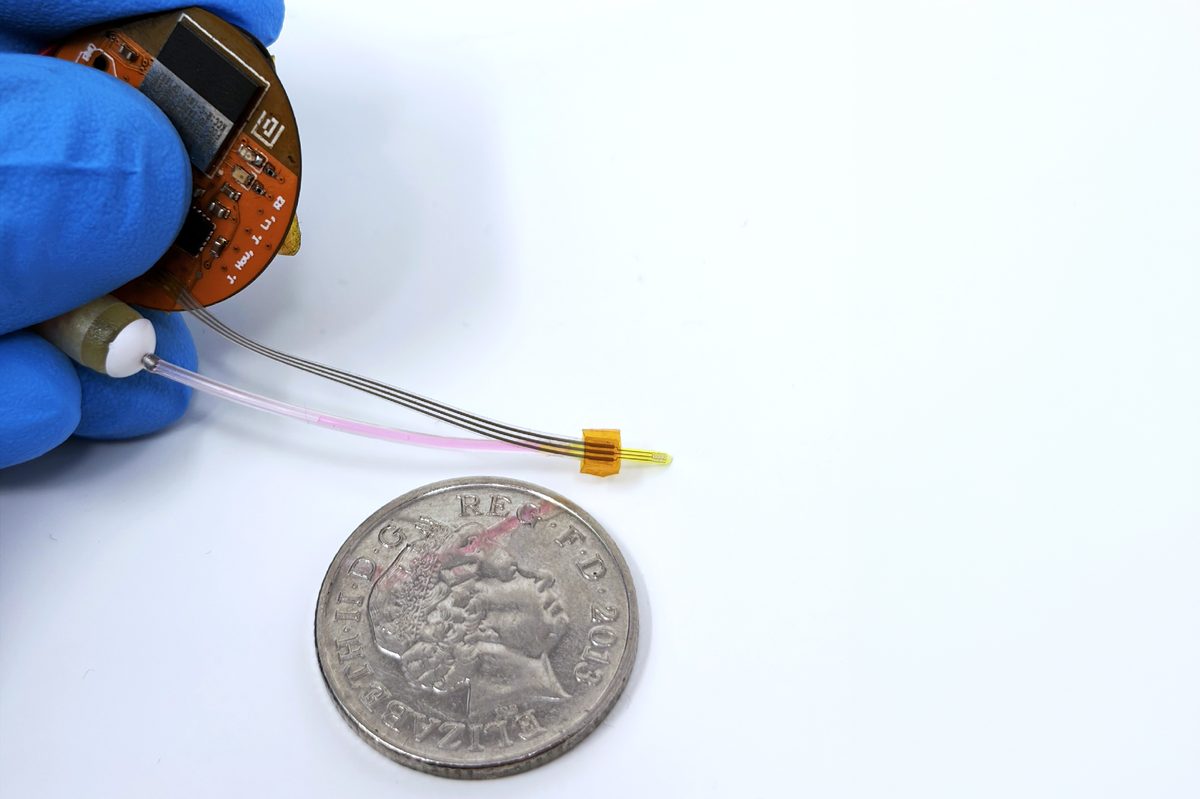
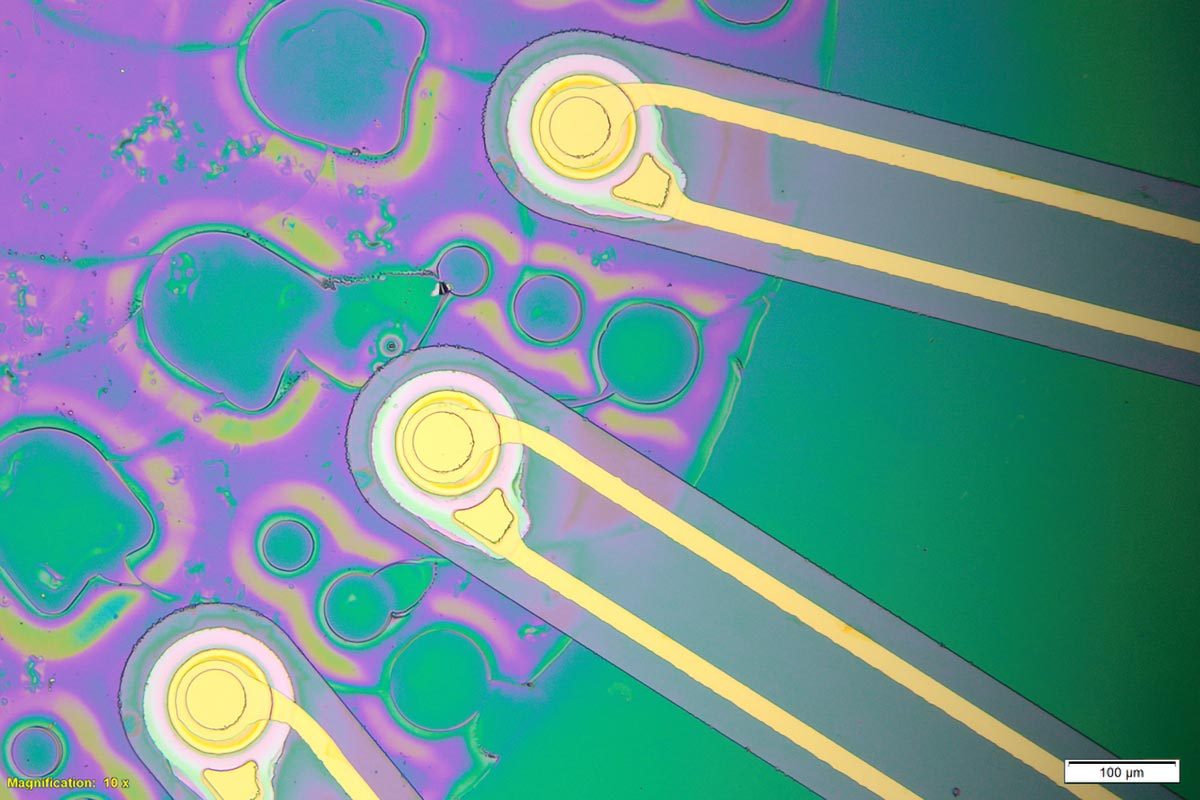
MIT has built an implant to attack those stray cells. LUCID (Long-term Ultrasound-enhanced Convective Injection Device) is a flexible strip as thin as cardstock that pairs a drug cannula with 24 miniature ultrasound transducers. The transducers sit at the needle tip and push drug molecules deeper into brain tissue while temporarily loosening the blood-brain barrier.

Why it matters

If it reaches patients, LUCID could deliver weeks of chemotherapy inside the brain after surgery, reaching tumor cells current treatments miss.

Questions about this story

Free account needed to ask — your question is kept and asked for you right after sign-up. Answers are public.

No questions yet — be the first to ask.

Key Indicators

24
Ultrasound transducers per implant
Each transducer generates sound waves at the tip of the drug-delivery cannula.
~100 µL
Drug reservoir capacity
The reservoir feeds drugs through a passive osmotic pump over an extended period.
12–15 months
Median survival after glioblastoma diagnosis
The tumor kills most patients in that window; recurrence usually appears near the surgical site.

Voices

Curated perspectives — historical figures and your fellow readers.

Ever wondered what historical figures would say about today's headlines?

Sign up to generate historical perspectives on this story.

People Involved

Organizations Involved

Timeline

1 event Latest: Today
  1. MIT reports LUCID implantable ultrasound drug-delivery device

    Today Research

    MIT researchers published the device in the journal Device after tests in tissue models and mice showed ultrasound spread drug molecules far beyond passive diffusion.

Scenarios

1

LUCID enters human clinical trials

Likely Resolves by Oct 26, 2029

Discussed by: MIT research team; precedent set by SonoCloud-9 trials in recurrent glioblastoma

The device moves through larger safety studies in animals, then a first-in-human trial in patients with glioblastoma receiving surgery. The path is plausible: a similar skull-implanted ultrasound system, SonoCloud-9, is already in human trials for recurrent glioblastoma and has shown repeated blood-brain barrier opening is safe. A ClinicalTrials.gov registration would confirm the move.

2

LUCID stalls in the laboratory

Possible Resolves by Oct 26, 2028

Discussed by: Historical pattern of convection-enhanced delivery, which took decades to reach limited clinical use

Preclinical devices often fail to advance past animal studies. Convection-enhanced delivery, the technique LUCID builds on, has been studied for decades with only modest clinical adoption. No new publications or trial registration within two years would indicate the device needs more refinement or has hit a funding or engineering barrier.

3

MIT licenses LUCID to a medical device company

Possible Resolves by Oct 26, 2028

Discussed by: Standard path for university medical inventions, citing MIT's technology licensing office

A commercial partner acquires rights to the device and funds the development and manufacturing needed for clinical use. This is a typical route for university medical devices and would accelerate the timeline toward trials. An announcement from MIT's technology transfer office would mark the deal.

Historical Context

3 moments from history that rhyme with this story — and how they unfolded.

1990s

Convection-enhanced delivery for brain tumors

Surgeons began infusing chemotherapy directly into the brain to bypass the blood-brain barrier, using bulk flow rather than passive diffusion to spread drugs over a wider area. The aim was to reach tumor cells that surgery and systemic drugs missed.

Then

Early studies showed wider drug distribution, but clinical benefit in glioblastoma remained modest. Many drugs still clustered near the catheter tip.

Now

Convection-enhanced delivery remains an active research area and set the template for direct intracranial infusion.

Why this matters now

LUCID uses the same direct-infusion idea but adds ultrasound transducers to push drugs farther, directly addressing the technique's main weakness of limited spread.

2020s

SonoCloud-9 skull-implanted ultrasound trials

Researchers implanted a device with nine ultrasound emitters in the skulls of patients with recurrent glioblastoma during surgery. They used low-intensity pulsed ultrasound and microbubbles to open the blood-brain barrier during chemotherapy infusion.

Then

Two trials showed repeated blood-brain barrier opening is safe in humans and increased drug levels in brain tissue around the resection cavity.

Now

The trials established that implantable ultrasound devices can enhance drug delivery in patients, not just in animals.

Why this matters now

LUCID follows the same logic but embeds the ultrasound array into the drug-delivery implant itself, so it needs no separate skull window and can deliver drugs over weeks rather than single sessions.

2020s

MR-guided focused ultrasound for blood-brain barrier opening

Clinical teams used focused ultrasound guided by magnetic resonance imaging to transiently open the blood-brain barrier in patients with neurological conditions. Safety trials in humans followed extensive preclinical work.

Then

The technique showed a reassuring safety profile and proved the blood-brain barrier can be opened on demand in patients.

Now

It shifted focus toward implantable devices that can deliver repeated treatment without MRI guidance.

Why this matters now

LUCID aims to deliver drugs without imaging guidance, which is what makes an implantable device practical for repeated, long-term dosing.

Sources

(10)