Pull to refresh
Logo
Daily Brief
Following
Why
Honeywell dismantles its conglomerate, spinning aerospace into a standalone company

Honeywell dismantles its conglomerate, spinning aerospace into a standalone company

Money Moves
By Newzino Staff |

The $17.4 billion aerospace division will trade as HONA on Nasdaq, completing one of the largest industrial breakups since GE

Today: Form 10 filed for Honeywell Aerospace spinoff

Overview

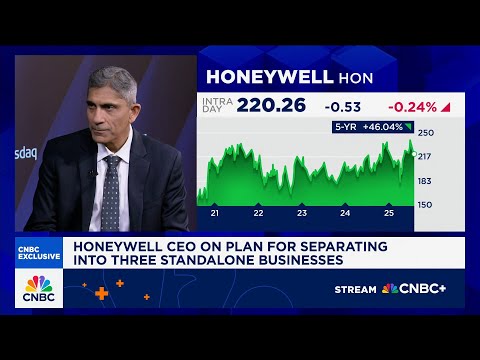
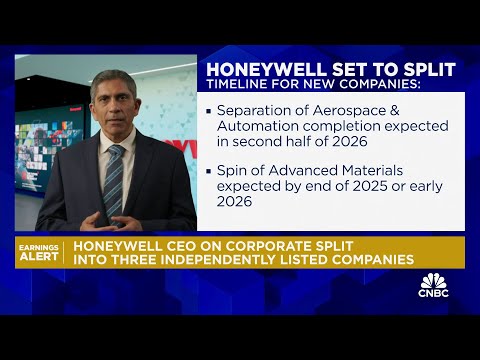
Honeywell has been a conglomerate for over a century, bundling aerospace engines, building thermostats, and specialty chemicals under one corporate roof. On March 3, 2026, it filed the paperwork to end that era, registering its $17.4 billion aerospace division as an independent company that will trade on Nasdaq under the ticker HONA. The filing is the second of three planned separations that will split Honeywell into entirely distinct publicly traded companies by late 2026.

Key Indicators

$17.4B
Honeywell Aerospace 2025 net sales
Pro forma revenue across three segments: Electronic Solutions, Engines & Power Systems, and Control Systems
$4.3B
Pro forma adjusted EBIT
Operating earnings before interest and taxes, reflecting a roughly 25 percent margin
$1.5B
Pro forma net income
Bottom-line profit after accounting for standalone costs like trademark licensing and transition services
3
Independent companies from one
Honeywell will become three publicly traded firms: Honeywell Aerospace (HONA), Solstice Advanced Materials (SOLS), and Honeywell Automation (HON)

Interactive

Exploring all sides of a story is often best achieved with Play.

Simone Weil

Simone Weil

(1909-1943) · Modernist · politics

Fictional AI pastiche — not real quote.

"They do not dissolve the empire; they merely sort its organs into separate jars, so that each may be more efficiently worshipped. A conglomerate discount is the market's dim, accidental recognition that no man can serve many masters — but the remedy they propose is simply to multiply the altars."

Andrew Carnegie

Andrew Carnegie

(1835-1919) · Gilded Age · industry

Fictional AI pastiche — not real quote.

"Aye, even the mightiest conglomerate must one day reckon with the same truth that shaped my steel works: a man who chases every enterprise masters none, and the same holds for corporations. Elliott's activists have merely done what sound management should have done decades prior — and if Honeywell's shareholders are wise, they'll recognise that focused excellence, not sprawling mediocrity, is where true fortunes are forged."

Ever wondered what historical figures would say about today's headlines?

Sign up to generate historical perspectives on this story.

Sign Up

Debate Arena

Two rounds, two personas, one winner. You set the crossfire.

People Involved

Vimal Kapur
Vimal Kapur
Chairman and Chief Executive Officer, Honeywell (Leading the breakup; will head the remaining Honeywell automation business)
Jim Currier
Jim Currier
President and CEO-designate, Honeywell Aerospace (Preparing to lead HONA as an independent company)
Jesse Cohn
Jesse Cohn
Managing Partner, Elliott Investment Management (Key architect of the activist campaign that triggered the breakup)
Craig Arnold
Craig Arnold
Board Chair-designate, Honeywell Aerospace (Selected to chair the HONA board upon completion of spinoff)
Josh Jepsen
Josh Jepsen
Chief Financial Officer, Honeywell Aerospace (Building the financial infrastructure for HONA as an independent company)

Organizations Involved

Honeywell International
Industrial Conglomerate (transitioning)
Status: Separating into three independent companies by late 2026

A multinational industrial conglomerate that is dismantling itself into three focused companies after more than a century of diversified operations.

Honeywell Aerospace (HONA)
Aerospace and Defense Company (pending independence)
Status: Filed Form 10; expected to begin trading Q3 2026

A pure-play aerospace and defense supplier with $17.4 billion in revenue across avionics, propulsion, and flight control systems.

Elliott Investment Management
Activist Hedge Fund
Status: Cooperation agreement with Honeywell; board seat secured

One of the world's largest and most active activist hedge funds, with over $70 billion in assets under management.

Timeline

  1. Form 10 filed for Honeywell Aerospace spinoff

    Regulatory Filing

    Honeywell filed a Form 10 registration statement with the Securities and Exchange Commission for the planned spinoff of Honeywell Aerospace, which will trade on Nasdaq under the ticker HONA. The filing details a pure-play aerospace and defense company with $17.4 billion in 2025 net sales across three segments.

  2. Aerospace CFO and business unit leaders appointed

    Leadership

    Josh Jepsen was named chief financial officer of Honeywell Aerospace, and business unit leaders for the three segments were announced.

  3. Honeywell names aerospace spinoff leadership

    Leadership

    Jim Currier was appointed CEO-designate of independent Honeywell Aerospace, and Craig Arnold, former Eaton Corporation chairman and CEO, was named board chair-designate.

  4. Solstice Advanced Materials begins independent trading

    Spinoff Completion

    Honeywell completed the spinoff of its Advanced Materials business, now called Solstice Advanced Materials, which began trading on Nasdaq under the ticker SOLS. Shareholders received one Solstice share for every four Honeywell shares held.

  5. Elliott and Honeywell sign cooperation pact

    Corporate Governance

    Honeywell reached a formal cooperation agreement with Elliott, adding an Elliott-backed director to the board as the company prepares for its multi-part breakup.

  6. Honeywell announces three-way split

    Corporate Decision

    Honeywell announced plans to separate into three independent publicly traded companies—Aerospace, Automation, and Advanced Materials—with all separations targeted for completion by the second half of 2026.

  7. Elliott discloses $5 billion Honeywell stake

    Activist Campaign

    Elliott Investment Management revealed a $5 billion-plus position in Honeywell and sent a letter to the board arguing that separating the aerospace and automation businesses could unlock 51 to 75 percent upside for shareholders.

  8. Third Point's failed breakup push

    Activist Campaign

    Activist investor Daniel Loeb's Third Point urged Honeywell to spin off its aerospace division. Honeywell's board resisted and the campaign faded without structural changes.

Scenarios

1

HONA launches on schedule, aerospace pure-play premium materializes

Discussed by: Elliott Investment Management; multiple Wall Street analysts covering HON

Honeywell Aerospace completes its separation in Q3 2026, begins trading as HONA, and attracts a valuation premium as a focused aerospace and defense company—similar to GE Aerospace's roughly 50 percent stock appreciation in its first year of independent trading. Defense spending tailwinds, a strong commercial aviation aftermarket, and simplified corporate governance attract dedicated aerospace investors who previously avoided Honeywell's conglomerate structure.

2

Separation costs and standalone overhead erode the promised value unlock

Discussed by: Motley Fool, skeptical institutional analysts; Honeywell's own disclosure of $202M in incremental standalone costs

The transition to independence proves more expensive than projected. Trademark licensing fees, duplicated corporate functions, loss of cross-divisional synergies, and one-time separation costs eat into margins. The Form 10 already discloses $202 million in incremental costs versus historical figures. If aerospace aftermarket growth slows or defense budgets tighten, HONA could trade at a discount to Elliott's projected range.

3

Spinoff delayed by regulatory review or market conditions

Discussed by: Corporate governance analysts; precedent from other delayed spinoffs

The SEC requests material amendments to the Form 10, or deteriorating market conditions cause Honeywell's board to push the separation into Q4 2026 or beyond. While the Form 10 filing signals strong momentum, the document remains subject to SEC review and comment. A significant market downturn could also make the timing unfavorable for launching a new $17 billion public company.

4

HONA becomes an acquisition target or serial acquirer

Discussed by: Aerospace industry analysts; defense sector M&A commentary

As a newly independent pure-play aerospace company, HONA attracts acquisition interest from a larger defense prime contractor or uses its own focused balance sheet to pursue bolt-on acquisitions. Without the constraints of a conglomerate parent, the aerospace business can allocate capital entirely to its own strategic priorities—a dynamic that accelerated deal-making at GE Aerospace and other recent spinoffs.

Historical Context

General Electric three-way breakup (2021–2024)

November 2021 – April 2024

What Happened

GE, once the most valuable company in America, announced in November 2021 that it would split into three independent companies: GE HealthCare (spun off January 2023), GE Vernova for energy (spun off April 2024), and GE Aerospace. The breakup ended a 130-year conglomerate era that had made GE a symbol of American industrial might.

Outcome

Short Term

GE Aerospace stock rose roughly 50 percent in its first year of independent trading. The combined market value of all three GE successor companies approximately quadrupled from pre-breakup levels.

Long Term

The GE spinoffs became the template for industrial conglomerate breakups, demonstrating that focused companies could attract dedicated investors, allocate capital more efficiently, and command higher valuations than diversified parents.

Why It's Relevant Today

Honeywell's three-way separation directly mirrors GE's playbook. Elliott Investment Management explicitly cited GE's value unlock when pressing for the Honeywell breakup. HONA's success or failure will determine whether the GE model is repeatable or a one-time phenomenon.

Third Point's failed Honeywell breakup campaign (2017)

October 2017

What Happened

Activist investor Daniel Loeb's Third Point took a stake in Honeywell and pushed the company to spin off its aerospace division, arguing the conglomerate discount was depressing the stock. Honeywell's board, led by then-CEO Darius Adamczyk, rejected the proposal and the campaign dissipated without structural changes.

Outcome

Short Term

Honeywell's stock modestly outperformed the market in the following year, giving the board ammunition to argue the conglomerate structure was working.

Long Term

The failed campaign delayed the breakup by seven years but planted the intellectual groundwork. When Elliott made the same argument in 2024 with a much larger stake and the GE precedent in hand, the board moved within months.

Why It's Relevant Today

Demonstrates that the same breakup thesis was proposed and rejected in 2017. The difference in 2024 was timing, scale, and proof of concept: Elliott's $5 billion stake was far larger than Third Point's position, and GE had already demonstrated that separating aerospace from industrial businesses could unlock massive value.

3M/Solventum healthcare spinoff (2024)

April 2024

What Happened

3M spun off its healthcare division as Solventum, trading under the ticker SOLV on the New York Stock Exchange. The separation was part of the broader wave of industrial conglomerates shedding divisions to become more focused, following years of 3M dealing with litigation liabilities and operational complexity.

Outcome

Short Term

Solventum's initial trading was sluggish, with the stock struggling in its first months as an independent company before turning a corner later in the year.

Long Term

The mixed early results showed that conglomerate breakups do not automatically produce GE-level returns. Execution, market conditions, and the quality of the underlying business matter as much as the structural change.

Why It's Relevant Today

Serves as a cautionary counterexample to GE's breakup success. Honeywell Aerospace has stronger growth tailwinds than Solventum did, but the comparison illustrates that spinoffs carry execution risk and value unlock is not guaranteed.

Sources

(9)