

Pull to refresh
Logo
HPE launches ProLiant Gen13 servers on AMD's new EPYC chips

HPE launches ProLiant Gen13 servers on AMD's new EPYC chips

New Capabilities

First four Gen13 systems target agentic AI with up to 256 cores per CPU and automated security

Today: HPE announces first four ProLiant Gen13 servers

Overview

Updated 1 hour ago

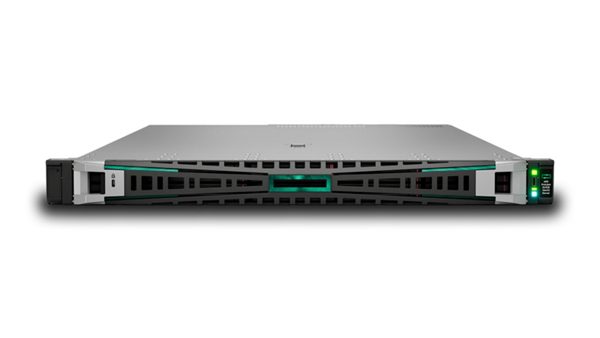
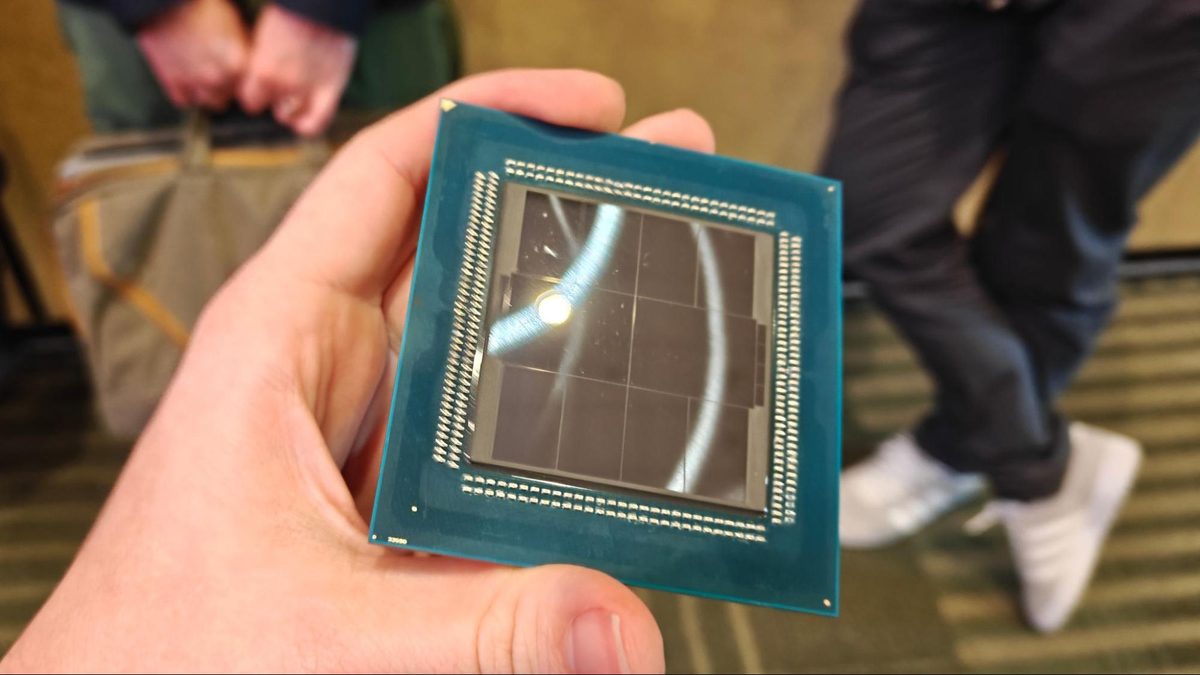
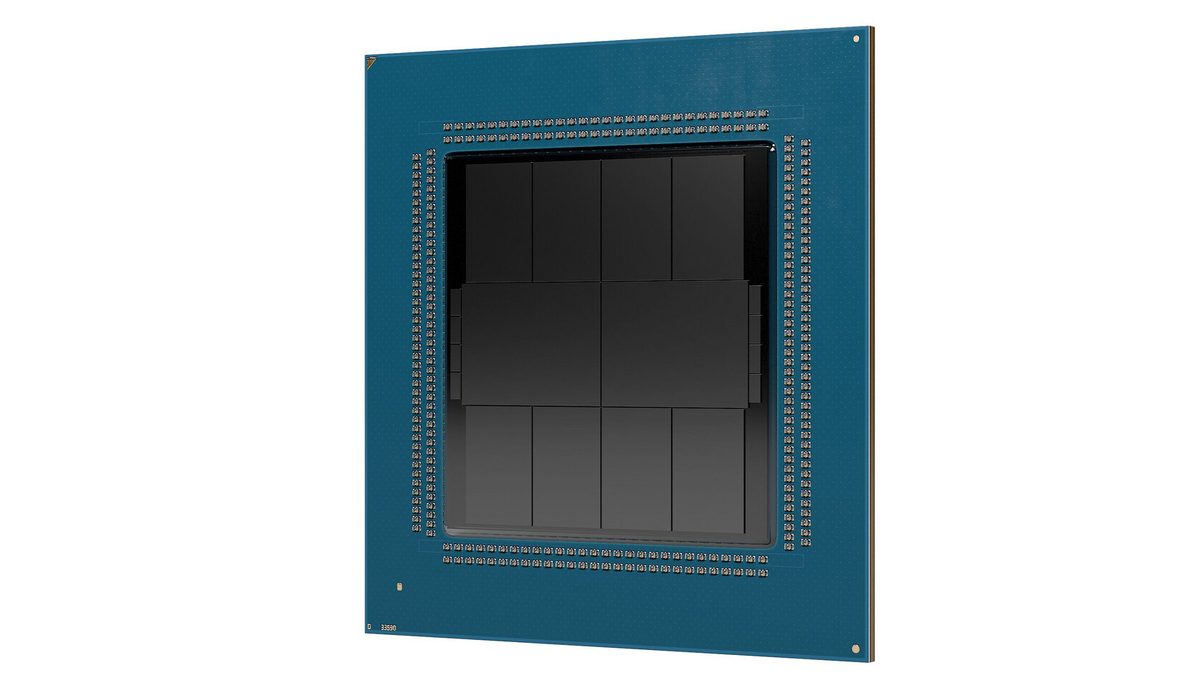
HPE announced its first four ProLiant Gen13 servers, all built around AMD's sixth-generation EPYC 'Venice' processors. Each chip carries up to 256 cores, and the systems add PCIe Gen6 plus a new management processor that encrypts drives automatically and requires two-person approval for sensitive actions.

The launch is a bet on where AI infrastructure is heading. HPE argues agentic AI — software that plans and acts on its own — will need far more CPU power per GPU than the GPU-heavy data centers built over the last three years. If that shift happens, dense CPU servers like these become central to enterprise AI, and spending moves away from Nvidia's dominance.

Why it matters

If agentic AI shifts data-center buying toward dense CPUs, enterprises may spend less on Nvidia GPUs and more on AMD-powered servers.

Questions about this story

Free account needed to ask — your question is kept and asked for you right after sign-up. Answers are public.

No questions yet — be the first to ask.

Key Indicators

4
First-wave Gen13 servers announced
All four ProLiant Gen13 systems run on AMD's 6th-gen EPYC processors.
256
Maximum cores per CPU in Gen13 systems
The DL525 and DL585a support single AMD Venice chips up to 256 cores.
8
Double-wide GPU slots in DL585a Gen13
The 10U flagship supports up to eight GPUs from Nvidia, AMD, or Intel.
209%
Three-year ROI from HPE Compute Ops Management
Forrester's composite model of a typical enterprise, per HPE.
50%
Reduction in server management time
Organizations using Compute Ops Management cut management time in half, HPE says.

Voices

Curated perspectives — historical figures and your fellow readers.

Ever wondered what historical figures would say about today's headlines?

Sign up to generate historical perspectives on this story.

People Involved

Organizations Involved

Timeline

July 2026 June 2027

5 events Latest: Today
Tap a bar to jump to that date
  1. HPE ProLiant XD245 and XD285 Gen13 ship

    Upcoming Product launch

    The dense OCP-compliant systems — a four-node liquid-cooled model and a two-node air-cooled model — launch for large-scale HPC and AI.

  2. HPE ProLiant DL585a Gen13 ships

    Upcoming Product launch

    The 10U flagship with up to eight double-wide GPUs and two Venice CPUs launches for AI inference, RAG, and agentic workloads.

  3. HPE ProLiant DL525 Gen13 ships

    Upcoming Product launch

    The 1U single-socket system with up to 256 cores and 16-channel memory launches for AI inference and high-throughput workloads.

  4. HPE announces first four ProLiant Gen13 servers

    Today Product launch

    All four systems run on AMD Venice EPYC CPUs, with up to 256 cores, PCIe Gen6, and the new iLO 8 management processor.

  5. AMD releases EPYC 'Venice' server chips

    Product launch

    AMD ships its 6th-gen EPYC 9006 SP7-series processors with up to 256 cores per socket.

Scenarios

1

All four Gen13 servers ship on schedule

Likely Resolves by Jul 31, 2027

Discussed by: HPE product roadmap and official release notes

HPE promised the DL525 in November 2026, the DL585a in early 2027, and the XD systems by mid-2027. If AMD's Venice production stays stable and HPE's supply chain holds, all four should be generally available by summer 2027. Delays would signal component shortages or chip yield problems.

2

Agentic AI drives Gen13 into enterprise data centers

Possible Resolves by Jan 31, 2028

Discussed by: HPE executives and industry analysts covering server demand

HPE expects the CPU-to-GPU ratio in AI infrastructure to shift from one CPU per two to eight GPUs toward one to one. If agentic AI workloads like RAG, inference, and autonomous agents run on these systems, Gen13 ships in volume and HPE's compute business grows. If the workload mix stays GPU-centric, demand falls short.

3

Nvidia's hold on AI compute keeps CPU servers on the sidelines

Uncertain Resolves by Jan 31, 2028

Discussed by: Nvidia earnings and data-center supply reports

The counter-case: enterprises keep routing AI budgets to GPU clusters, treating CPUs as peripheral. Nvidia's supply-chain investments and application lead times favor GPU-centric build-outs. If GPU-accelerated server revenue still outpaces CPU server growth through 2027, the Venice-based Gen13 line underperforms.

Historical Context

3 moments from history that rhyme with this story — and how they unfolded.

June 2017

AMD EPYC launch (2017)

AMD launched its first EPYC server processors, offering up to 32 cores per socket, after years of Opteron decline in data centers. The Naples generation gave AMD its first credible rival to Intel's Xeon in a decade.

Then

AMD reclaimed a modest share of the server CPU market within two years.

Now

By the Genoa generation (2022), EPYC held a significant slice of cloud and enterprise servers, and major server makers including HPE adopted the line.

Why this matters now

The Gen13 launch is the latest step in AMD's decade-long EPYC climb — now at 256 cores per chip — showing how far the company has come since its 2017 return.

2012

AI compute shifts from CPUs to GPUs (2012)

AlexNet, a deep neural network trained on two GPUs, won the 2012 ImageNet competition by a wide margin. That result convinced researchers that GPUs, not CPUs, were the right hardware for AI, launching the GPU-centric era of machine learning.

Then

Nvidia's CUDA platform became the default for AI training and inference.

Now

AI infrastructure spending concentrated in GPU clusters, and Nvidia became the dominant AI chip supplier. CPUs were relegated to general server workloads.

Why this matters now

HPE's new servers bet that agentic AI shifts some of that compute back to CPUs — a reversal of the 2012 GPU pivot.

2015

HP Apollo 2000 dense servers (2015)

Hewlett-Packard launched Apollo 2000, a dense multi-node server line for HPC and scale-out workloads that shared power and cooling across nodes in a single chassis.

Then

Apollo became HP's answer to hyperscale-style efficiency for enterprise and research customers.

Now

The line evolved into HPE's XD systems, which now anchor the Gen13 dense-compute offering — adapted to 21-inch OCP racks.

Why this matters now

The new XD245 and XD285 continue this decade-old lineage, repurposed for AI and HPC workloads in open rack format.

Sources

(9)