

Pull to refresh
Logo
AMD agrees to acquire AI startup World Labs

AMD agrees to acquire AI startup World Labs

Money Moves

Chipmaker pays $8.2 billion in stock for Fei-Fei Li's spatial-intelligence lab

Today: AMD announces $8.2 billion acquisition

Overview

Updated 1 hour ago

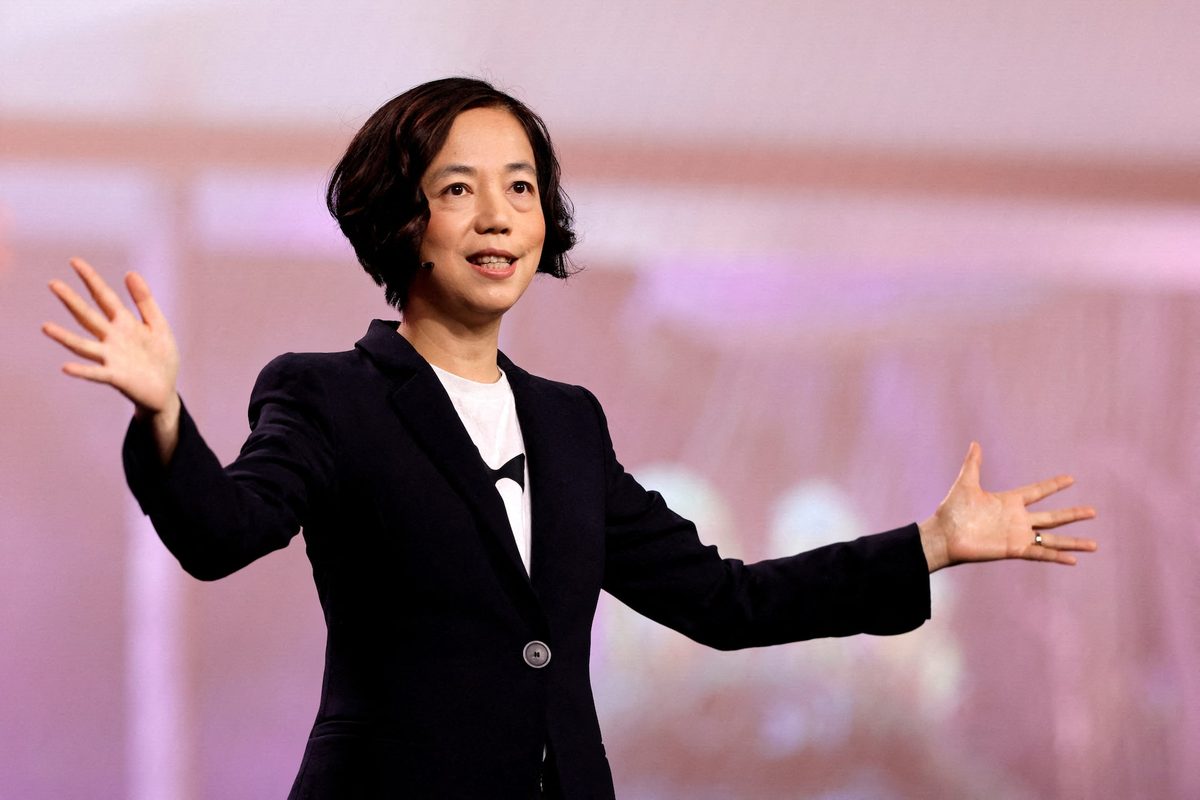
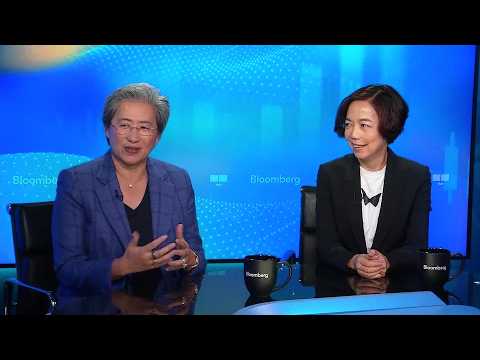
AMD has agreed to buy World Labs, the AI lab founded by Stanford professor Fei-Fei Li, for $8.2 billion in stock. The deal puts one of AI's most prominent researchers inside a chipmaker racing to close Nvidia's lead in data-center AI. The transaction is expected to close by the end of 2026, pending regulatory approvals.

World Labs builds world models — systems that generate, reconstruct, and simulate 3D environments from text, images, and video. AMD says the team's model expertise will help it design chips for AI workloads years before they exist, and strengthens its pitch for an open AI ecosystem against Nvidia's proprietary stack. The deal is AMD's second-largest purchase, behind the roughly $50 billion it paid for Xilinx in 2022.

Why it matters

World Labs' model research will shape AMD's AI chip designs for years — a direct challenge to Nvidia's grip on the AI data-center market.

Questions about this story

Free account needed to ask — your question is kept and asked for you right after sign-up. Answers are public.

No questions yet — be the first to ask.

Key Indicators

$8.2B
Deal value
All-stock price AMD agreed to pay for World Labs.
$50B
AMD's Xilinx purchase
AMD's largest-ever acquisition, closed in 2022; the World Labs deal is its second-largest.
$1B
World Labs' 2026 funding round
Raised earlier in 2026 with AMD among the investors.
3
Co-founders
Fei-Fei Li, Ben Mildenhall, and Justin Johnson founded the lab in early 2024.

Voices

Curated perspectives — historical figures and your fellow readers.

Ever wondered what historical figures would say about today's headlines?

Sign up to generate historical perspectives on this story.

People Involved

Organizations Involved

Timeline

January 2024 December 2026

5 events Latest: Today
Tap a bar to jump to that date
  1. Expected deal close

    Upcoming Milestone

    Acquisition expected to close by end of 2026, subject to regulatory approvals and customary conditions.

  2. AMD announces $8.2 billion acquisition

    Today Acquisition

    AMD agrees to buy World Labs in an all-stock deal, with Fei-Fei Li joining as EVP and chief scientist.

  3. World Labs raises $1 billion

    Funding

    Funding round includes AMD as an investor, alongside earlier backers in the lab's rapid rise.

  4. Technical partnership with AMD begins

    Partnership

    World Labs starts optimizing model training and inference on AMD GPUs, deepening ties with the chipmaker.

  5. World Labs founded

    Founding

    Fei-Fei Li, Ben Mildenhall, and Justin Johnson launch the lab in San Francisco to build spatial-intelligence models.

Scenarios

1

AMD closes World Labs deal, Li becomes chief scientist

Likely Resolves by End of 2026

Discussed by: AMD, World Labs, and most coverage (CNBC, Reuters, Nikkei)

The deal clears regulatory review and closes by the end of 2026. Fei-Fei Li takes her role as AMD executive vice president and chief scientist, and the World Labs team keeps operating as a frontier research unit inside AMD. This is the outcome both companies publicly expect.

2

Regulators delay or block the World Labs deal

Possible Resolves by Q2 2027

Discussed by: Antitrust trackers, given the $8.2 billion size and the precedent of Nvidia's failed ARM bid

U.S., EU, or China antitrust agencies open a formal review or challenge the deal, pushing the close past year-end. A full block would be unusual for a deal of this size in tech, but extended scrutiny is common and would match what AMD faced with Xilinx, which waited over a year for China's approval.

3

Post-close integration stalls, key researchers depart

Possible Resolves by End of 2027

Discussed by: Silicon Valley talent-watchers and M&A analysts who track acquired research teams

The deal closes, but the founding scientists — Fei-Fei Li, Ben Mildenhall, Justin Johnson — leave AMD within a year. History shows acquired research teams often churn after a big-company merger. If that happens, the deal's value rests on patents and existing technology rather than ongoing frontier research.

Historical Context

3 moments from history that rhyme with this story — and how they unfolded.

January 2014

Google acquires DeepMind (2014)

Google bought the London AI lab DeepMind, founded by Demis Hassabis, Shane Legg, and Mustafa Suleyman. The price was never officially confirmed but was widely reported at roughly $500 million. DeepMind later produced AlphaGo in 2016 and AlphaFold in 2020, both landmarks in AI.

Then

DeepMind kept its London base and research culture inside Google, then built a string of breakthrough systems.

Now

DeepMind became central to Google's Gemini models and is the standard example of a tech giant absorbing a frontier research lab.

Why this matters now

AMD's purchase of World Labs follows the same playbook: a hardware giant buying an AI research team to anchor its decade-long strategy.

October 2020 – February 2022

AMD acquires Xilinx (2022)

AMD announced a $50 billion all-stock deal to buy Xilinx, a maker of adaptive computing chips, in October 2020. The deal closed in February 2022 after China's antitrust regulator cleared it, following a year-long review.

Then

AMD expanded beyond CPUs and GPUs into adaptive computing with Xilinx's field-programmable gate array (FPGA) technology.

Now

The Xilinx purchase remains AMD's largest acquisition; the World Labs deal is its second-largest.

Why this matters now

It shows AMD's habit of buying capabilities rather than building them, and the regulatory scrutiny such deals attract.

September 2020 – February 2022

Nvidia's failed ARM bid (2022)

Nvidia agreed to buy chip designer ARM from SoftBank for $40 billion in September 2020. The deal collapsed in February 2022 after the U.S. Federal Trade Commission sued to block it and U.K. and EU regulators raised objections.

Then

Nvidia abandoned the deal and paid SoftBank a us$1.25 billion breakup fee.

Now

ARM later went public, and the collapse became a warning about regulators' willingness to kill major chip industry deals.

Why this matters now

It is the clearest recent example of a chipmaker's large acquisition failing on regulatory grounds — the risk scenario for AMD's World Labs deal.

Sources

(11)