
Pull to refresh
Logo
Hua Medicine's once-daily diabetes pill clears first U.S. patient trial

Hua Medicine's once-daily diabetes pill clears first U.S. patient trial

New Capabilities

A prodrug of the world's first approved glucokinase activator held glucose in range for 14 days without severe hypoglycemia, in a mostly White U.S. population

Overview

Updated 1 hour ago

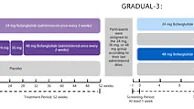
Forty-eight Americans with type 2 diabetes took a once-daily pill called HMS1005 for two weeks. Their continuous glucose monitors showed more time in the healthy range, and no participant's blood sugar fell below 54 mg/dL, the threshold for clinically meaningful hypoglycemia.

The pill is a prodrug of dorzagliatin, the glucokinase activator Hua Medicine has sold in China since 2022. Patients swallow a precursor that converts into the active drug inside the body, delivered in an extended-release form designed to hold steady levels for 24 hours rather than the twice-daily schedule of the original.

Why it matters

A once-daily version could take a drug that has treated 600,000 people in China into the U.S., a market Hua has not entered.

Questions about this story

Free account needed to ask — your question is kept and asked for you right after sign-up. Answers are public.

No questions yet — be the first to ask.

Key Indicators

48
Patients in the Phase 1b trial
Adults with type 2 diabetes across six dose cohorts; 83% were White.
>80%
Peak time in healthy glucose range
Highest observed time in range, up from about 35% at baseline.
1.48%
Largest drop in glucose management indicator
Seen in the cohort with the worst beta-cell function; the indicator approximates HbA1c.
369 mg
Maximum tolerated once-daily dose
Doses tested ran from 123 mg to 492 mg.
600,000+
Patients prescribed dorzagliatin in China
More than 10 million packs used since the 2022 launch.

Voices

Curated perspectives — historical figures and your fellow readers.

Sign up to generate historical perspectives on this story.

People Involved

Organizations Involved

Timeline

2022 November 2026

6 events Latest: Today
Tap a bar to jump to that date
  1. Shares rise over 5% in Hong Kong

    Today Market

    Hua Medicine trades at HK$2.125 in early trading after the trial readout.

  2. HMS1005 clears Phase 1b in the U.S.

    Clinical trial

    Once-daily doses from 123 mg to 492 mg hold glucose in range without severe hypoglycemia in 48 patients.

  3. Five of six Phase 1b cohorts complete

    Clinical trial

    An interim report says the sixth cohort is testing two 246 mg tablets.

  4. Dorzagliatin real-world data presented at ADA

    Data

    A 2,024-patient, 52-week study finds no drug-related serious adverse events and clinically meaningful hypoglycemia below 1%.

  5. First U.S. patient dosed with HMS1005

    Clinical trial

    Hua starts the multiple ascending dose Phase 1b study in U.S. adults with type 2 diabetes.

  6. Dorzagliatin reaches Chinese patients

    Launch

    Hua Medicine begins selling HuaTangNing, described as the world's first approved glucokinase activator, in mainland China.

Scenarios

1

HMS1005 begins a U.S. Phase 2 trial

Likely Resolves by End of 2027

Discussed by: Hua Medicine, which said the findings "support further evaluation of HMS1005 in Phase 2 trials"

Hua takes the Phase 1a and 1b data to the FDA, then tests selected once-daily doses over a longer period, measuring HbA1c and other glycemic endpoints. That would be the first efficacy test of a Chinese-developed glucokinase activator in U.S. patients.

2

Hua Medicine signs an ex-China partner for HMS1005

Possible Resolves by End of 2027

Discussed by: Hua's chief executive, who said the company plans to engage strategic and financial partners for development outside China

Hua keeps global rights but has no sales infrastructure outside China. A licensing or co-development deal would hand a partner the costly later-stage trials and commercialization in the U.S. and Europe, in exchange for milestones and royalties.

3

FDA waives the long-term toxicity study

Uncertain Resolves by Q2 2027

Discussed by: Hua Medicine, which said the prodrug's exposure profile "supports a waiver" if the regulator confirms it

Because HMS1005 turns into dorzagliatin, a molecule already given to hundreds of thousands of patients, Hua argues the FDA can skip a long-term Good Laboratory Practice toxicity study. A waiver would shorten and cheapen the path to later-stage trials.

Historical Context

2 moments from history that rhyme with this story — and how they unfolded.

2000s-2022

Glucokinase activators wait for a first approval (to 2022)

Glucokinase is the enzyme that lets the pancreas and liver sense rising glucose, and drugmakers pursued activators of it for years. Several experimental compounds were tested in people; none reached the market. Dorzagliatin, developed in Shanghai, became the first approved when Chinese regulators cleared it in 2022.

Then

Hua gained a marketed drug and a large body of human safety data on the mechanism.

Now

That data became the foundation for a once-daily successor aimed at the U.S. and other markets.

Why this matters now

HMS1005 is not a new mechanism. It is a new delivery strategy for a mechanism with one approved drug and essentially one company behind it.

2026

Dorzagliatin's real-world safety record (2026)

Hua presented results from HMM0601, a post-marketing study of 2,024 patients with type 2 diabetes across 80 Chinese centers, observed for 52 weeks. No drug-related serious adverse events or severe hypoglycemia were reported, and clinically meaningful hypoglycemia occurred in under 1% of patients.

Then

The data supported the drug's safety case in older adults and in patients with reduced kidney function.

Now

It gave Hua a human exposure record to cite when arguing that its prodrug does not need a fresh long-term toxicity study.

Why this matters now

The Phase 1b readout leans on this record: the argument for a toxicity-study waiver rests on dorzagliatin's prior clinical and post-marketing experience.

Sources

(7)