

FDA clears first wearable that monitors both glucose and ketones
New CapabilitiesAbbott's Libre Duo 10 Day tracks both in one sensor and alerts users before diabetic ketoacidosis becomes an emergency
Yesterday: FDA authorizes Libre Duo 10 Day via De Novo pathwayNew here? Follow stories to track developments over time. Create a free account to get updates when stories you care about change.
Overview
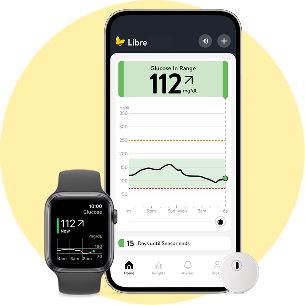
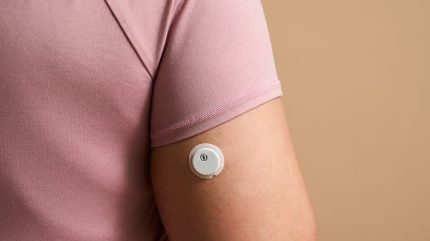
Updated 53 minutes agoThe FDA on August 25 authorized Abbott's Libre Duo 10 Day, the first wearable that continuously tracks both blood sugar and ketone levels in a single sensor. The device samples the fluid just beneath the skin every minute for up to 10 days, for people as young as 2.
Until now, ketone checks were one-off fingerstick or urine tests that showed a single value with no trend. Diabetic ketoacidosis can turn life-threatening within hours, and US hospital admissions for it have risen 55% over the past decade.
Why it matters
For 2.1 million Americans with type 1 diabetes, this is the first early-warning system for rising ketones, which can turn fatal within hours.
Questions about this story
Free account needed to ask — your question is kept and asked for you right after sign-up. Answers are public.
No questions yet — be the first to ask.
Key Indicators
Voices
Curated perspectives — historical figures and your fellow readers.
Play
Exploring all sides of a story is often best achieved with Play.
Higher or Lower
A number from this story, against one from elsewhere in the news — guess which is bigger, then keep the chain going. 5 rounds, 3 strikes; a miss costs a strike and resets your streak.
Keyboard: ↓/L lower · ↑/H higher
0 points — sign up to put that on the leaderboard.
Connections
Sixteen names from the news. Find the four hidden groups of four. Four mistakes max.
Sign up to keep a daily streak — a new puzzle lands every day.
Exit debate?
Your progress in this debate will be lost.
- 1 Two AI personas square off on this story.
- 2 You predict who'll win each round — correct picks earn XP.
- 3 One crossfire question is yours to fire. Pick it carefully.
Couldn't generate a topic
Select Your Champions
Choose one persona for each side of the debate
DEBATE TOPIC
Choose personas with different perspectives for a more dynamic debate.
Select debater for this side:
No debate personas available right now.
Select debater for this side:
No debate personas available right now.
Who's Got This Round?
Make your prediction before the referee scores
The referee scores both sides on
Round Results
Set the Crossfire
Pick the question both personas must answer in the final round
Debate Oracle! You called every round!
Sharp Instincts! You know your debaters!
The Coin Flip Strategist! Perfectly balanced!
The Contrarian! Bold predictions!
Inverse Genius! Try betting the opposite next time!
XP Breakdown
Prediction History
People Involved
Organizations Involved
The FDA division that reviews medical devices and authorized Libre Duo 10 Day through the De Novo pathway.
Global healthcare company that makes FreeStyle Libre continuous glucose monitors and developed the Libre Duo 10 Day.
Timeline
May 2026 August 2026
-
FDA authorizes Libre Duo 10 Day via De Novo pathway
Latest RegulatoryFirst US device to continuously monitor both glucose and ketones, cleared for ages 2 and older after Breakthrough Device designation.
-
Abbott wins European CE Mark for Libre Duo
RegulatoryEuropean clearance covered the 15-day Libre Duo for adults and the 10-day version for ages 2 and older, but not the US versions.
Historical Context
3 moments from history that rhyme with this story — and how they unfolded.
First continuous glucose monitors approved (2005-2007)
Medtronic's Guardian RT (2005) and DexCom's STS (2006) were the first wearable glucose sensors to stream readings continuously instead of at discrete moments. Early CGMs were expensive, imprecise, and rarely covered.
Adoption was slow for more than a decade as accuracy and coverage improved.
CGM trend data eventually enabled automated insulin delivery systems, approved starting in the late 2010s.
Libre Duo extends the same continuous-data logic to ketones, and it rides the coverage and AID infrastructure CGMs built—so adoption could be faster this time.
Home blood glucose meters replace urine testing (late 1970s)
Before portable meters, patients tested urine at home, which lagged blood glucose by hours and missed rapid swings. Devices like the Ames Glucometer (1978) gave immediate blood readings for the first time.
Point-of-care glucose testing transformed daily diabetes management within a decade.
The test-strip and meter infrastructure CGMs later replaced was built in this era.
Libre Duo does for ketones what home meters did for glucose: replaces lagging, one-off tests with immediate continuous data.
Fingerstick blood ketone meters (early 2000s)
Before Libre Duo, home ketone testing meant urine strips (available since the 1960s) or fingerstick blood meters like Abbott's Precision Xtra. Blood meters were more accurate, but both gave a single snapshot with no trend.
DKA is often detected only after symptoms appear, because patients have no reason to test until they feel unwell.
Point-in-time tests cannot distinguish rising from falling ketones, limiting their warning value.
Libre Duo's trend data and alerts target the core limitation of existing ketone tests, which is why the FDA created a new device category for it.
