


FDA approves first gene therapy for the cause of Glycogen Storage Disease Type Ia
New CapabilitiesUltragenyx's GENGLYCOS delivers a working G6PC gene to the liver, targeting the root of a rare blood-sugar disorder instead of managing its symptoms
Yesterday: FDA approves GENGLYCOSNew here? Follow stories to track developments over time. Create a free account to get updates when stories you care about change.
Overview
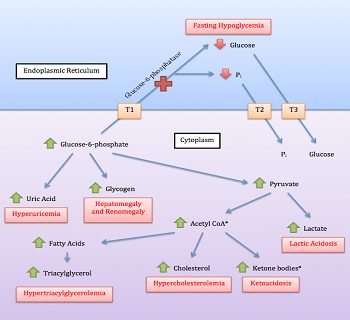
Updated YesterdayPeople with Glycogen Storage Disease Type Ia can't safely go without food. Their bodies can't release stored sugar, so many eat raw cornstarch around the clock, including overnight, to keep blood sugar from crashing. On August 19, 2026, the FDA approved GENGLYCOS, the first treatment aimed at the genetic cause of the disease rather than its symptoms.
The one-time therapy puts a working copy of the missing gene into liver cells. In the main trial, treated patients cut their daily cornstarch by about 41%, against 10% for placebo. The approval covers roughly 1,500 to 2,500 US patients aged eight and up.
Why it matters
For a disease whose patients have only ever managed it with round-the-clock cornstarch, a one-time gene therapy now targets the actual cause.
Questions about this story
Free account needed to ask — your question is kept and asked for you right after sign-up. Answers are public.
No questions yet — be the first to ask.
Key Indicators
Voices
Curated perspectives — historical figures and your fellow readers.
Play
Exploring all sides of a story is often best achieved with Play.
Higher or Lower
A number from this story, against one from elsewhere in the news — guess which is bigger, then keep the chain going. 5 rounds, 3 strikes; a miss costs a strike and resets your streak.
Keyboard: ↓/L lower · ↑/H higher
0 points — sign up to put that on the leaderboard.
Connections
Sixteen names from the news. Find the four hidden groups of four. Four mistakes max.
Sign up to keep a daily streak — a new puzzle lands every day.
Exit debate?
Your progress in this debate will be lost.
- 1 Two AI personas square off on this story.
- 2 You predict who'll win each round — correct picks earn XP.
- 3 One crossfire question is yours to fire. Pick it carefully.
Couldn't generate a topic
Select Your Champions
Choose one persona for each side of the debate
DEBATE TOPIC
Choose personas with different perspectives for a more dynamic debate.
Select debater for this side:
No debate personas available right now.
Select debater for this side:
No debate personas available right now.
Who's Got This Round?
Make your prediction before the referee scores
The referee scores both sides on
Round Results
Set the Crossfire
Pick the question both personas must answer in the final round
Debate Oracle! You called every round!
Sharp Instincts! You know your debaters!
The Coin Flip Strategist! Perfectly balanced!
The Contrarian! Bold predictions!
Inverse Genius! Try betting the opposite next time!
XP Breakdown
Prediction History
People Involved
Organizations Involved
A Novato, California biotech focused on rare and ultra-rare genetic diseases.
The US agency that reviews and approves drugs and biologics.
Timeline
June 2019 August 2026
-
FDA approves GENGLYCOS
Latest RegulatoryThe FDA grants accelerated approval for GENGLYCOS in patients eight and older, the first therapy targeting the genetic cause of GSDIa. A priority review voucher comes with it.
-
Phase 3 trial hits its main goal
Clinical TrialThe 48-week GlucoGene study meets its primary endpoint. Treated patients cut daily cornstarch by 41.3% versus 10.3% for placebo (p<0.0001).
-
First patient data show promise
Clinical TrialUltragenyx reports positive Phase 1/2 results for DTX401, showing the gene therapy could reduce cornstarch reliance in adults with GSDIa.
Historical Context
3 moments from history that rhyme with this story — and how they unfolded.
Luxturna approval (2017)
The FDA approved Luxturna from Spark Therapeutics, the first gene therapy in the US for an inherited disease. It treated a rare form of blindness caused by mutations in the RPE65 gene, delivered by a single injection under the retina.
Spark priced the treatment at $850,000, sparking debate over how to pay for one-time cures.
Luxturna set the template for later AAV gene therapies: a single dose, a tiny patient pool, and a high price.
GENGLYCOS follows the same model Luxturna opened, a one-time gene delivery for a rare inherited disease with few patients.
Zolgensma approval (2019)
The FDA approved Novartis's Zolgensma for spinal muscular atrophy, a genetic disease that kills infants' motor neurons. The one-time therapy carried a list price of about $2.1 million, then the most expensive drug ever.
Insurers and Novartis built installment and outcomes-based payment plans to spread the cost.
Zolgensma showed a gene therapy could change the course of a fatal childhood disease and forced new thinking on paying for cures.
Like GENGLYCOS, Zolgensma replaced a missing gene in a metabolic or neuromuscular disease, and its pricing debate previews questions Ultragenyx will face.
Elevidys accelerated approval (2023)
The FDA granted accelerated approval to Sarepta's Elevidys for Duchenne muscular dystrophy based on a surrogate measure, protein expression, even though the therapy missed its main clinical goal in a trial. The decision drew internal FDA disagreement.
The approval let patients access the therapy while confirmatory trials continued, but critics questioned the evidence.
Elevidys became a reference point in the debate over how much proof a gene therapy needs before reaching patients.
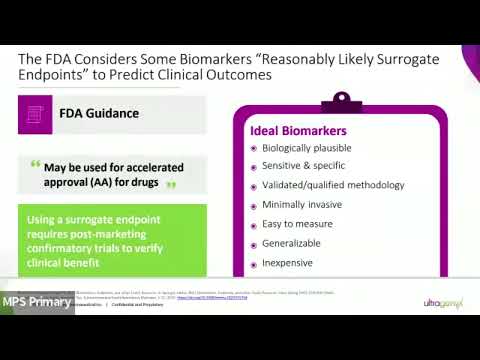
GENGLYCOS also cleared on a surrogate endpoint, so its confirmatory trial will test whether the cornstarch measure predicts real benefit.
