
Pull to refresh
Logo
Transgrid wins contract to build the Hunter transmission line

Transgrid wins contract to build the Hunter transmission line

Built World

The 110-kilometre, 500 kV line is the piece that lets new wind and solar in two inland zones reach the NSW grid as coal plants retire

Overview

Updated 10 minutes ago

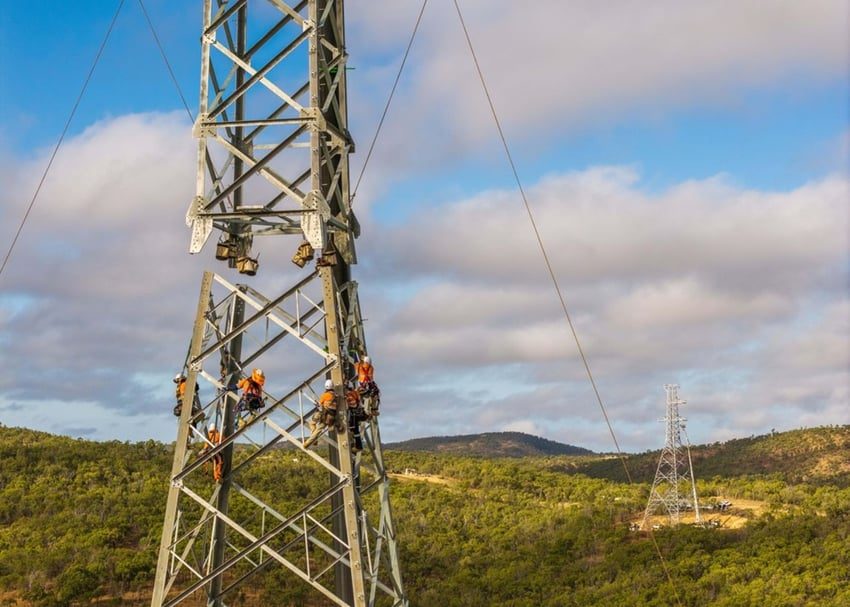
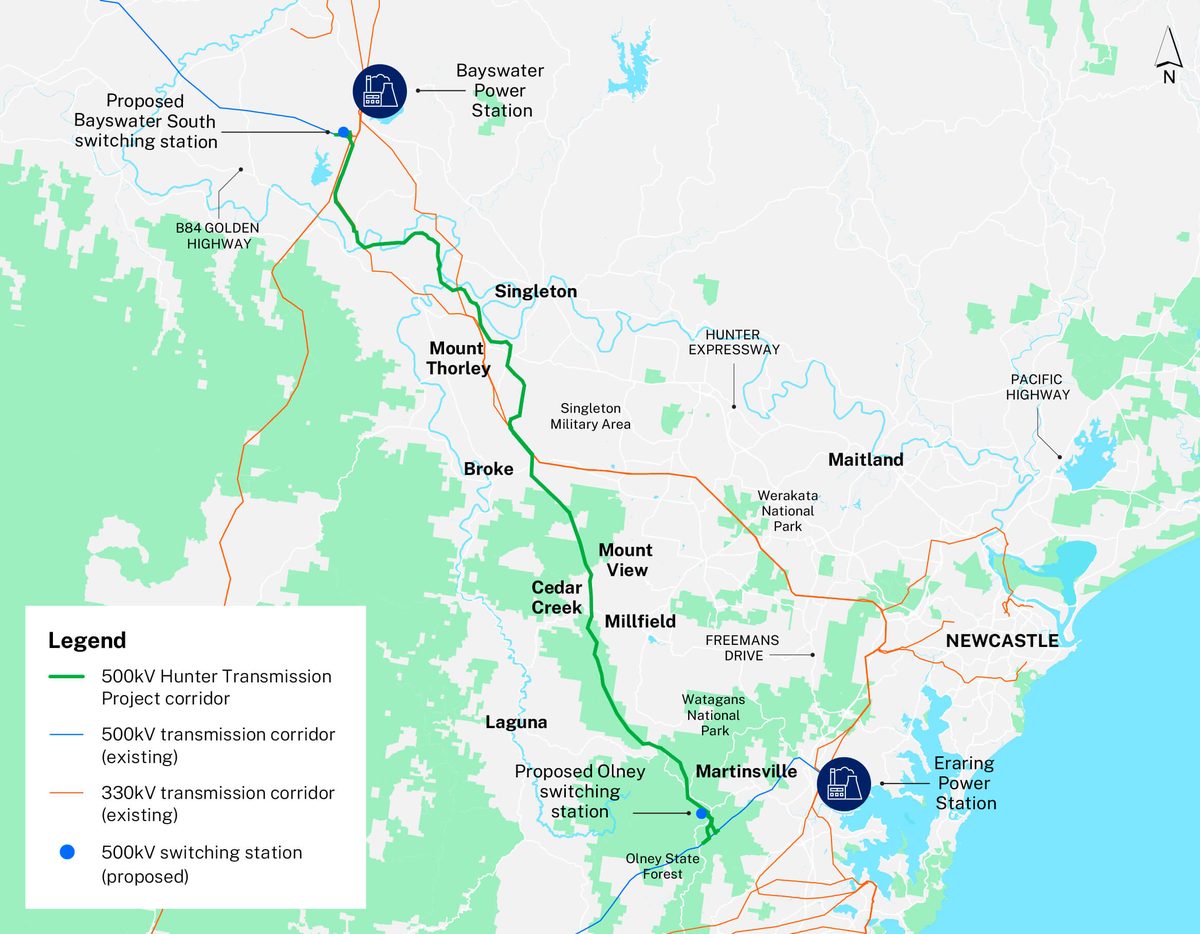
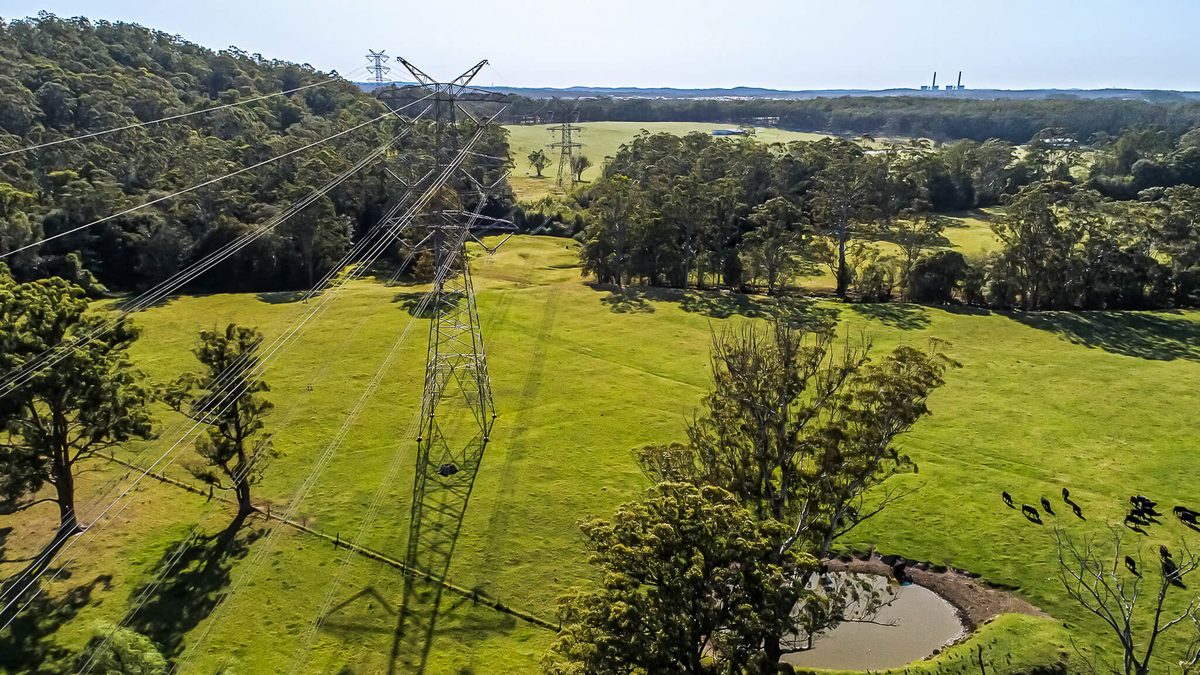
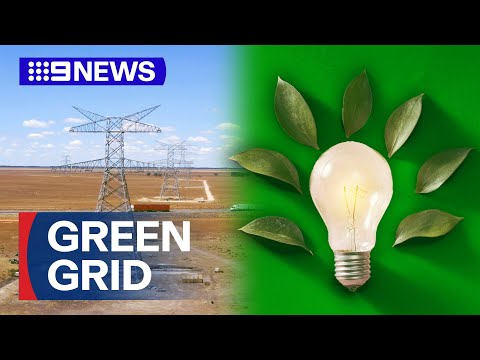
On 23 November 2026, the New South Wales government gave Transgrid the contract to build and operate a 110-kilometre, 500-kilovolt transmission line between Bayswater in the Upper Hunter and Olney in the Lower Hunter. Downer won about A$1.1 billion of line works, and UGL takes the switching stations and substation upgrades at each end.

The line joins the state's existing 500 kV circuits into a ring instead of a set of dead ends. That ring is what carries power from the Central-West Orana and New England renewable energy zones to Sydney as the coal plants around it close.

Why it matters

NSW's coal plants are closing before the wires that replace them exist. This contract decides whether new wind and solar can actually reach Sydney.

Questions about this story

Free account needed to ask — your question is kept and asked for you right after sign-up. Answers are public.

No questions yet — be the first to ask.

Key Indicators

110 km
Length of new transmission line
Runs between the Bayswater South and Olney switching stations.
500 kV
Operating voltage
The highest voltage class in the NSW network; the line completes a 500 kV ring.
A$1.1B
Downer's line-works contract
Covers roughly three years of construction.
900
Construction jobs
EnergyCo's estimate for the build; roughly 210 direct jobs a year on average.
140
Ongoing operational jobs
Expected from 2030, once the line is in service.
115
Planning conditions
Attached to the July 2026 approval, covering environment, construction and landowner commitments.
~89%
Corridor on mining, energy or government land
Fewer than 20 private properties fall inside the corridor, down from 70 in the preliminary route.

Voices

Curated perspectives — historical figures and your fellow readers.

Sign up to generate historical perspectives on this story.

Organizations Involved

Timeline

January 2025 November 2026

5 events Latest: Today
Tap a bar to jump to that date
  1. Transgrid awarded Hunter Transmission Project contract

    Today Contract

    Downer takes A$1.1 billion of line works and UGL the substations; design starts December 2026.

  2. NSW government grants planning approval

    Approvals

    Approval came with 115 conditions on environment, construction and landowner engagement.

  3. Submissions and amendment reports lodged

    Approvals

    EnergyCo filed its responses to public submissions with the planning process.

  4. Environmental impact statement exhibited

    Approvals

    Public exhibition ran through September 2025 on the 110-kilometre corridor.

  5. Transgrid named preferred network operator

    Contract

    EnergyCo signed a commitment deed with Transgrid, subject to a final delivery contract and approvals.

Scenarios

1

Hunter line enters service on schedule in late 2029

Possible Resolves by End of 2029

Discussed by: Transgrid's 2026 Transmission Annual Planning Report and EnergyCo project documents

Design work starts in December 2026, crews mobilise in 2027, and the line is energised by the November 2029 target. The 500 kV ring closes before the last Hunter coal units shut, so new generation in the Central-West Orana and New England zones has somewhere to send power.

2

Construction slips into the 2030s

Possible Resolves by Q2 2030

Discussed by: Energy industry analysts tracking Australian transmission build times

Weather, labour shortages on a tight contractor market, or conditions attached to the approval push delivery past the target date. The grid then runs through at least one coal retirement with the ring still open, and constraints on the inland renewable zones persist longer.

3

Line works cost more than A$1.1 billion

Possible Resolves by End of 2028

Discussed by: Downer's own disclosure that the contract carries variable mechanisms for key uncertainties

The contract deliberately avoids a straight fixed price. If ground conditions, materials or design changes run past the modelled allowances, Downer books a cost increase or EnergyCo approves a variation, and the headline number moves.

4

Land access or condition breach halts part of the build

Unlikely Resolves by Q2 2028

Discussed by: Landowner and community submissions during the 2025 environmental exhibition

Fewer than 20 private properties sit in the corridor, but those negotiations plus the 115 approval conditions create points where work can stop. A stop-work order, a court challenge or a compliance finding would pause a section of the route.

Historical Context

3 moments from history that rhyme with this story — and how they unfolded.

1949–1974

Snowy Mountains Scheme (1949–1974)

Australia built a network of dams, tunnels and power stations to shift Snowy River water inland and generate electricity. It drew tens of thousands of workers, many of them post-war migrants, into company towns in the mountains.

Then

Generation and irrigation arrived years later and cost more than the early estimates.

Now

It set the template for Commonwealth-state infrastructure deals and for treating generation and transmission as a single piece of national work.

Why this matters now

The Hunter line is a smaller version of the same problem: the generation is being built first, and the wires determine whether it is worth anything.

2021 onwards

EnergyConnect interconnector (2021–)

Transgrid's NSW–South Australia interconnector won planning approval and began construction as one of the first priority transmission projects under the national grid upgrade program.

Then

The project reported cost increases and a later energisation date than first announced.

Now

It became the reference case for how Australian transmission projects actually behave once contracts are signed: approval is the start of the risk, not the end.

Why this matters now

The Hunter project is now in the same phase, with a signed contract, an in-service target and a contractor holding the schedule risk.

2015 onwards

Germany's SuedLink (2015–)

Germany planned a long north-south direct-current line to move wind power to southern industry. Opposition to overhead pylons forced a switch to underground cable and repeated route revisions.

Then

Costs rose and the completion date moved back repeatedly.

Now

Routing decisions made under public pressure reshape a project's cost and timeline years after the original approval.

Why this matters now

Explains why EnergyCo routes 89% of the Hunter corridor over mining, energy and government land, and why it cut affected private properties from 70 to under 20.

Sources

(9)