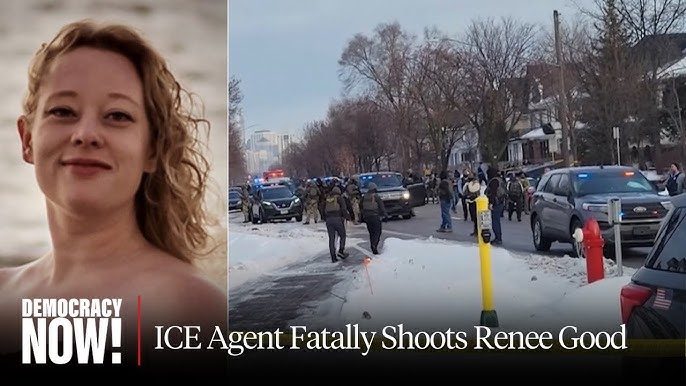
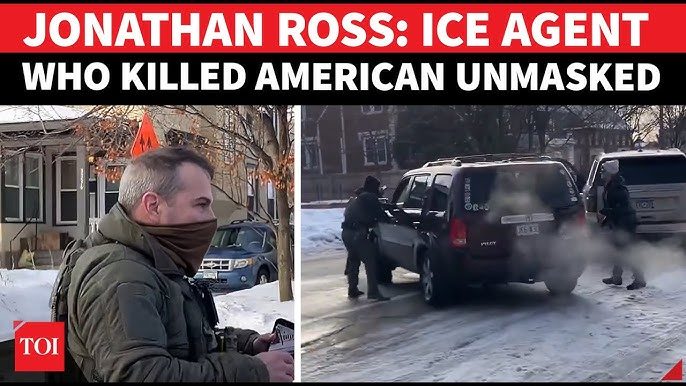
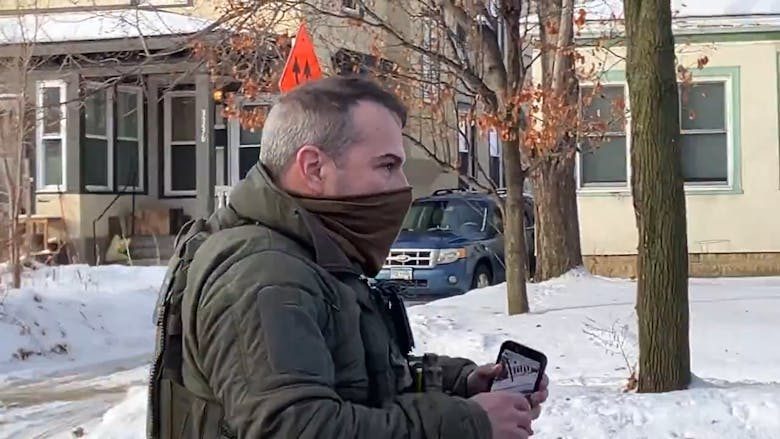
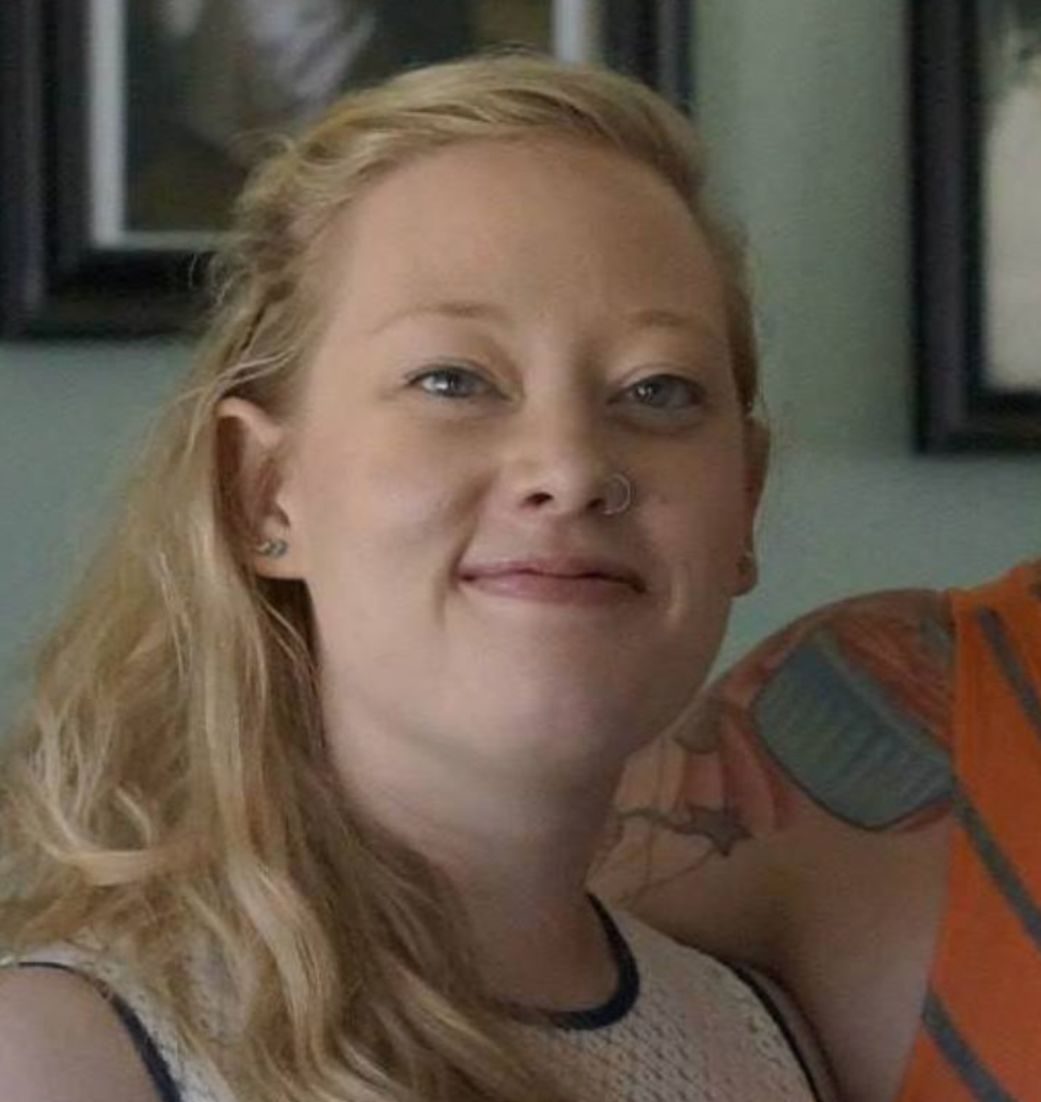
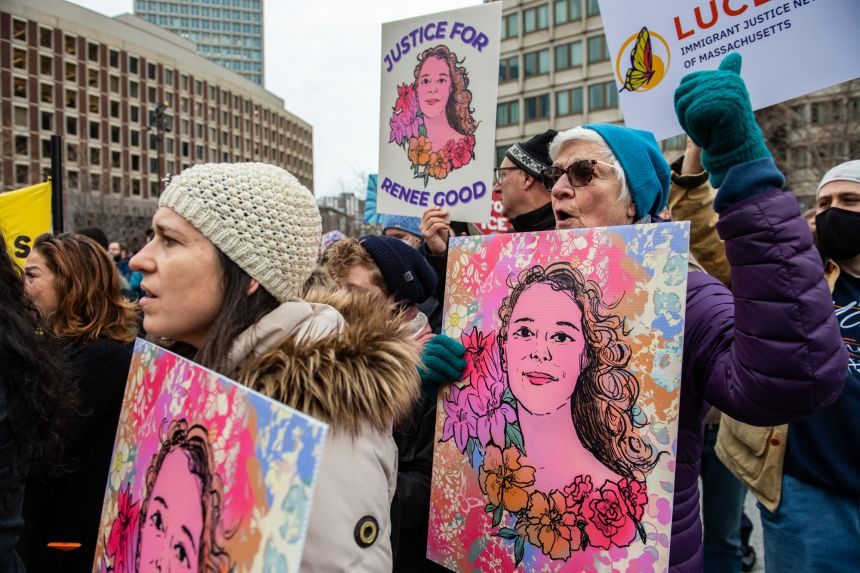
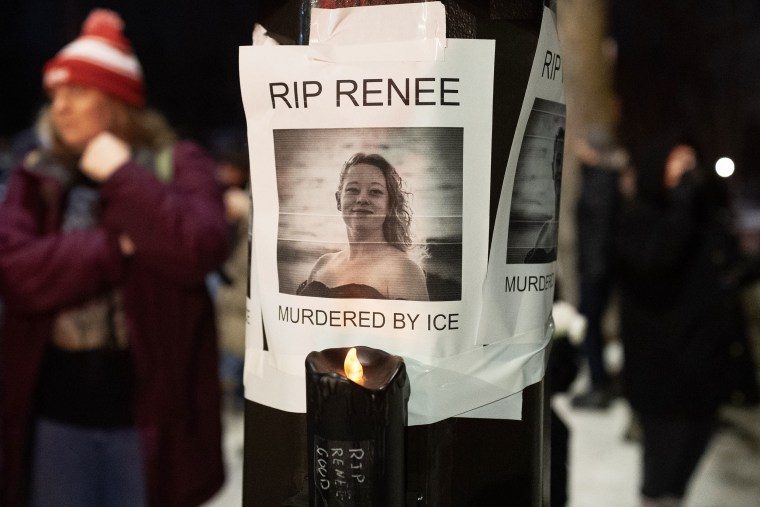
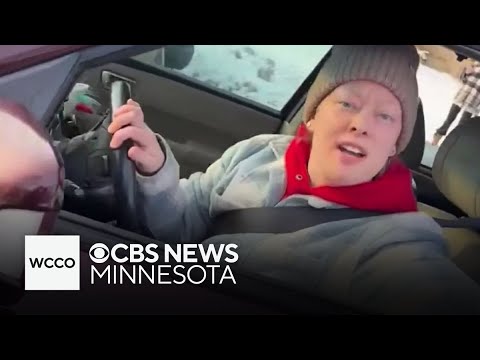
ICE agent Jonathan Ross fired three shots in 700 milliseconds, killing 37-year-old Renee Nicole Good in her car on a Minneapolis street. Good was a U.S. citizen, a mother of three, standing with her wife to support neighbors during Trump's self-proclaimed "largest immigration operation ever"—2,000 federal agents deployed to Minnesota.
Federal officials claim she tried to run over Ross. Minneapolis officials who reviewed video footage called that story "bullshit." Within a week, the Trump administration announced deployment of 1,000 additional federal officers to Minnesota, prompting the state and its two largest cities to file federal lawsuits challenging the enforcement surge.
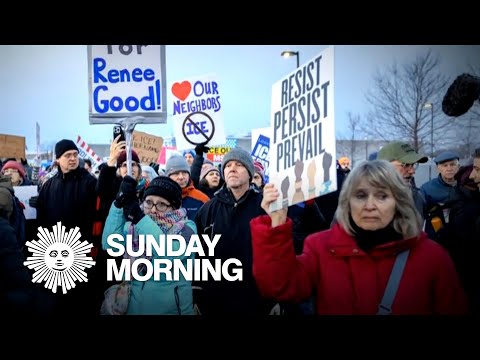
More than 1,000 protests under the "ICE Out for Good" slogan mobilized tens of thousands nationwide. The FBI seized exclusive control of the investigation, blocking Minnesota state authorities. The DOJ's Civil Rights Division declined to investigate whether Good's civil rights were violated—a decision that triggered mass resignations including the division's criminal section chief, principal deputy chief, deputy chief, and acting deputy chief.
Federal agents fired tear gas at high school students and protesters in Minneapolis. At stake: whether federal agents can shoot civilians without state accountability, and whether organized resistance can halt the administration's immigration crackdown.
Questions about this story
Free account needed to ask — your question is kept and asked for you right after sign-up. Answers are public.
No questions yet — be the first to ask.
Key Indicators
1,000+
Protest actions nationwide
Largest coordinated anti-ICE mobilization in U.S. history
3 shots
Fired in 700 milliseconds
Time between first and last gunshot that killed Renee Good
3,000
Federal agents deployed
DHS deployed 2,000 initially, announced 1,000 more after lawsuit filed
4
DOJ officials resigned
Civil Rights Division leadership quit after declining to investigate shooting
9
ICE shootings since Sept 2025
Four resulted in deaths during deportation operations
18 events
Latest: January 13th, 2026 · 9 months ago
Showing 8 of 18
JK to step
Tap a bar to jump to that date
January 2026
Federal Agents and Protesters Clash in Multiple Minnesota Cities
LatestProtest
Confrontations stretched across Minneapolis and St. Cloud as federal agents conducted enforcement operations. Hundreds protested outside Somali-run businesses after ICE arrived, with clashes erupting at the federal building being used as a base.
Minnesota and Twin Cities Sue Trump Administration
Legal
Minnesota, Minneapolis, and St. Paul filed federal lawsuits to stop the immigration enforcement surge that led to Good's shooting. Attorney General Keith Ellison called it "a federal invasion of the Twin Cities."
Federal Agents Fire Tear Gas at Protesters and Students
Federal Response
Federal agents fired tear gas in Minneapolis as crowds gathered around immigration officers. Hundreds of students walked out of Roosevelt High School, where agents had deployed tear gas on students and staff the previous week.
DHS Announces 1,000 Additional Federal Officers to Minnesota
Federal Response
Department of Homeland Security announced deployment of 1,000 more immigration officers to Minnesota, bringing total to over 3,000 agents. The announcement came the same day Minnesota filed its lawsuit.
Protests Continue, Tens of Thousands March
Protest
Second day of nationwide protests. Tens of thousands march in Minneapolis alone, with large crowds in Philadelphia, New York, DC, Los Angeles, Boston.
1,000+ Protests Launch Nationwide
Protest
ICE Out for Good coalition mobilizes tens of thousands in largest coordinated anti-ICE action in U.S. history. Major demonstrations in every major city.
DOJ Civil Rights Division Leadership Resigns
Federal Response
The DOJ Civil Rights Division's criminal section chief, principal deputy chief, deputy chief, and acting deputy chief resigned after Assistant Attorney General Harmeet Dhillon declined to investigate whether Good's civil rights were violated.
Video from Ross's Phone Released
Evidence
Alpha News publishes 47-second video from shooter's perspective showing Good turning steering wheel away before shots fired. Becca Good heard yelling "Drive, baby, drive!"
Minnesota Launches Independent State Investigation
Investigation
Hennepin County Attorney Mary Moriarty and AG Keith Ellison launch separate probe, ask public to submit evidence directly to state.
FBI Seizes Exclusive Control of Investigation
Investigation
FBI reverses agreement for joint state-federal probe, blocks Minnesota Bureau of Criminal Apprehension from accessing evidence.
Vice President Vance Defends Shooter
Federal Response
JD Vance calls it "a lie" to describe Good as innocent, blames her death on "radicals who teach people" to interfere with immigration law.
ICE Agent Jonathan Ross Identified Publicly
Investigation
Media outlets identify 43-year-old Iraq War veteran Jonathan Ross as the shooter.
DHS Secretary Kristi Noem claims Good was intentionally trying to mow down agents, asserts Minnesota has no jurisdiction.
Portland: Border Patrol Shoots Two More People
Shooting
One day after Minneapolis, Border Patrol agents shoot two people during traffic stop in Portland, Oregon. Both hospitalized in stable condition.
ICE Agent Shoots Renee Good Three Times, Kills Her
Shooting
After dropping her son at school, Renee Good stops on Portland Avenue to support neighbors during ICE enforcement. Agent Jonathan Ross fires three shots in 700 milliseconds, killing her.
Minneapolis Mayor Frey: 'Get the F*** Out'
Political Response
After reviewing video footage, Mayor Jacob Frey calls federal justification "bullshit" and demands ICE leave Minneapolis immediately.
Governor Walz Issues National Guard Warning Order
State Response
Minnesota Governor Tim Walz prepares National Guard for potential deployment, calls shooting preventable and unnecessary.
DHS Launches 'Largest Immigration Operation Ever'
Federal Operation
Department of Homeland Security deploys 2,000 federal agents to Minneapolis area, citing fraud investigations targeting Somali community.
Scenarios
1
State Prosecution Moves Forward, Federal Immunity Tested
Possible
Discussed by: Legal experts at Lawfare, Slate, constitutional law professors analyzing Hennepin County's jurisdiction claims
Hennepin County Attorney Mary Moriarty files state criminal charges against Jonathan Ross for manslaughter or murder. The case becomes a Supreme Court test of whether federal agents can be prosecuted by states for shootings during enforcement operations. Legal precedent from In re Neagle (1890) and the Ruby Ridge case suggests federal officers can face state prosecution when their use of force exceeds what's "necessary and proper." Video evidence showing Good's vehicle turning away from Ross could undermine his self-defense claim. Trump cannot pardon state convictions, making this pathway significant regardless of federal prosecution decisions.
2
FBI Clears Agent, Mass Movement Intensifies
Likely
Discussed by: Immigration advocates, civil rights organizations warning of credibility crisis if federal investigation whitewashes the shooting
The FBI-controlled investigation concludes Ross acted in self-defense, declining prosecution. State authorities lack evidence access to build their own case. The decision triggers a credibility crisis as Minnesota officials publicly dispute federal findings. The "Abolish ICE" movement gains mainstream Democratic support similar to 2018, but now backed by fatal shooting evidence and mass mobilization infrastructure. Congressional Democrats introduce legislation to dissolve ICE and create new immigration enforcement structures. The movement becomes a defining issue in the 2026 midterms, with protests escalating whenever ICE conducts visible enforcement operations.
Discussed by: CNN, legal analysts discussing potential confrontation over National Guard control after Walz's warning order
As protests intensify and Minnesota prepares National Guard deployment, Trump invokes the Insurrection Act to federalize state troops and prevent Governor Walz from interfering with immigration enforcement. This constitutional crisis mirrors historical conflicts over federal versus state authority. Minnesota officials refuse to comply, creating a standoff. The confrontation galvanizes opposition across multiple states where governors threaten non-cooperation with ICE. Mass civil disobedience spreads, with protesters physically blocking ICE operations in multiple cities. The administration faces a choice between backing down or escalating force against American protesters.
Discussed by: Democratic House members, Government Accountability Office reports on ICE use-of-force patterns
Congressional Democrats launch investigations into all nine ICE shootings since September 2025, uncovering systemic use-of-force problems and inadequate training. Evidence emerges that ICE leadership encouraged aggressive tactics to meet Trump's 3,000-daily-arrest quota. Public pressure forces ICE Director Patrick Lechleitner to resign. DHS Secretary Kristi Noem implements new use-of-force restrictions and body camera requirements. The reforms don't satisfy abolition demands but constrain ICE operations. Ross faces administrative discipline but no criminal charges. The compromise satisfies neither protesters nor immigration hardliners, leaving the underlying conflict unresolved.
5
Federal Court Blocks Minnesota's Immigration Enforcement Surge
Possible
Discussed by: Legal analysts at CNN, constitutional law experts discussing federalism challenges to enforcement operations
Federal judge grants preliminary injunction limiting ICE operations in Minnesota, finding state demonstrated likelihood of success on constitutional claims regarding excessive federal presence interfering with state sovereignty. The ruling creates a template for other states to challenge mass enforcement operations. Trump administration appeals immediately, but decision emboldens governors nationwide to resist. Legal battle reaches Supreme Court on federalism questions not seen since desegregation era. Minnesota case becomes pivotal test of whether states can restrict federal immigration enforcement within their borders.
6
Violence Escalates Between Federal Agents and Protesters
Possible
Discussed by: Law enforcement analysts, civil rights groups warning of Portland 2020-style confrontations
As protests continue and ICE operations intensify with 3,000+ federal agents deployed, confrontations turn violent. Federal agents deploy tear gas, rubber bullets, and aggressive tactics against protesters blocking ICE operations. Injuries mount on both sides. Images of federal agents in tactical gear confronting peaceful protesters dominate national news. The administration characterizes protesters as "domestic terrorists," while civil liberties groups document excessive force. Violence spreads to other cities where ICE conducts visible enforcement. Congressional Democrats demand withdrawal of federal forces, comparing situation to Portland 2020.
Historical Context
3 moments from history that rhyme with this story — and how they unfolded.
1 of 3
May-August 2020
George Floyd Protests (2020)
Minneapolis police officer Derek Chauvin killed George Floyd by kneeling on his neck for over nine minutes. The murder, captured on video, sparked the largest protest movement in U.S. history with 15-26 million participants nationwide. Minneapolis saw days of intense unrest including the burning of a police precinct. The incident catalyzed the Black Lives Matter movement and national reckoning on police violence.
Then
Chauvin was convicted of murder and sentenced to 22.5 years. Minneapolis saw significant property damage and National Guard deployment.
Now
The protests failed to produce major federal police reform legislation, though some cities reduced police budgets and implemented reforms. The movement energized progressive politics but also sparked conservative backlash.
Why this matters now
The Renee Good shooting occurred less than a mile from where Floyd was killed, reopening Minneapolis's trauma. But unlike 2020, these protests remain largely peaceful despite similar outrage over federal agents killing a civilian. The question is whether organized resistance learned tactical lessons from 2020 or whether this represents a different phase of confrontation with federal enforcement power.
2 of 3
August 1992
Ruby Ridge FBI Shooting (1992)
During an 11-day standoff at Ruby Ridge, Idaho, an FBI sniper shot and killed Vicki Weaver, an unarmed woman holding her infant daughter. The incident began with a U.S. Marshals operation that resulted in the death of Weaver's 14-year-old son and a marshal. The FBI's rules of engagement were later deemed unconstitutional. The shooting became a rallying point for anti-government movements and raised questions about federal use of force.
Then
The sniper faced state manslaughter charges, though the case was eventually dismissed. The Weaver family received a $3.1 million settlement.
Now
Ruby Ridge led to reforms in FBI hostage rescue protocols and rules of engagement. The 9th Circuit ruled federal officials could face state prosecution when use of force exceeded what was reasonable, establishing precedent that federal agents don't have absolute immunity.
Why this matters now
Ruby Ridge established the legal principle that federal agents can be prosecuted by states for excessive force. Hennepin County Attorney Mary Moriarty is citing this precedent in asserting jurisdiction over Jonathan Ross. The case demonstrates that federal officials can face state accountability, though such prosecutions remain extremely rare.
3 of 3
June-December 2018
Abolish ICE Movement (2018)
After Trump's first-term family separation policy sparked outrage, grassroots immigrant rights activists launched the "Abolish ICE" movement. The cause gained mainstream attention when Alexandria Ocasio-Cortez made it central to her upset primary victory over Joe Crowley in June 2018. Fellow Democrats including Kirsten Gillibrand and Bill de Blasio joined the call. At least 15 Democratic challengers campaigned on abolishing ICE. The movement represented the most significant challenge to federal immigration enforcement structures in modern history.
Then
The movement forced immigration policy into the center of 2018-2020 Democratic debates. Democrats won the House in 2018 but didn't pursue abolition legislation.
Now
By 2020, "Abolish ICE" faded from mainstream Democratic messaging as the party moved toward more moderate immigration positions. ICE continued operating with expanded authority under both administrations. The grassroots movement remained but lost political momentum.
Why this matters now
The 2026 "ICE Out for Good" protests represent the movement's resurgence, but now backed by fatal shootings rather than policy disputes. The current mobilization is larger—1,000+ protests versus scattered 2018 demonstrations. The question is whether documented killings provide the catalyst that policy debates couldn't, or whether this surge also fades when the news cycle moves on.