
Pull to refresh
Logo
Daily Brief
Following
Why Ranks Sign Up
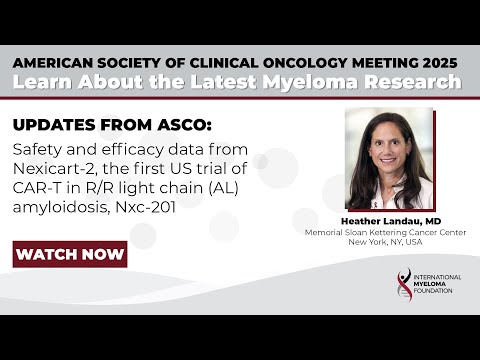
NXC-201 CAR-T therapy advances toward first approval for AL amyloidosis

NXC-201 CAR-T therapy advances toward first approval for AL amyloidosis

New Capabilities

Immix Biopharma's single-dose cell therapy posts deep remissions in a registrational Phase 2 trial

3 days ago: Interim Phase 2 readout: 95% complete response

Overview

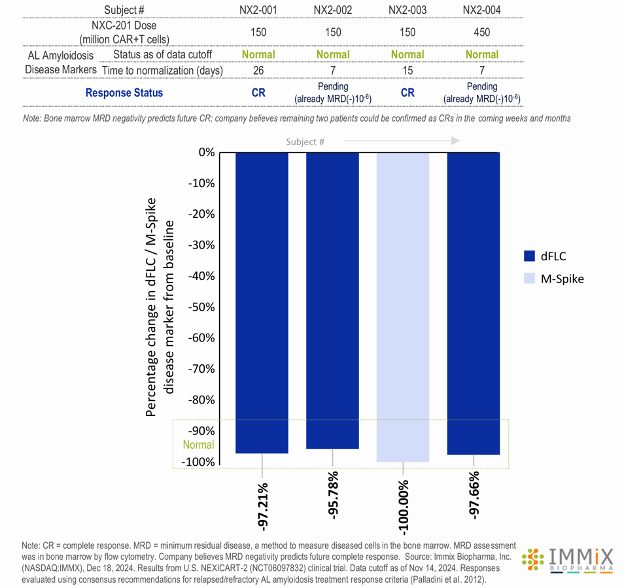
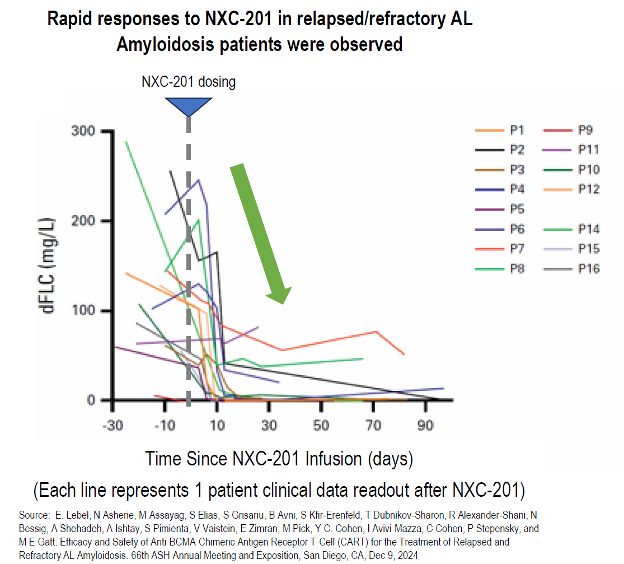
Immix Biopharma reported Thursday that 19 of 20 patients in its NEXICART-2 Phase 2 trial reached complete remission with NXC-201, a one-time CAR-T cell therapy for AL amyloidosis. The 95% complete response rate is up from 75% in an earlier readout, and all four patients with minimal-residual-disease-negative status have now converted to complete responses.

AL amyloidosis kills patients by depositing toxic protein in the heart, kidneys, and nerves. Those who relapse after standard chemotherapy have a median survival under a year, and no CAR-T therapy is currently approved for the disease. Immix is enrolling 45 patients in the registrational trial and plans to file for FDA approval after the full readout.

Why it matters

If cleared, NXC-201 would be the first one-time cell therapy for AL amyloidosis, a disease that often kills relapsed patients within a year.

Key Indicators

95%
Complete response rate
Up from 75% in the earlier NEXICART-2 readout.
19 of 20
Patients in deep remission
All four patients previously listed as MRD-negative now meet the complete-response bar.
0
Relapses observed
No remitting patient has relapsed within the follow-up window so far.
~$20M
Hadassah licensing fee
What Immix paid Hadassah Medical Center for the rights, before milestones.

Voices

Curated perspectives — historical figures and your fellow readers.

Ever wondered what historical figures would say about today's headlines?

Sign up to generate historical perspectives on this story.

Play

Exploring all sides of a story is often best achieved with Play.

Log in to play. Track your picks, climb the leaderboards. Log in Sign Up
Predict 4 ways this could play out. Contrarian picks score more — points lock when the scenario resolves. Log in to play
Higher or Lower Two numbers from this story. Guess which is bigger. 5 rounds to set a streak. Log in to play
Timeline Five events from this story — drag them oldest to newest. Log in to play
Connections Sixteen names from the news. Find the four hidden groups of four. Log in to play

People Involved

Organizations Involved

Timeline

2017 May 2026

8 events Latest: 3 days ago
Tap a bar to jump to that date
  1. Interim Phase 2 readout: 95% complete response

    Latest Clinical

    Immix reports 19 of 20 patients in deep remission, up from 75% earlier; no relapses to date. Topline data expected Q3 2026.

  2. FDA grants RMAT designation

    Regulatory

    Regenerative Medicine Advanced Therapy status opens a faster review path and more FDA contact.

  3. Trial moves to expansion cohort

    Clinical

    NEXICART-2 advances into its expansion cohort after early dosing meets safety bars.

  4. FDA clears NEXICART-2 trial

    Regulatory

    Investigational New Drug application clears, allowing the US multi-center Phase 1b/2 study to start.

  5. FDA grants orphan drug designation

    Regulatory

    NXC-201 receives orphan status for AL amyloidosis and multiple myeloma, qualifying for tax credits and exclusivity.

  6. Immix in-licenses NXC-201 from Hadassah

    Deal

    California-based Immix Biopharma pays Hadassah about $20 million plus future milestones for global rights.

  7. First patients dosed in Jerusalem

    Clinical

    Hadassah's single-center NEXICART-1 trial treats the first multiple myeloma and AL amyloidosis patients with NXC-201.

  8. Hadassah starts work on academic CAR-T

    Research

    Polina Stepensky and Cyril Cohen begin developing the BCMA-targeted CAR-T that becomes NXC-201.

Historical Context

3 moments from history that rhyme with this story — and how they unfolded.

August 2017

Kymriah becomes the first FDA-approved CAR-T (2017)

The FDA approved Novartis's tisagenlecleucel (Kymriah) for children and young adults with relapsed B-cell acute lymphoblastic leukemia. Pivotal trial data showed an 83% remission rate in a population with few options. The agency cleared it three months ahead of its decision date.

Then

Kymriah launched at $475,000 per infusion and forced insurers, hospitals, and Medicare to build new payment and delivery systems for one-time cell therapies.

Now

Eight more CAR-T therapies have since been approved, building the regulatory and manufacturing template Immix is following with NXC-201.

Why this matters now

Kymriah set the precedent for high-priced, one-time cell therapies in blood cancers with no other good options. AL amyloidosis would be the next major category if NXC-201 clears.

March 2021

Abecma approved as first BCMA CAR-T for multiple myeloma (2021)

The FDA approved Bristol Myers Squibb and bluebird bio's idecabtagene vicleucel (Abecma) for adults with relapsed or refractory multiple myeloma after four prior therapies. The pivotal KarMMa trial showed a 72% response rate and 28% complete response rate. It was the first BCMA-targeted cell therapy of any kind to reach market.

Then

Abecma and the follow-on Carvykti generated more than $1 billion in combined annual sales by 2024 and shifted myeloma treatment toward earlier cell therapy use.

Now

BCMA CAR-Ts have set the safety expectations the FDA now applies to NXC-201, which targets the same antigen in a different plasma cell disease.

Why this matters now

AL amyloidosis is driven by the same plasma cells that cause multiple myeloma. Abecma proved BCMA CAR-T can work clinically and commercially. NXC-201 is the closest analog in a sibling disease.

January 2021

Darzalex Faspro becomes first drug specifically approved for AL amyloidosis (2021)

The FDA approved Janssen's subcutaneous daratumumab plus chemotherapy for newly diagnosed AL amyloidosis based on the ANDROMEDA trial, which showed a 53% complete hematologic response rate compared with 18% on chemotherapy alone. It was the first therapy ever approved with an AL amyloidosis label.

Then

Daratumumab quickly became the front-line standard of care and roughly doubled deep response rates in newly diagnosed patients.

Now

It established AL amyloidosis as a commercially viable indication, encouraging programs like NXC-201 to target patients who relapse after daratumumab-based regimens.

Why this matters now

Darzalex defines the standard of care that NXC-201 patients have failed before enrolling. The 95% complete response rate in NEXICART-2 is roughly double what daratumumab produced in newly diagnosed disease, and these are sicker patients.

Sources

(9)