Pull to refresh
Logo
Diet drinks match water for weight management in two-year trial

Diet drinks match water for weight management in two-year trial

New Capabilities

SWITCH study of 493 adults finds non-nutritive sweetened beverages don't disrupt appetite or cause metabolic harm

Yesterday: 104-week SWITCH results show equivalence with water

Overview

Updated 2 hours ago

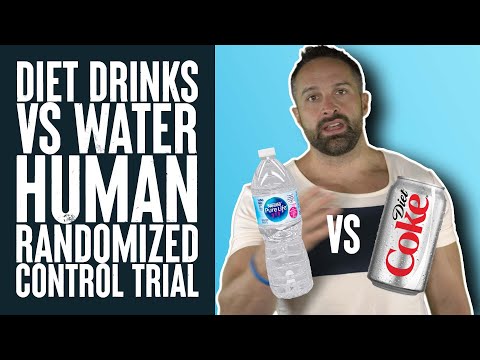
Adults who drank diet soft drinks every day for two years lost as much weight as those who drank water. The finding comes from a 104-week randomized trial of 493 adults with overweight or obesity, published in the British Journal of Nutrition.

The trial found no evidence that non-nutritive sweeteners disrupted appetite regulation or caused long-term metabolic harm. That directly challenges World Health Organization guidance from 2023, which advised against using sugar substitutes for weight control based on observational studies.

Why it matters

The WHO advised against sugar substitutes for weight control in 2023. This trial gives regulators randomized evidence that could reverse it.

Questions about this story

Free account needed to ask — your question is kept and asked for you right after sign-up. Answers are public.

0

I thought I recently read that there are studies out there that said that diet drinks are seen by the body almost identically to sugar. Is that not the case and how does that fit with this finding?

That claim comes from observational studies and sweet-taste receptor biology, but randomized trials — including the SWITCH trial — show diet drinks don't disrupt metabolism or appetite regulation in ways that matter for weight.

Why it matters: The gap between observational warnings and trial evidence is why WHO's 2023 guidance against sugar substitutes is now being challenged by long-duration randomized data.

  • The 'seen like sugar' idea traces to animal and observational research suggesting sweet taste alone can trigger cephalic-phase insulin release or alter glucose metabolism — mechanisms behind WHO's 2023 conditional recommendation against non-sugar sweeteners for weight control.
  • Randomized evidence doesn't support that: a JAMA Network Open meta-analysis of 17 RCTs (1,733 adults) found low- and no-calorie sweetened beverages replacing sugar-sweetened beverages reduced body weight (~1 kg), BMI, body fat, and liver fat — benefits similar to water, with no evidence of harm.
  • SWITCH at 104 weeks: 4.8 kg weight loss with diet drinks vs 3.7 kg with water — the difference was not statistically significant, and researchers found no appetite disruption or metabolic harm in the 493 adults studied.
  • Sweet taste receptor activation is not sugar metabolism: non-nutritive sweeteners deliver no glucose and no calories, and in head-to-head RCTs the physiological response is weight-neutral or weight-loss-supportive.
Room for disagreement
  • WHO's 2023 guideline relies on observational studies linking NNS to weight gain and diabetes; SWITCH researchers argue those findings are confounded by reverse causality — people at risk of weight gain are more likely to use diet drinks.
  • One 18-month trial in 71 women who regularly drank diet beverages found replacing them with water produced greater weight loss (-1.7 kg vs -0.1 kg) and better insulin sensitivity — suggesting water may edge out diet drinks in certain populations, though SWITCH's larger trial found equivalence.
  • SWITCH itself flipped direction between time points: at 52 weeks diet drinks produced statistically greater weight loss than water; at 104 weeks the two were equivalent — showing the headline depends on which endpoint you read.
AI-generated with web search — may be wrong. Check the linked sources.

Key Indicators

493
Adults randomized in SWITCH trial
Adults with BMI 27-35 kg/m² split evenly between water and diet beverage groups.
4.8 vs 3.7 kg
Weight loss at week 104: diet drinks vs water
Difference between groups was not statistically significant, meeting the trial's equivalence threshold.
104 weeks
Trial duration
12-week weight-loss phase, 40-week maintenance phase, and 52-week unassisted follow-up.
27.7%
Participants new to diet drinks
NNS-naive defined as diet beverages comprising at most 25% of beverages in the prior 5 years.

Voices

Curated perspectives — historical figures and your fellow readers.

Ever wondered what historical figures would say about today's headlines?

Sign up to generate historical perspectives on this story.

People Involved

Organizations Involved

Timeline

May 2023 September 2026

3 events Latest: Yesterday
  1. 104-week SWITCH results show equivalence with water

    Latest Publication

    British Journal of Nutrition publishes two-year results: weight loss of 4.8 kg with diet beverages versus 3.7 kg with water, a difference that was not statistically significant. No evidence of appetite disruption or metabolic harm.

  2. 52-week SWITCH results show diet drinks beat water for weight loss

    Publication

    International Journal of Obesity publishes results showing NNS beverage users lost 7.5 kg versus 6.1 kg with water — a statistically significant but not clinically meaningful difference.

  3. WHO advises against non-sugar sweeteners for weight control

    Guidance

    World Health Organization issues a conditional recommendation against using non-sugar sweeteners for weight control, citing observational studies suggesting possible harms.

Scenarios

1

WHO revisits guidance on non-sugar sweeteners

Possible Resolves by End of 2028

Discussed by: Researchers cited in the SWITCH trial reporting, including the University of Liverpool team and the International Sweeteners Association

The World Health Organization reviews the SWITCH trial alongside other new evidence and issues a revised guideline on non-sugar sweeteners. A revision could soften or remove the 2023 conditional recommendation against their use for weight control, given that the trial provides long-term randomized evidence showing equivalence with water and no metabolic harm.

2

WHO recommendation stays in place

Likely Resolves by End of 2028

Discussed by: WHO's existing conditional recommendation, which remains in force until formally revised

The WHO does not revise its 2023 guidance in the near term. The SWITCH findings join the evidence base but do not trigger an immediate recommendation change, since guideline updates require formal review processes that can take years.

3

National dietary bodies adopt SWITCH evidence

Possible Resolves by End of 2028

Discussed by: UK Scientific Advisory Committee on Nutrition, US Dietary Guidelines Advisory Committee, and European Food Safety Authority

A national or regional dietary advisory body cites the SWITCH trial when updating its recommendations on low-calorie sweetened beverages. The trial's two-year randomized design and direct comparison with water make it relevant to dietary guidance processes that currently vary across countries.

Historical Context

2 moments from history that rhyme with this story — and how they unfolded.

1977-2000

Saccharin bladder cancer controversy (1977-2000)

The FDA proposed banning saccharin after rat studies showed it caused bladder cancer. Congress blocked the ban and required a warning label instead. Later research showed the cancer mechanism in rats was specific to rodent physiology.

Then

Consumers saw warning labels on a popular sweetener for more than two decades.

Now

The National Toxicology Program delisted saccharin as a carcinogen in 2000, and the warning label requirement was removed.

Why this matters now

Precautionary guidance based on imperfect evidence was later corrected as better research emerged — the same pattern the SWITCH trial now tests for WHO's 2023 non-sugar sweetener recommendation.

May 2023

WHO non-sugar sweetener guidance (May 2023)

The World Health Organization published its first guideline on non-sugar sweeteners, issuing a conditional recommendation against their use for weight control. The recommendation leaned on observational studies suggesting links to weight gain, type 2 diabetes, and cardiovascular disease.

Then

The guidance conflicted with advice from many national bodies and left consumers and clinicians without clear direction on diet beverages.

Now

It set a precautionary standard that the SWITCH trial was explicitly designed to test with randomized controlled evidence.

Why this matters now

The 104-week SWITCH results directly answer the question the WHO guidance raised, providing the kind of long-term randomized data the WHO said was missing.

Sources

(8)