

Pull to refresh
Logo
Daily Brief
Following
Why
Weight-loss drugs show broad power to prevent and reduce addiction

Weight-loss drugs show broad power to prevent and reduce addiction

New Capabilities
By Newzino Staff |

Largest study yet finds GLP-1 medications cut substance use disorders across every major drug class

2 days ago: Largest study finds GLP-1 drugs reduce addiction risk across all major substances

Overview

Drugs designed to control blood sugar and shrink waistlines may also quiet the cravings that drive addiction. A study of more than 600,000 United States veterans, published March 4 in The BMJ, found that people taking GLP-1 medications were 14 percent less likely to develop a new substance use disorder and, if they already had one, experienced 50 percent fewer substance-related deaths and 39 percent fewer overdoses.

Key Indicators

606,434
Veterans studied
Electronic health records of U.S. veterans with type 2 diabetes analyzed over three years
14%
Reduced risk of new substance use disorder
Overall reduction in risk of developing any new substance use disorder among GLP-1 users versus non-GLP-1 diabetes patients
50%
Fewer substance-related deaths
Reduction in drug-related deaths among people with existing substance use disorders who started GLP-1 treatment
25%
Reduced opioid addiction risk
GLP-1 users were 25 percent less likely to develop a new opioid use disorder, the largest reduction among individual substances
$63B+
Global GLP-1 market (2025)
Annual revenue of the GLP-1 receptor agonist market, projected to exceed $130 billion by 2035

Interactive

Exploring all sides of a story is often best achieved with Play.

Ever wondered what historical figures would say about today's headlines?

Sign up to generate historical perspectives on this story.

Sign Up

Debate Arena

Two rounds, two personas, one winner. You set the crossfire.

People Involved

Ziyad Al-Aly
Ziyad Al-Aly
Clinical epidemiologist, Washington University School of Medicine; Chief of Research and Development, VA Saint Louis Health Care System (Lead author of the March 2026 BMJ study)
Nora Volkow
Nora Volkow
Director, National Institute on Drug Abuse (NIDA) (Advocating for expanded GLP-1 addiction research)
CH
Christian Hendershot
Researcher, University of North Carolina at Chapel Hill (Lead author of first randomized trial of semaglutide for alcohol use disorder)

Organizations Involved

Novo Nordisk
Novo Nordisk
Pharmaceutical company
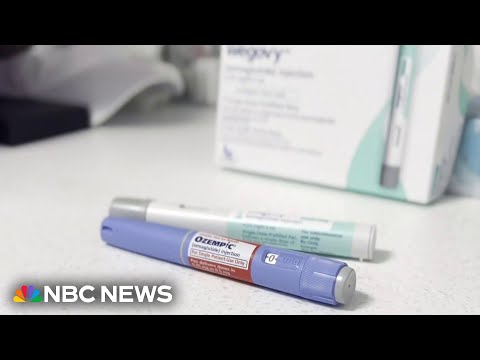
Status: Maker of Ozempic and Wegovy; not pursuing dedicated addiction trials

Danish pharmaceutical company that developed semaglutide and dominates the GLP-1 market with Ozempic (diabetes) and Wegovy (obesity).

Eli Lilly and Company
Pharmaceutical company
Status: Actively pursuing GLP-1 addiction trials

American pharmaceutical company pursuing the most aggressive GLP-1 addiction research program among major drugmakers.

Washington University School of Medicine
Academic research institution
Status: Published landmark BMJ study on GLP-1 and addiction

St. Louis-based medical school whose researchers produced the largest observational study linking GLP-1 drugs to reduced substance use disorders.

Timeline

  1. Largest study finds GLP-1 drugs reduce addiction risk across all major substances

    Research

    Washington University researchers publish a study of 606,434 veterans in The BMJ showing GLP-1 drugs are associated with a 14 percent lower risk of new substance use disorders and, for those already addicted, 50 percent fewer substance-related deaths and 39 percent fewer overdoses.

  2. Eli Lilly announces large-scale addiction trials

    Industry

    Eli Lilly CEO David Ricks announces the company will begin large studies of GLP-1 drugs in alcohol and drug abuse, including phase 3 trials of brenipatide for alcohol use disorder.

  3. Brown University researchers describe 'turning point in addiction psychiatry'

    Research

    Brown University researchers publish analysis framing GLP-1 drugs as a potential paradigm shift in addiction treatment, citing converging preclinical and clinical evidence.

  4. First randomized trial shows semaglutide reduces alcohol consumption

    Research

    A phase 2 trial of 48 adults with alcohol use disorder, published in JAMA Psychiatry, finds that low-dose semaglutide reduces alcohol intake during lab sessions, craving, and heavy drinking days compared to placebo.

  5. NIDA director calls GLP-1 addiction data 'very, very exciting'

    Statement

    Nora Volkow, director of the National Institute on Drug Abuse, publicly endorses the potential of GLP-1 drugs to treat addiction, lending high-level institutional support to the research direction.

  6. Anecdotal reports of reduced cravings emerge

    Observation

    Patients and clinicians begin reporting that GLP-1 drugs suppress not just food cravings but also urges to drink alcohol, smoke, and use drugs, prompting researchers to investigate systematically.

  7. Wegovy approved for weight management

    Regulatory

    The FDA approves a higher-dose version of semaglutide (Wegovy) for chronic weight management in adults, accelerating widespread use and the first wave of anecdotal reports about reduced cravings for alcohol and other substances.

  8. Ozempic approved for diabetes

    Regulatory

    The Food and Drug Administration (FDA) approves Novo Nordisk's injectable semaglutide (Ozempic) for type 2 diabetes, the drug that will later become central to addiction research.

  9. FDA approves first GLP-1 drug for diabetes

    Regulatory

    Exenatide (Byetta), derived from a compound found in Gila monster venom, becomes the first GLP-1 receptor agonist approved in the United States, initially for type 2 diabetes.

  10. Scientists isolate GLP-1 from the gut

    Discovery

    Researchers identify truncated glucagon-like peptide-1, a gut hormone that stimulates insulin secretion and inhibits glucagon, laying the foundation for a new drug class.

Scenarios

1

FDA approves first GLP-1 drug for substance use disorder

Discussed by: STAT News, CNN Health, addiction medicine researchers at Brown University and UNC

Randomized controlled trials now underway, including Eli Lilly's phase 3 alcohol use disorder trial, confirm the observational findings. The FDA grants a new indication for a GLP-1 drug to treat one or more substance use disorders, potentially beginning with alcohol. This would make GLP-1 agonists the first drug class approved to treat addiction across multiple substances and could dramatically expand insurance coverage for their use in addiction medicine.

2

Randomized trials show weaker results than observational data suggested

Discussed by: BMJ editorial commentators, clinical trial methodologists, skeptics of observational study designs

The BMJ study, like all observational research, cannot prove causation. Confounding factors — such as the possibility that veterans who sought GLP-1 prescriptions were generally more health-engaged — may explain part of the association. If randomized trials produce smaller or inconsistent effect sizes, enthusiasm may cool and regulatory approval could stall, limiting GLP-1 use to its current diabetes and obesity indications.

3

GLP-1 drugs become standard addiction treatment before formal approval

Discussed by: National Geographic, addiction psychiatrists, harm reduction advocates

Physicians begin prescribing GLP-1 drugs off-label for addiction, driven by patient demand and accumulating evidence, before formal FDA approval for that indication. This could accelerate access but also create insurance coverage gaps, since payers may refuse to cover off-label addiction use of drugs that cost over $1,000 per month. The pattern would mirror how SSRIs were widely prescribed for anxiety and other conditions before receiving formal approvals beyond depression.

4

Cost and access barriers limit impact despite proven efficacy

Discussed by: Health economists, addiction medicine advocates, VA health system analysts

Even if GLP-1 drugs prove effective against addiction, their high cost — roughly $1,000 to $1,500 per month at list price — could place them out of reach for many people with substance use disorders, a population that disproportionately lacks insurance and financial resources. Without dedicated addiction indications that mandate coverage, or significant price reductions, the drugs' addiction benefits may primarily reach patients already taking them for diabetes or obesity.

Historical Context

Prozac and the SSRI revolution (1988)

January 1988

What Happened

Eli Lilly launched fluoxetine (Prozac), the first selective serotonin reuptake inhibitor (SSRI), for depression. Within months it outsold every existing antidepressant. Doctors began prescribing it not just for major depression but for obsessive-compulsive disorder, bulimia, panic disorder, and anxiety — conditions for which it had not yet been formally approved.

Outcome

Short Term

Prozac became a cultural phenomenon, selling $2.7 billion annually at its peak. Millions of people who would not have sought treatment for depression began taking medication.

Long Term

SSRIs eventually received FDA approvals for multiple conditions beyond depression, validating the off-label use that preceded formal regulatory action. The class demonstrated that a drug targeting one brain mechanism can treat a range of disorders sharing that underlying biology.

Why It's Relevant Today

GLP-1 drugs are following a strikingly similar trajectory: approved for one condition (diabetes), then a second (obesity), now showing broad effects on a third category (addiction) that shares underlying brain reward circuitry. The SSRI precedent suggests off-label prescribing may outpace formal approvals.

Disulfiram (Antabuse) and the limits of aversion therapy (1951)

1948–1951

What Happened

Danish researchers discovered that disulfiram, a chemical used in rubber manufacturing, caused violent illness when combined with alcohol. The FDA approved it in 1951 as Antabuse, the first medication for alcohol dependence. It worked not by reducing craving but by making drinking physically punishing — nausea, vomiting, and flushing.

Outcome

Short Term

Early adoption was enthusiastic. Ruth Fox, the founding president of the American Society of Addiction Medicine, treated about 2,500 patients and reported the drug was effective at deterring drinking.

Long Term

Compliance proved to be the fundamental problem: patients who wanted to drink simply stopped taking the pill. Disulfiram remains available but is rarely prescribed today, illustrating the limits of a deterrence-based approach to addiction that does not address the underlying craving.

Why It's Relevant Today

GLP-1 drugs represent the opposite pharmacological strategy. Instead of punishing consumption, they appear to reduce the craving that drives it. If confirmed, this would address the exact failure point that limited Antabuse's effectiveness for 75 years.

Naltrexone's expansion from opioids to alcohol (1984–1994)

1984–1994

What Happened

The FDA approved naltrexone in 1984 to treat opioid addiction by blocking opioid receptors. A decade later, researchers discovered it also reduced alcohol cravings and heavy drinking, leading to a second FDA approval for alcohol use disorder in 1994. It was one of the first demonstrations that a drug targeting one addictive pathway could help with a different substance entirely.

Outcome

Short Term

Naltrexone provided the first pharmacological option for alcohol use disorder that directly reduced craving rather than creating aversion.

Long Term

Despite proven efficacy, naltrexone remains underused due to stigma around medication-assisted addiction treatment and because it addresses only opioid and alcohol pathways, not the broader reward circuitry involved in other addictions.

Why It's Relevant Today

GLP-1 drugs may extend the naltrexone precedent much further. Where naltrexone crossed from one substance to a second, GLP-1 data suggests activity across all major substance classes, pointing to a more fundamental craving mechanism than the opioid receptor system alone.

Sources

(14)