



Pull to refresh
Logo
Daily Brief
Following
Why Sign Up
India launches national carbon market, joining global push to price emissions

India launches national carbon market, joining global push to price emissions

Rule Changes
By Newzino Staff |

The Indian Carbon Market portal operationalizes a compliance trading system covering nine industrial sectors and more than 40 registered offset projects

Today: Indian Carbon Market portal goes live

Overview

India, the world's most populous country and third-largest emitter of greenhouse gases, now has a live digital platform for trading carbon credits. The Indian Carbon Market portal, launched March 21 at the Prakriti 2026 summit in New Delhi, allows industries to register emission-reduction projects, earn Carbon Credit Certificates, and trade them on supervised power exchanges — a mechanism designed to put a price on pollution across nine industrial sectors.

Why it matters

India's 1.4 billion people now live under a system that prices industrial carbon emissions, reshaping costs for steel, cement, and aluminum globally.

Key Indicators

40+
Registered offset entities
Projects in biogas, hydrogen, and forestry already registered on the portal under nine approved methodologies
9
Industrial sectors covered
Aluminium, cement, iron and steel, chlor-alkali, fertilizer, paper and pulp, petrochemical, refinery, and textile
~490
Obligated industrial units
Facilities that must meet government-set emission intensity reduction targets or buy credits
~10%
National emissions covered
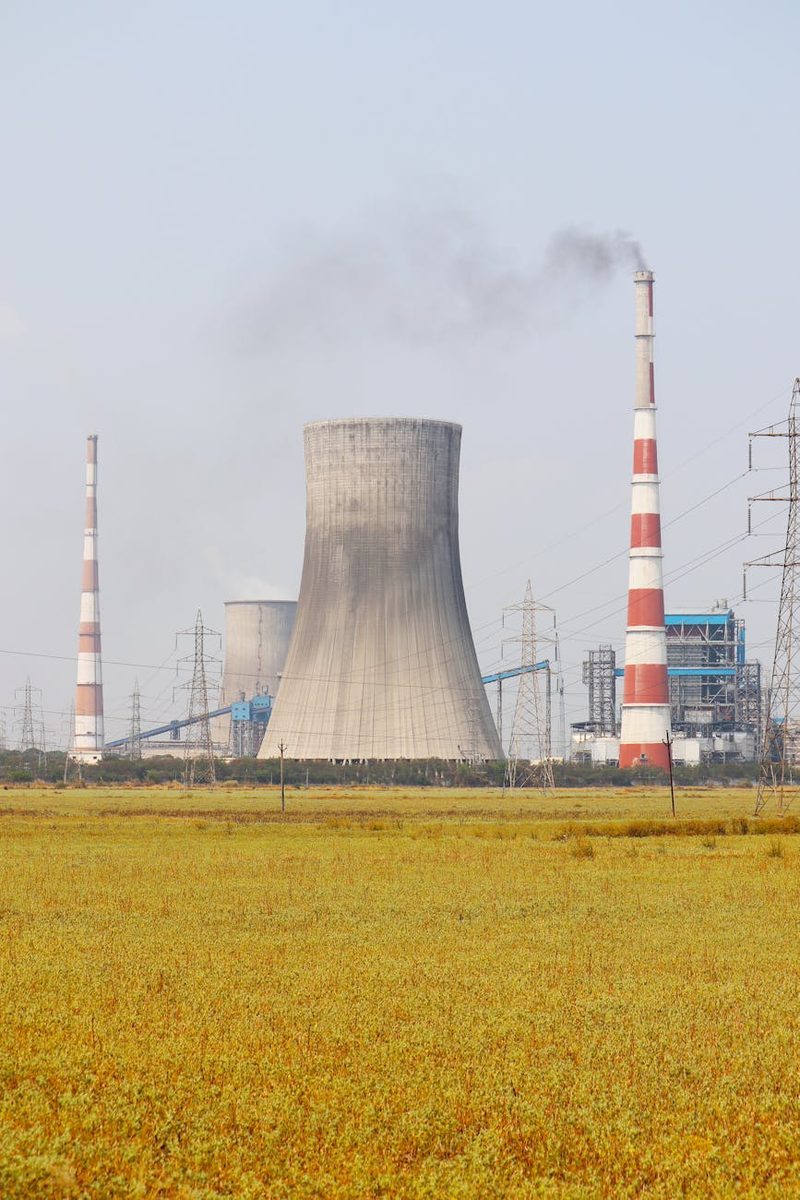
The initial phase excludes thermal power, which accounts for nearly 40% of India's greenhouse gas output
45%
GDP emission intensity reduction target by 2030
India's nationally determined contribution under the Paris Agreement, which the carbon market is designed to help meet

Interactive

Exploring all sides of a story is often best achieved with Play.

Ever wondered what historical figures would say about today's headlines?

Sign up to generate historical perspectives on this story.

Sign Up

Debate Arena

Two rounds, two personas, one winner. You set the crossfire.

People Involved

Organizations Involved

Timeline

  1. Indian Carbon Market portal goes live

    Launch

    Union Minister Manohar Lal Khattar inaugurated the Indian Carbon Market portal at the Prakriti 2026 summit, operationalizing the digital platform for registering projects, issuing credits, and facilitating compliance trading across nine industrial sectors.

  2. India Climate Week 2026 opens in New Delhi

    Conference

    The Carbon Markets Association of India convened the five-day India Climate Week at Bharat Mandapam, gathering policymakers, industry leaders, and global institutions for workshops and high-level dialogues on carbon market readiness.

  3. CERC issues carbon credit trading regulations

    Regulatory

    The Central Electricity Regulatory Commission notified the terms and conditions for purchasing and selling Carbon Credit Certificates on India's power exchanges, clearing the final regulatory hurdle before the portal launch.

  4. Emission intensity targets issued for approximately 490 industrial units

    Regulatory

    BEE notified emission intensity reduction targets covering seven sectors, with reduction requirements ranging from roughly 2.8% to 15%. An additional round of targets followed in January 2026.

  5. Detailed offset mechanism procedures released

    Regulatory

    BEE published Version 1 of the Detailed Procedure for the Offset Mechanism, defining how non-obligated entities can earn Carbon Credit Certificates through voluntary emission-reduction projects.

  6. Monitoring, reporting, and verification framework published

    Regulatory

    The Bureau of Energy Efficiency published detailed procedures for how facilities must monitor emissions, report data, and undergo third-party verification — the technical backbone of the market's credibility.

  7. Carbon Credit Trading Scheme formally notified

    Regulatory

    The Ministry of Power issued the official notification establishing the Carbon Credit Trading Scheme, defining the governance structure, compliance obligations, and offset mechanism.

  8. Energy Conservation Amendment Act takes effect

    Legislative

    The amended act empowered the central government to specify a carbon credit trading scheme and designate the Bureau of Energy Efficiency as its administrator.

  9. Parliament passes Energy Conservation Amendment Bill

    Legislative

    India's Lok Sabha passed the Energy Conservation (Amendment) Bill, 2022, establishing the legal basis for a national carbon credit trading scheme. The Rajya Sabha followed in December.

Scenarios

1

India's carbon market scales to cover thermal power and sets a credible price signal by 2028

Discussed by: Columbia University Center on Global Energy Policy, International Carbon Action Partnership analysts

The initial nine-sector rollout proceeds smoothly, with first compliance trades completing by late 2026. Demonstrated credibility and EU Carbon Border Adjustment Mechanism pressure push the government to expand coverage to thermal power generation — which represents nearly 40% of national emissions — by 2028. A price stability mechanism is introduced to prevent the credit surplus problems that plagued the earlier Perform, Achieve, and Trade scheme. Carbon credit prices rise above $15 per tonne, creating genuine incentives for industrial decarbonization.

2

Credit surplus floods market, prices stay too low to drive real change

Discussed by: Institute for Energy Economics and Financial Analysis, World Economic Forum

The intensity-based design and conservative emission reduction targets produce a glut of Carbon Credit Certificates, echoing the Perform, Achieve, and Trade scheme's experience where over two million excess certificates suppressed prices. Without a price floor or market stability mechanism, credit prices settle below $5 per tonne — too low to incentivize capital expenditure on cleaner technology. The market functions on paper but fails to shift industrial behavior, drawing criticism from environmental groups and weakening India's position in international climate negotiations.

3

Indian carbon market becomes bridge to international trading under Paris Agreement Article 6

Discussed by: International Emissions Trading Association, Carbon Markets Association of India

India's domestic market infrastructure proves robust enough to link with international carbon trading mechanisms under Article 6 of the Paris Agreement. Indian offset credits — particularly from forestry, biogas, and hydrogen projects — attract demand from companies in countries with higher carbon prices, creating capital inflows for clean energy investment. India negotiates bilateral agreements to recognize its Carbon Credit Certificates in key export markets, partially shielding its industries from EU border tariffs.

4

Implementation stalls amid enforcement gaps and data quality concerns

Discussed by: Lessons-from-China analysts at International Carbon Action Partnership, domestic energy policy critics

Monitoring, reporting, and verification infrastructure proves inadequate for the scale of India's industrial base. Verification agencies lack capacity, reported data quality is uneven, and enforcement against non-compliant facilities is inconsistent. The experience mirrors early problems in China's national emissions trading system, where data fabrication scandals undermined market integrity. Trading volumes remain thin, and the market enters a dormant phase while regulators retool the verification framework.

Historical Context

European Union Emissions Trading System launch (2005)

January 2005

What Happened

The European Union launched the world's first major cap-and-trade carbon market, covering roughly 11,000 power plants and industrial facilities across 25 member states. In its first phase, governments over-allocated free emission allowances based on industry self-reported data, crashing the price of carbon permits to near zero by 2007.

Outcome

Short Term

Phase 1 carbon prices collapsed from over EUR 30 to under EUR 1 as the surplus of free allowances became apparent. Critics declared emissions trading a failed experiment.

Long Term

The EU reformed the system repeatedly — tightening caps, auctioning permits, and introducing a Market Stability Reserve in 2019. By 2023, prices exceeded EUR 80 per tonne and EU emissions covered by the system had fallen roughly 47% from 2005 levels. The system became the global benchmark for carbon pricing.

Why It's Relevant Today

India's intensity-based design and concern about credit surpluses echo the EU's early over-allocation problems. The EU experience shows that a carbon market can fail on launch and still evolve into an effective decarbonization tool — but only with aggressive reforms and price stability mechanisms that India has not yet introduced.

China's national emissions trading system launch (2021)

July 2021

What Happened

China launched the world's largest carbon market by volume, initially covering roughly 2,200 power plants responsible for about 4.5 billion tonnes of carbon dioxide annually. Like India's planned system, China used an intensity-based approach rather than an absolute emissions cap, and prices remained low — around $8 per tonne in early trading.

Outcome

Short Term

Trading volumes were thin, concentrated around compliance deadlines, and in 2022 investigators discovered that several verification agencies had fabricated emissions data, leading to criminal prosecutions.

Long Term

China expanded the system to cover additional sectors by 2025 and announced plans to transition from intensity-based to absolute-cap trading by 2027. Prices gradually rose but remained well below levels considered sufficient to drive major investment in clean technology.

Why It's Relevant Today

India follows a remarkably similar path — intensity-based targets, phased sector coverage, and a government-controlled registry. China's data fabrication problems highlight the verification challenge India faces at scale, while China's gradual shift toward absolute caps suggests the trajectory India may eventually need to follow.

India's Perform, Achieve, and Trade scheme (2012–2023)

April 2012 – June 2023

What Happened

India's Bureau of Energy Efficiency launched the Perform, Achieve, and Trade scheme, setting energy efficiency targets for designated consumers across 13 energy-intensive sectors. Facilities that exceeded their targets earned tradable Energy Savings Certificates; those that fell short had to buy certificates or face penalties.

Outcome

Short Term

In Cycle II, over two million excess certificates accumulated because targets were set too leniently, collapsing certificate prices and making compliance easy without significant technological upgrades.

Long Term

The scheme was formally subsumed into the new Carbon Credit Trading Scheme in 2023. It demonstrated that India could build market-based environmental trading infrastructure but warned that lenient targets produce meaningless markets.

Why It's Relevant Today

The Indian Carbon Market directly inherits the PAT scheme's institutional infrastructure, personnel, and — critics worry — its tendency toward unambitious targets. Whether the new system sets reduction targets stringent enough to create genuine trading demand is the central question for its credibility.

Sources

(10)