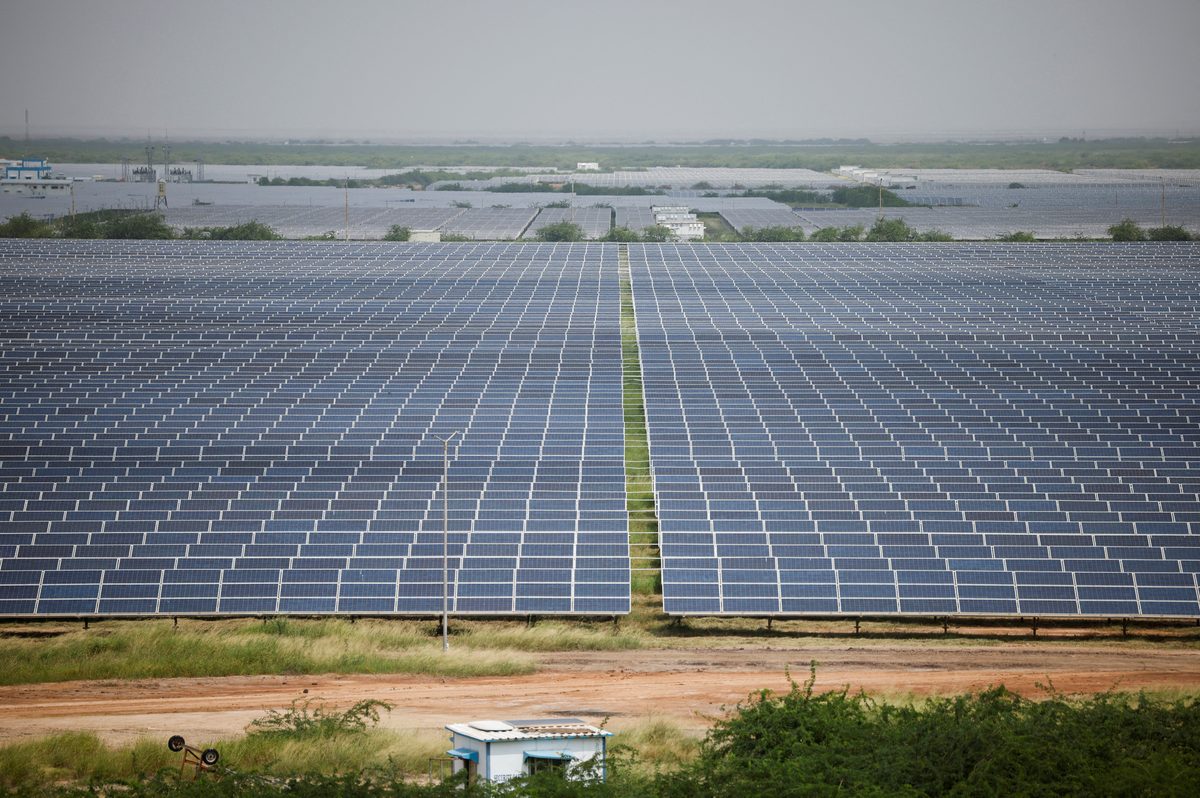
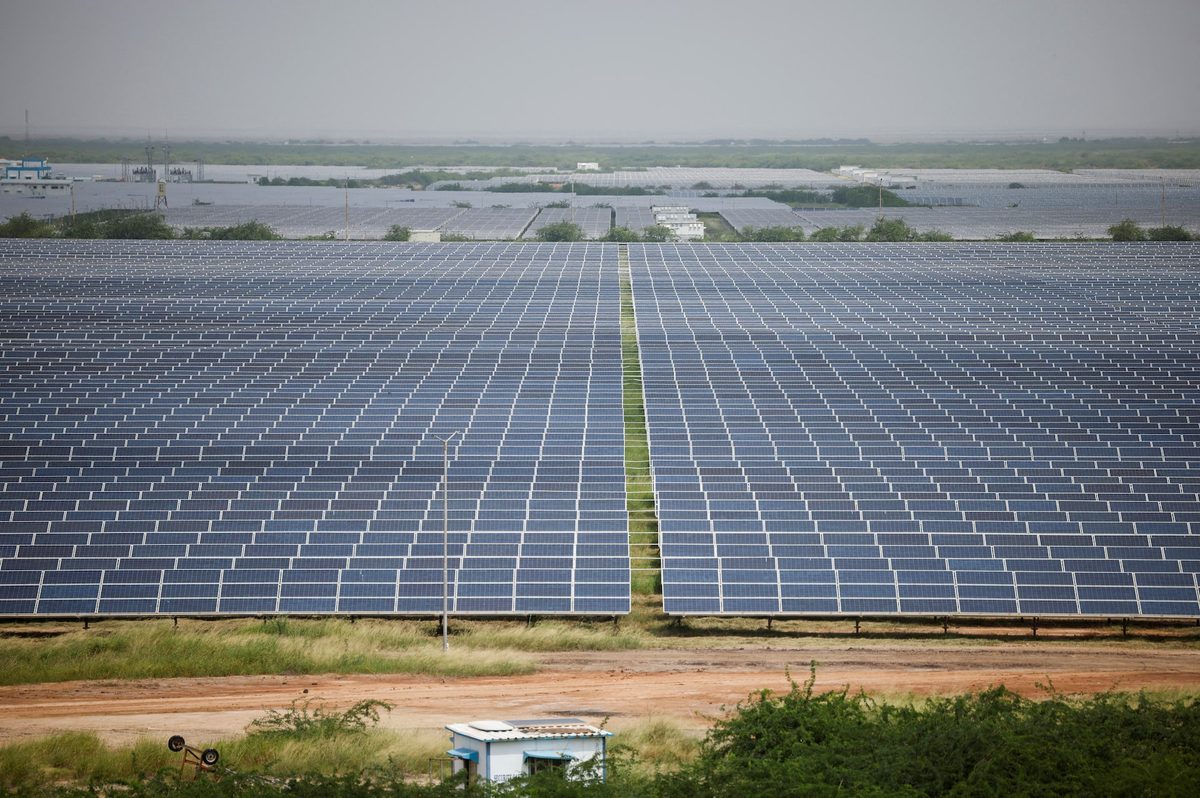
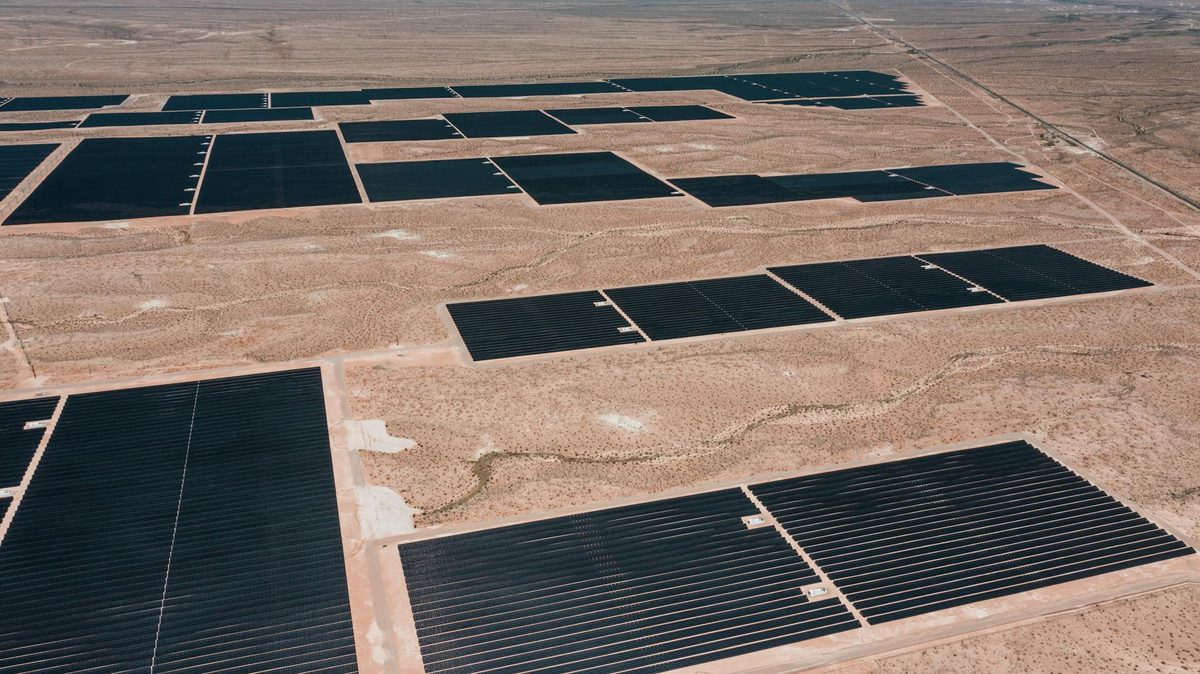
India added 30.6 gigawatts of renewable capacity in the first half of 2026, bringing total installed renewables to 288 gigawatts, but curtailment is worsening in step. Coal plants hit the 55% minimum thermal floor in over half of midday dispatch intervals by April 2026. One-third of the 54.8 gigawatts of recently commissioned capacity flows only through temporary grid routes, with curtailment running 50-60% during peak solar hours in Rajasthan and Gujarat.
Power Grid Corporation commissioned the 765 kV Bhadla II-Sikar II transmission line in Rajasthan on July 20, adding 1,100 megawatts of evacuation capacity from the state's worst curtailment zones. CERC released 15.7 gigawatts of stranded interstate slots in early July, but its proposed April 2027 grid-discipline penalties could cut solar revenues 11% and wind revenues up to 48%, per Equirus Capital. India's Ministry of New and Renewable Energy is formally opposing those penalties, warning that equal deviation charges for wind, solar, and thermal generators would raise project risk and push tariffs higher.
Why it matters
If India can't add grid flexibility fast, the world's third-largest carbon emitter hits a buildout ceiling, and global decarbonization timelines slip with it.
Questions about this story
Free account needed to ask — your question is kept and asked for you right after sign-up. Answers are public.
No questions yet — be the first to ask.
Key Indicators
55%
Coal minimum load
Mandated thermal floor — breached in over half of midday dispatch intervals by April 2026 as solar generation overwhelms grid capacity.
2.1 TWh
Solar lost in FY2025-26
Ember's confirmed curtailment figure for the full April 2025–March 2026 fiscal year, worth roughly Rs 629 crore in lost developer revenue.
33%
New capacity curtailed
Share of India's recently commissioned renewable capacity (54.8 GW) reliant on temporary grid-access routes, per ICRA (July 2026). Curtailment on these routes runs 50-60% during peak solar hours.
#2
Target market rank
India's plan to surpass the US as the world's second-largest solar market in 2026.
15+ GW
ReNew portfolio
Operational and contracted renewable capacity across solar, wind, and hybrid projects.
16 events
Latest: July 20th, 2026 · 3 months ago
Showing 8 of 16
JK to step
Tap a bar to jump to that date
Jump to
July 2026
Power Grid Corporation commissions 765 kV Bhadla II-Sikar II transmission line, adding 1,100 MW of Rajasthan solar evacuation
LatestInfrastructure
POWERGRID commissioned the 765 kV double-circuit Bhadla II-Sikar II transmission line through its tariff-based competitive bidding subsidiary PBSTL, adding 1,100 megawatts of evacuation capacity from the Bhadla, Ramgarh, and Fatehgarh solar complexes. Rajasthan is one of the two states where ICRA documented peak curtailment of 50-60% during solar hours.
India adds 30.6 GW of renewables in H1 2026; solar capacity reaches 162 GW
Data
India added 30.6 gigawatts of renewable capacity in the first half of 2026, up 25% on the same period last year, per Power Minister Pralhad Joshi. Solar led with 26.34 GW added, a 43% year-on-year jump. Total installed renewable capacity, including large hydro, reached 288 gigawatts — 52% of all installed generation capacity.
MNRE formally opposes CERC's uniform grid-discipline penalties for wind and solar
Regulatory
India's Ministry of New and Renewable Energy formally asked CERC to maintain separate deviation settlement rules for wind and solar rather than aligning them with thermal generator standards. MNRE warned that equal deviation charges across all generator types would raise project risk and weaken developer bankability, potentially pushing tariffs higher.
Equirus Capital: grid-discipline rules due April 2027 could cut solar revenues 11%, wind up to 48%
Analysis
Equirus Capital's July 2026 Infrastructure Tracker estimated that stricter grid-discipline penalties, due to take effect in April 2027, could cut solar revenues by 11% and wind revenues by up to 48%. Solar and wind generators struggle to match scheduled grid commitments because weather varies, and the proposed rules would penalize shortfalls more heavily.
CERC orders release of 15.7 GW of stranded interstate transmission capacity
Regulatory
CERC issued a one-time order to release up to 15.7 gigawatts of interstate transmission capacity held by projects that received letters of award between 2019 and 2025 but never signed power purchase agreements. Freed slots go first to projects in the same substation cluster, then to open auction at Rs 3 lakh per MW.
ICRA: one-third of new renewable capacity on temporary grid routes, 12% of transmission projects on time
Analysis
ICRA found about 33% of India's 54.8 GW of recently commissioned renewable capacity is evacuated via temporary general network access routes, with curtailment hitting 50-60% during peak solar hours in Rajasthan and Gujarat. Just 12% of tariff-based competitive bidding transmission projects were commissioned on their scheduled date, with median delays exceeding 10 months.
June 2026
Ember: India needs 10 GWh of storage now; curtailed 2.1 TWh in FY2025-26
Analysis
Ember reported that India curtailed 2.1 terawatt-hours of renewable electricity across FY2025-26 — 1.3% of total renewable generation — costing developers roughly Rs 629 crore. It estimated that 10 GWh of battery storage charged during peak solar hours would have prevented all of it, and that coal plants breached the 55% floor in over half of midday dispatch intervals by April 2026.
GEON commissions 2.88 GWh battery project at Khavda in five months
Infrastructure
GEON, the future technologies division of Kabra Extrusiontechnik, commissioned a 2.88 GWh battery system at Khavda, Gujarat, completed in five months and adding to a growing cluster of grid-scale storage at India's largest renewable hub.
May 2026
ReNew discloses curtailment and profitability hit
Corporate disclosure
Bloomberg reports that ReNew Energy Global is being forced to curb solar output and is taking earnings hits because India's grid cannot absorb mid-day solar peaks.
March 2026
Adani Green commissions cumulative 3.37 GWh BESS at Khavda — world's largest single-location deployment outside China
Infrastructure
Adani Green Energy reached 3.37 GWh of operational battery storage at its Khavda renewable hub in Gujarat, the world's largest single-location deployment outside China, built in roughly ten months from groundbreaking.
January 2026
Ministry of Power releases Draft National Electricity Policy 2026 for public consultation
Policy
The Ministry of Power published a draft NEP to replace the 2005 policy. It classifies storage as foundational grid infrastructure, targets 411 GWh of grid-connected storage by 2031-32, and mandates coal plants reduce minimum technical load from 55% to 40% by 2030.
December 2025
Ember estimates 2.3 TWh of solar lost in H2 2025
Analysis
Energy think tank Ember reports India curtailed roughly 2.3 terawatt-hours of solar generation in the second half of 2025, largely for grid security reasons.
Argus Media documents rising solar curtailment volumes, attributing them to insufficient transmission, storage, and inflexible coal dispatch.
June 2024
First curtailment warnings emerge from regional grids
Operational
Rajasthan and Karnataka grid operators begin reporting periodic solar curtailment during low-demand hours, raising early warnings to developers.
May 2023
CEA publishes National Electricity Plan flagging storage gap
Planning
The Central Electricity Authority projects India needs roughly 47 gigawatts of battery storage by 2030 to integrate planned renewable capacity.
August 2022
India sets 500 GW non-fossil capacity target for 2030
Policy
Prime Minister Narendra Modi confirms India's pledge to reach 500 gigawatts of non-fossil power capacity by 2030, accelerating solar and wind tenders.
Scenarios
1
India fast-tracks storage mandates, curtailment eases by 2027
Likely
Discussed by: Bloomberg NEF, Ember, and Indian Ministry of Power consultations
New Delhi accelerates battery storage tenders and an expanded Energy Storage Obligation on distribution companies, pairing solar additions with co-located batteries. Inter-state transmission corridors already under construction come online, giving Grid-India room to absorb mid-day surplus rather than curtail it. Developers sign storage-bundled power purchase agreements at scale, and curtailment rates plateau by late 2027.
2
Coal minimum load floor lowered, more solar reaches the grid
Possible
Discussed by: Argus Media, CEA technical committees, thermal generators
The Central Electricity Authority revises the 55% minimum thermal load downward—possibly to 40%—after technical studies confirm modern coal units can ramp deeper without damage. Coal generators receive compensation for cycling losses. The reform unlocks immediate solar headroom but faces resistance from state-owned thermal operators worried about plant wear and stranded capacity.
3
Solar buildout slows as developers retreat from grid-constrained states
Possible
Discussed by: Industry analysts at CRISIL, ICRA, and BloombergNEF
Persistent curtailment pushes developers to pause new project bids in Rajasthan, Gujarat, and Karnataka, where grid congestion is worst. ReNew and peers redirect capital toward green hydrogen, exports, and markets with firmer evacuation guarantees. India misses its annual capacity addition targets, and the 500 GW by 2030 goal slips by two to three years.
4
Demand-shifting reforms unlock daytime solar absorption
Uncertain
Discussed by: Power Ministry, distribution company associations
India accelerates time-of-day tariffs and large-load shifting—agricultural pumping, industrial cooling, and electrolyzer hydrogen production—into mid-day hours. Combined with rooftop solar growth and electric vehicle charging incentives, daytime demand rises to meet solar peaks, easing curtailment without major new transmission or storage spend.
5
Transmission delays keep curtailment elevated through FY2027-28 despite new storage
Possible
Resolves by Q1 2028
Discussed by: ICRA analysts and Ember (June–July 2026 reports)
Only 12% of India's tariff-based competitive bidding transmission projects have been commissioned on schedule, with a median delay of over 10 months. If the next pipeline — 107 GW of projects already granted grid connectivity — faces the same execution drag, new battery storage at Khavda and planned tender wins won't offset the gap. Curtailment could hold above 2% of renewable generation through FY2027-28, slowing investor returns and deterring new bids in congested states.
Historical Context
3 moments from history that rhyme with this story — and how they unfolded.
1 of 3
2014-2020
California duck curve (2014-2020)
As California's solar fleet crossed roughly 10 gigawatts, the California Independent System Operator's mid-day net load curve sagged into the now-famous 'duck' shape. Solar generation at noon began outstripping demand, and grid operators curtailed renewable output—peaking at over 1.5 terawatt-hours curtailed in 2020.
Then
California began paying neighbors to take surplus power, sometimes at negative prices, and curtailed an increasing share of solar generation each year through 2020.
Now
The state mandated procurement of grid-scale batteries—reaching over 10 gigawatts by 2024—and curtailment rates stabilized as storage absorbed the mid-day peak and discharged it into the evening ramp.
Why this matters now
California faced the same mid-day surplus problem India is now hitting, and the fix that worked—massive battery storage paired with market reforms—is exactly what India's CEA and Grid-India have begun to plan but not yet procured at scale.
2 of 3
2015-2017
China wind curtailment crisis (2015-2017)
Wind curtailment in China's Inner Mongolia, Gansu, and Xinjiang provinces hit 30-43% in 2016, with developers losing tens of billions of yuan to forced output cuts. Local coal plants kept running for heat and employment reasons, while transmission to coastal demand centers lagged the wind buildout by years.
Then
Beijing imposed regional caps on new wind approvals in the worst-affected provinces and ordered grid operators to prioritize renewable dispatch.
Now
China built ultra-high-voltage transmission lines linking interior wind farms to eastern load centers and reformed dispatch rules. National wind curtailment fell below 4% by 2020.
Why this matters now
China's experience shows that curtailment from inflexible coal plus transmission shortfalls is solvable—but only through aggressive transmission buildout and dispatch reform, both of which India has been slower to execute.
Germany's rapid wind buildout in the windy north outpaced transmission to industrial demand in the south. Operators paid to curtail wind farms and used 'redispatch' payments to fire up southern fossil plants, with redispatch costs climbing past €1.4 billion in 2017.
Then
Consumers absorbed the redispatch costs through grid fees, and several planned wind projects in the north were paused pending transmission approval.
Now
Germany approved major north-south transmission corridors, but legal and local opposition delayed completion by nearly a decade. The episode reshaped how European countries plan transmission alongside generation.
Why this matters now
Germany is the cautionary tale: building generation faster than the wires that carry it produces curtailment, higher consumer costs, and political backlash. India is at the early stage of the same gap, with most renewable capacity in the western and southern states but demand spread nationwide.