
Pull to refresh
Logo
FDA proposes first infant formula nutrient update since 1998

FDA proposes first infant formula nutrient update since 1998

Rule Changes

Eight of the 30 required nutrients would change, with higher vitamin D and a narrower iodine range

Overview

Updated 1 hour ago

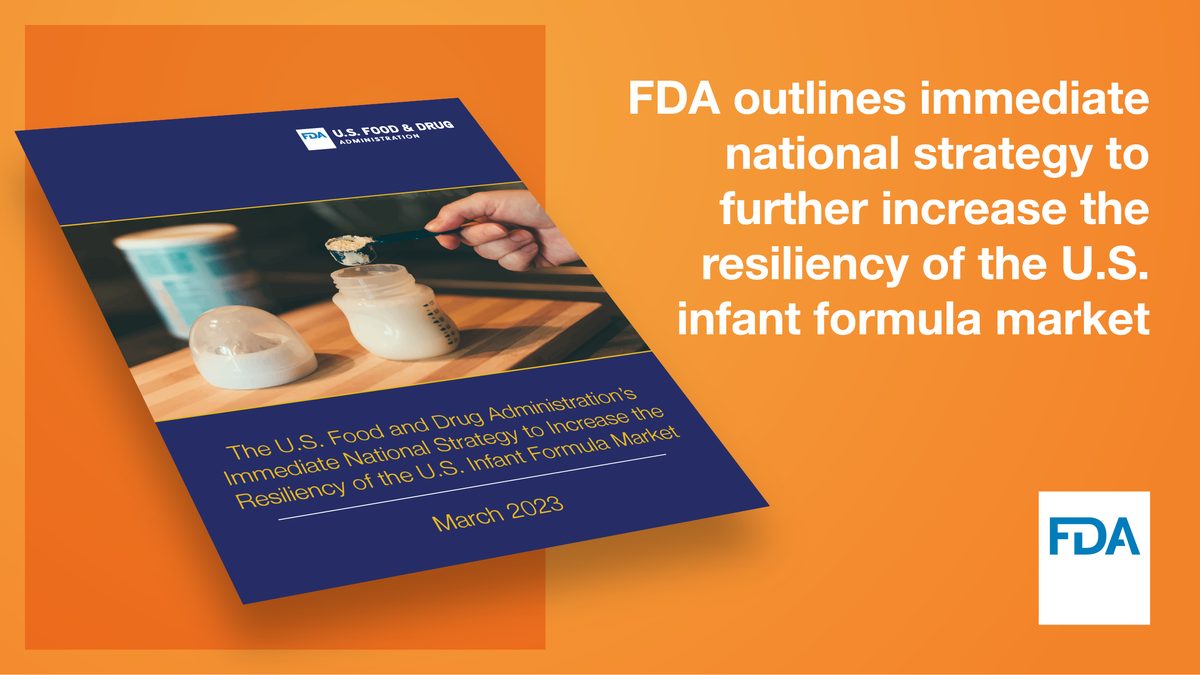
The Food and Drug Administration proposed new nutrient limits for infant formula on October 29, 2026, the first comprehensive rewrite of the standards since 1998. The rule would change eight of the 30 nutrients formula is required to contain, doubling the vitamin D minimum, tripling the iodine minimum, and cutting the vitamin A ceiling from 225 to 120 micrograms of retinol activity equivalents per 100 calories.

Nothing on shelves changes yet. The FDA says current formulas remain safe and that the proposal was not driven by safety concerns; it opens a 120-day comment period, and manufacturers would get three years after a final rule takes effect to reformulate and relabel.

Why it matters

If finalized, formula makers get three years to reformulate, changing vitamin D, iodine, and vitamin A levels in every US can of formula.

Questions about this story

Free account needed to ask — your question is kept and asked for you right after sign-up. Answers are public.

No questions yet — be the first to ask.

Key Indicators

8
Nutrients changed in Phase 1
Iodine, manganese, selenium, sodium, potassium, chloride, vitamin A, and vitamin D.
30
Nutrients required in infant formula
The FDA is reviewing all of them across three phases.
120
Comment period
Measured from the date the proposed rule appears in the Federal Register.
100%
Increase in vitamin D minimum
From 1 microgram per 100 calories to 2 micrograms, or 40 to 80 international units.
3
Phases of the nutrient review
The FDA plans to fold all three into a single final rule.

Voices

Curated perspectives — historical figures and your fellow readers.

Sign up to generate historical perspectives on this story.

Organizations Involved

Timeline

1980 October 2026

5 events Latest: Yesterday
Tap a bar to jump to that date
  1. HHS and FDA announce the overhaul

    Latest Statement

    The departments publicized the proposal as the first major formula standards update in nearly 30 years.

  2. FDA publishes proposed nutrient rule

    Regulation

    The proposal changes limits for eight of 30 nutrients and keeps four others as they are.

  3. HHS and FDA open the nutrient review

    Statement

    The agencies issued a Request for Information under Operation Stork Speed, the first step in the legally required review.

  4. FDA completes last comprehensive nutrient review

    Regulation

    The agency finished its most recent full review of formula nutrient requirements, the baseline for today's standards.

  5. Infant Formula Act becomes law

    Legislation

    Congress set federal nutrient requirements for formula after a chloride-deficient product harmed infants in the late 1970s.

Scenarios

1

Final rule adopts the eight proposed nutrient limits

Possible Resolves by Q2 2029

Discussed by: FDA's proposed rule, which states its intent to consolidate all phases into one final rule

The comment period closes, the FDA reviews submissions, and a final rule keeps the vitamin D, iodine, manganese, and vitamin A ranges close to what was proposed. Manufacturers then get three years from the effective date to reformulate and relabel.

2

Single rule covers all 30 nutrients

Uncertain Resolves by End of 2031

Discussed by: FDA's phased review plan and its stated intent to consolidate changes

The agency finishes Phases 2 and 3 and issues one comprehensive rule covering vitamins, minerals, protein, fat, and carbohydrate sources together. That would push any reformulation deadline years past the Phase 1 proposal.

3

DHA and ARA become required ingredients

Unlikely Resolves by End of 2030

Discussed by: FDA's request for comment on nutrients commonly added but not required, including DHA, ARA, and L-carnitine

The agency says there is evidence these nutrients support neurodevelopment. A future proposal could make them mandatory rather than optional, which would affect every manufacturer's formulation and cost.

Historical Context

2 moments from history that rhyme with this story — and how they unfolded.

1980

Infant Formula Act (1980)

In the late 1970s, infant formula with too little sodium chloride harmed infants. Congress responded with the Infant Formula Act of 1980, which set federal nutrient requirements and manufacturing standards for formula. That law still underpins the rules the FDA is now revising.

Then

Formula became a federally regulated food with mandatory nutrient levels and quality controls.

Now

The 1980 framework, including the four-year review requirement, is the structure the October 2026 proposal would amend.

Why this matters now

The current review exists because the 1980 law requires periodic reassessment of nutrient levels, which is why the FDA can revise limits without new legislation.

1998

FDA comprehensive nutrient review (1998)

The FDA completed its last full review of infant formula nutrient requirements in 1998. Since then the agency has reviewed individual nutrients but has not revisited the full set at once.

Then

The 1998 specifications became the baseline for formula sold in the United States.

Now

Standards stayed largely fixed for nearly three decades while research on human milk composition and infant nutrition continued.

Why this matters now

The 2026 proposal is the first attempt since 1998 to update the nutrient set as a whole, which is why the agency calls it the most thorough evaluation of its kind in that span.

Sources

(10)