Israel launches wide-scale West Bank operation after settler-Palestinian gunfight
Force in Play
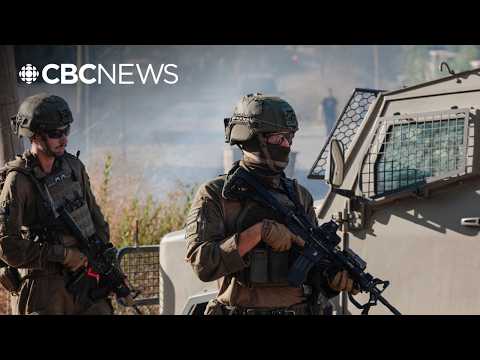
A settler raid on Tell set off a July operation of mass detentions. After a checkpoint shooting killed two soldiers, Israel sealed Hebron, launched a multi-day sweep of the city and prepared a West Bank-wide lockdown.
Israel's Hebron operation entered its seventh day on October 29, and the West Bank-wide lockdown is still in place. Hebron's governor says 537 families, or 3,361 people, have been forced from their homes, including 232 infants and 326 older people.
On October 28 the army widened the campaign to raids in eight villages and the city of Nablus. Army chief of staff Eyal Zamir wanted to consider ending the Hebron operation, but Netanyahu and Defense Minister Israel Katz pushed to continue it, and they prevailed. The UN refugee agency UNRWA warned that the lockdown echoes the 2025 displacement in northern camps, where more than 34,000 refugees remain out of their homes.
Why it matters
A West Bank-wide lockdown is now in force, sealing Palestinians in at the height of the olive harvest, days before Israelis vote.
Questions about this story
Free account needed to ask — your question is kept and asked for you right after sign-up. Answers are public.
No questions yet — be the first to ask.
Key Indicators
3,361
Palestinians displaced in Hebron
Hebron governor Khaled Dudin said on October 29 that 537 families had been forced out. The municipality put the total affected, including those under siege, at about 5,000 people from 780 families. Hebron's mayor had earlier said about 2,200.
262,000
Students disrupted in Hebron
Governor Dudin said the offensive forced schools in 589 Hebron governorate schools to move to remote learning this week.
~70
Palestinians arrested October 24
Detained between Friday and early Saturday as troops raided at least 15 northern towns, according to the Palestinian Prisoners' Society.
110
Palestinians detained in Hebron governorate, Oct 24-28
The Palestinian Prisoners' Society said Israeli forces detained 110 people in the governorate from Friday to Wednesday.
2
Israeli soldiers killed October 23
Staff Sgt. Ron Yonatan Roytman, 23, and Sgt. Yuval Shai Svilem, 20, were killed at a checkpoint near Hebron; troops killed both gunmen.
~1,000
Checkpoints and gates closed
Al Jazeera reported nearly 1,000 checkpoints and gates across the West Bank would be shut under the lockdown.
670+
Settler incidents since harvest began
Yesh Din counted more than 670 incidents since the olive harvest started nearly a month ago, an average of more than 25 a day.
6
Killed in the July 24 gunfight
Four Palestinians and two Israelis died in the clash that started the operation.
~140
Outposts slated for legalization
Farming outposts the government has moved to authorize since early 2026.
160+
Settler attacks in early October
Incidents the UN human rights office recorded in the first two weeks of October, including arson, crop theft and damage to olive groves.
Governor Khaled Dudin said 537 families were forced out and the offensive disrupted schooling for about 262,000 students. Soldiers also bulldozed a mural of the town's dead in Dura, one of several memorials demolished across the governorate.
Hebron raids continue into sixth day
Military
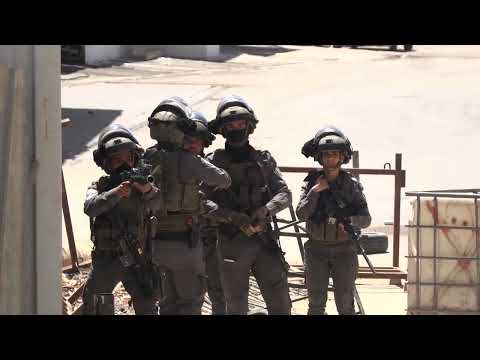
Israeli forces raided several Hebron neighbourhoods and towns across the governorate, tightened entrances to the city, and searched homes in the Fawwar refugee camp. Troops also detained four Palestinians in Tulkarm, including a journalist.
UNRWA warns of collective punishment
Diplomatic
Roland Friedrich, UNRWA's director for West Bank affairs, expressed grave concern about the Hebron lockdown, which has displaced nearly 5,000 people. He said the displacement bears alarming echoes of the 2025 northern camps, where more than 34,000 refugees remain displaced.
IDF widens raids to eight villages and Nablus
Military
The army launched a separate counterterrorism operation in eight villages and Nablus, run by the Judea and Samaria Division, alongside the Hebron operation run by the 98th Division. The army expects the northern raids to be shorter and more focused than the Hebron operation.
Command dispute over ending Hebron operation
Political
Chief of Staff Eyal Zamir wanted the army to consider ending the Hebron operation, according to Ynet. Netanyahu and Katz demanded it continue, citing deterrence and the need to find the attackers' weapons, and their position prevailed. Border Police also arrested six wanted Palestinians in nearby villages overnight.
US journalist attacked by settlers in Masafer Yatta
Violence
Armed settlers attacked US journalist Jasper Nathaniel and two activists in Umm al-Khair, according to activist Adele Shoko. Nathaniel was pepper-sprayed and arrested, and the group's equipment was stolen.
Israel launches multi-day operation in Hebron
Military
Troops from the army, Shin Bet, Border Police and Civil Administration searched homes in Hebron and demolished buildings near the shooting site, in what the army called a focused search of the area the gunmen came from. Palestinians left al-Jalda through three designated exits after questioning. Hebron's mayor, Yousef al-Ja'bari, told Al Jazeera about 2,200 people had been forced from homes in al-Jalda and Ein Deir Bahha, while earlier municipal counts put the number of families at 150 to 300. Raids also hit 15 northern towns, and about 70 people were arrested, the Palestinian Prisoners' Society said.
West Bank-wide lockdown takes effect
Military
Al Jazeera reported that Israel's army began its lockdown and military operations across the occupied West Bank. Nearly 1,000 checkpoints and gates were due to close, shutting Palestinians off from roads between towns.
Gunmen kill two soldiers at Hebron checkpoint
Violence
Two gunmen opened fire at about 7:30 a.m. at a temporary checkpoint near the Yehuda Junction outside Hebron, killing Staff Sgt. Ron Yonatan Roytman, 23, and Sgt. Yuval Shai Svilem, 20, and wounding three other soldiers. Troops killed both attackers, identified in Palestinian reports and by Israeli officials as two 27-year-old Hebron residents from the same family; the army said they had planned a larger attack on Israeli civilians on Route 35.
Bulldozers move into Hebron
Military
The army began demolishing Palestinian buildings in Hebron within hours of the attack, and Netanyahu ordered residents of the gunmen's neighbourhoods out ahead of a house-to-house weapons sweep. Finance Minister Bezalel Smotrich posted video of a bulldozer tearing down a home built without permits; no link between the building's owners and the attackers was claimed.
UN says it is 'extremely alarmed' by Hebron closures
Diplomatic
The UN said it was "extremely alarmed" by the closures, and spokesman Stéphane Dujarric said Secretary-General António Guterres was deeply concerned by reports of home demolitions and possible displacement in Hebron. The Ibrahimi Mosque was shut, leaving worshippers unable to perform Friday prayers, and the closure came at the height of the olive harvest.
July 2026
Troops re-enter Tal as settlers march
Military
Israeli soldiers entered the village of Tal, also called Tell, to disperse marching settlers, the military said. Residents said at least one Palestinian was wounded and at least three were arrested; Reuters reported seeing settlers take goods from a Palestinian building while soldiers looked on.
Mass raid on Tell village
Military
Israeli forces sealed Tell, raided about 70 homes, seized a house as an interrogation site, and detained 70 to 80 Palestinians.
Settler raid on Tell turns deadly
Violence
Armed settlers entered Tell near Nablus. A confrontation escalated into a shootout that killed four Palestinians and two Israelis.
Netanyahu orders wide-scale operation
Statement
Netanyahu and Katz ordered home demolitions, checkpoints, movement restrictions, and faster outpost legalization. Troops raided a Nablus hospital.
February 2026
Government moves to legalize outposts
Policy
Defense Minister Israel Katz said he and Netanyahu were working to legalize about 140 unauthorized farming outposts.
January 2025
Operation Iron Wall empties northern camps
Military
Israel launched a major operation in Jenin and Tulkarm, displacing about 40,000 Palestinians and demolishing hundreds of buildings.
Scenarios
1
Israel demolishes the attacker's home and cements new checkpoints
Deadline passed (Oct 25, 2026)
Discussed by: The Times of Israel, CNN, based on Netanyahu and Katz orders
The operation follows the pattern of past reprisals: the home of the Palestinian who seized the weapon is demolished, and the new checkpoints and movement limits around Tell and neighboring villages stay in place for weeks. This is the baseline outcome given orders already issued.
2
Cabinet formally legalizes farming outposts near Nablus
Possible
Resolves by Jan 25, 2027
Discussed by: Foundation for Middle East Peace, CNN, The Times of Israel
Katz's directive turns into cabinet action: the government authorizes outposts that were illegal under Israeli law, extending a 2026 push that already secretly approved more than 30. Settlement-watch groups track each authorization, so a formal decision would be documented.
3
Operation widens into a sustained campaign like Iron Wall
Uncertain
Resolves by Jan 25, 2027
Discussed by: Human Rights Watch, UN Special Rapporteur Francesca Albanese
The raids do not stop at Tell. Israel expands into a months-long operation across northern West Bank towns, with prolonged curfews, large-scale displacement, or camp demolitions echoing the 2025 Iron Wall operation that emptied Jenin and Tulkarm. Rights groups have warned this reprisal could scale up.
4
International pressure forces a scaling back
Unlikely
Resolves by Jan 25, 2027
Discussed by: UN Special Rapporteur Francesca Albanese, Human Rights Watch
Calls for arms embargoes and trade restrictions gain traction. A major government or bloc imposes concrete measures on Israel over settler violence, and Israel narrows the operation. This is the least likely path given muted past responses, but rights advocates are pressing for it.
5
Israel imposes a territory-wide West Bank lockdown
Deadline passed (Nov 6, 2026)
Discussed by: The Times of Israel and Al Jazeera, citing Netanyahu's orders
Netanyahu ordered Hebron shut immediately and told security chiefs to prepare a full lockdown of the occupied West Bank. A full closure would bar Palestinian travel between cities and into Israel during election week. The preparation order is confirmed; whether the lockdown is imposed is not.
6
Hebron stays sealed through election week
Deadline passed (Nov 6, 2026)
Discussed by: The Guardian, Al Jazeera, UN officials
Netanyahu ordered Hebron and Halhul closed and told security chiefs to prepare a full West Bank lockdown, with demolitions already under way. If the closure holds past the parliamentary election next week, Palestinians in Hebron face weeks of restricted movement during the olive harvest, and the UN's warning about displacement goes unanswered.
7
Settler attacks on olive harvesters keep pace as troops focus on Hebron
Likely
Resolves by Nov 30, 2026
Discussed by: Yesh Din, OHCHR
Yesh Din counted more than 670 settler incidents since the olive harvest began nearly a month ago, an average of more than 25 a day. Those include 135 cases of physical violence, 106 of farmers blocked from their trees, 176 of theft or property damage and 49 of vandalised trees. With soldiers and police committed to Hebron and the lockdown, rights groups expect the harvest to end on the same pattern.
Historical Context
3 moments from history that rhyme with this story — and how they unfolded.
1 of 3
January-February 2025
Operation Iron Wall (2025)
Israel launched a large operation in Jenin, Tulkarm, and Nur Shams refugee camps using helicopters, drones, and bulldozers. It displaced about 40,000 Palestinians and demolished roughly 850 buildings.
Then
The camps were emptied of nearly all residents, the largest single West Bank displacement since 1967.
Now
Months later the camps stayed empty; Human Rights Watch called the displacement a crime against humanity.
Why this matters now
It shows how a West Bank operation can escalate from a raid into mass, lasting displacement. Rights groups fear the Tell operation could follow the same path.
2 of 3
March-April 2002
Operation Defensive Shield (2002)
After a wave of Second Intifada bombings, Israel reoccupied major West Bank cities including Nablus and Jenin. Fighting in Jenin's refugee camp killed dozens and drew disputed accounts of a 'massacre.'
Then
Israel regained control of West Bank cities and arrested thousands of Palestinians.
Now
The operation reshaped Israeli control over the West Bank for years and hardened the separation between Israeli and Palestinian areas.
Why this matters now
It is the template for large Israeli West Bank operations launched after deadly attacks, showing how one clash can trigger a broad military push into Palestinian towns.
3 of 3
February 2017
Amona outpost legalization fight (2017)
Israel's parliament passed a law to retroactively legalize thousands of settler homes built on private Palestinian land, after courts ordered the Amona outpost demolished.
Then
The law drew international condemnation and was later struck down by Israel's Supreme Court in 2020.
Now
It set a precedent for government efforts to convert illegal outposts into recognized settlements.
Why this matters now
The current push to legalize about 140 farming outposts continues this pattern. It shows outpost legalization is a long-running policy tool, now tied directly to the operation's orders.