
Pull to refresh
Logo
Daily Brief
Following
Why
The race to harvest decades of space station science before the ISS falls to Earth

The race to harvest decades of space station science before the ISS falls to Earth

New Capabilities
By Newzino Staff |

With deorbit planned for 2030, NASA and commercial partners are accelerating microgravity research that cannot be replicated on the ground

2 days ago: CRS-33 Dragon undocks after 185 days, carrying irreplaceable research

Overview

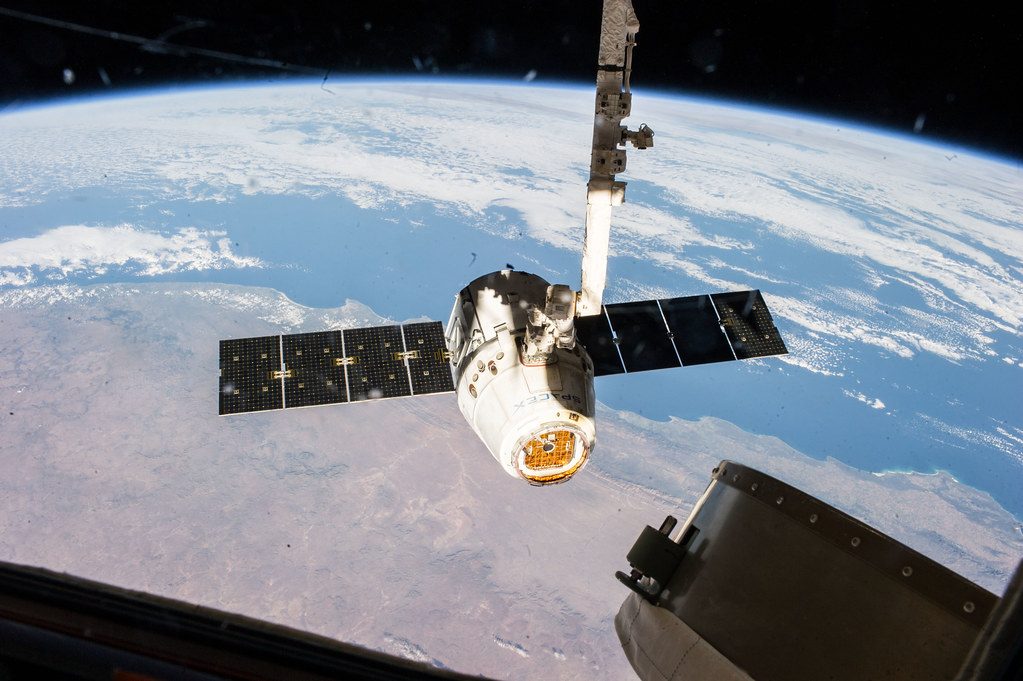
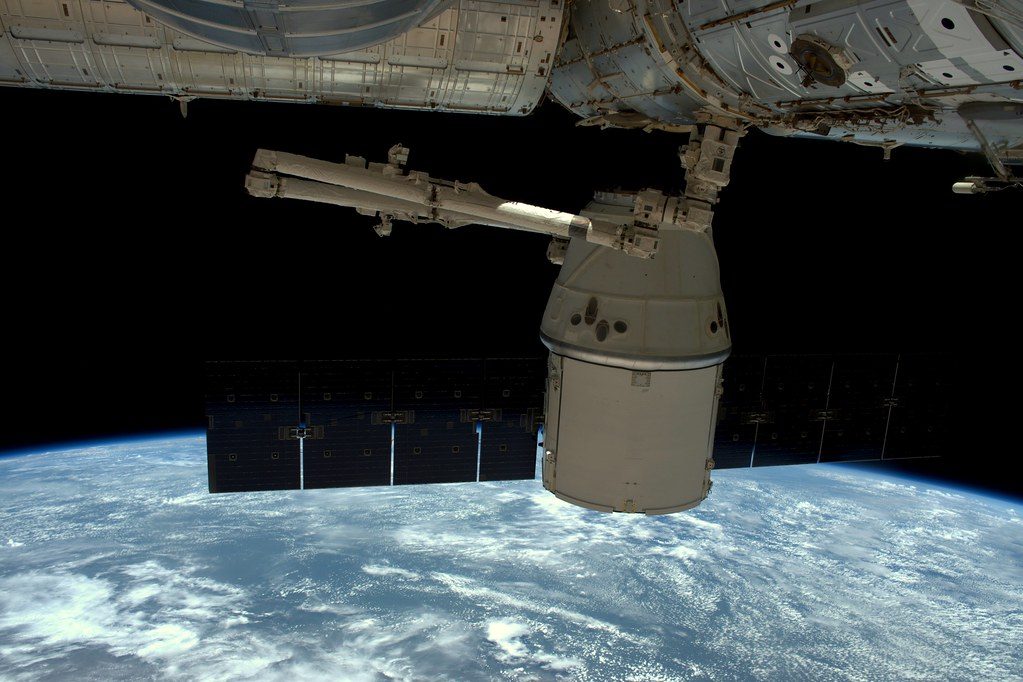
For over two decades, the International Space Station has been the only place where humans can grow tissues, crystals, and cells in ways impossible on Earth. On February 26, a SpaceX Dragon capsule undocked after 185 days, carrying frozen stem cell samples and bioprinted liver tissue back from orbit—research that scientists say cannot be replicated at any ground-based laboratory. The capsule also completed six orbital reboosts during its stay, marking the first time a commercial cargo vehicle has routinely helped keep the station from falling out of the sky.

Key Indicators

185
Days docked at ISS
CRS-33 Dragon's stay from August 2025 to February 2026, one of the longest commercial cargo missions
6
Orbital reboosts performed
First time a Dragon spacecraft has routinely boosted the station's altitude, covering roughly one-quarter of annual reboost needs
33
SpaceX resupply missions
CRS-33 is the 33rd cargo delivery under NASA's Commercial Resupply Services program, and SpaceX's 50th Dragon flight to the ISS
~4 years
Until planned ISS deorbit
NASA targets 2030 for controlled reentry, but commercial station replacements face delays

Interactive

Exploring all sides of a story is often best achieved with Play.

Ever wondered what historical figures would say about today's headlines?

Sign up to generate historical perspectives on this story.

Sign Up

Debate Arena

Two rounds, two personas, one winner. You set the crossfire.

People Involved

Clive Svendsen
Clive Svendsen
Director, Cedars-Sinai Board of Governors Regenerative Medicine Institute (Leading stem cell manufacturing research aboard the ISS)
Paula Grisanti
Paula Grisanti
Chief Executive, National Stem Cell Foundation (Overseeing Stellar Stem Cells Mission 2 research on ALS and Parkinson's)

Organizations Involved

SpaceX
SpaceX
Commercial Space Company
Status: Primary commercial cargo carrier for ISS; demonstrated new reboost capability

SpaceX operates the Dragon spacecraft that delivers cargo and returns research samples from the ISS, and has been selected to build the vehicle that will deorbit the station around 2030.

National Aeronautics and Space Administration (NASA)
Federal Agency
Status: Managing ISS operations through 2030 while transitioning to commercial stations

NASA operates the United States segment of the ISS and contracts commercial companies to deliver cargo, conduct research, and prepare for the station's eventual deorbit.

Wake Forest Institute for Regenerative Medicine (WFIRM)
Research Institution
Status: Conducting bioprinted liver tissue experiments aboard ISS

WFIRM sent bioprinted liver tissue constructs containing blood vessel channels to the ISS to test whether microgravity improves tissue development—work that could advance artificial organ manufacturing.

Timeline

  1. CRS-33 Dragon undocks after 185 days, carrying irreplaceable research

    Mission

    Dragon undocked from the Harmony module's forward port carrying frozen stem cell samples from the Stellar Stem Cells Mission 2 experiment and bioprinted liver tissue from Wake Forest Institute, concluding a mission that demonstrated both sustained microgravity research and commercial reboost capability.

  2. Sixth and final Dragon reboost

    Operations

    Dragon completed its sixth and final reboost of the ISS before preparations for undocking began, having provided roughly one-quarter of the station's annual reboost needs.

  3. Fourth Dragon reboost

    Operations

    Dragon performed its fourth altitude adjustment of the station.

  4. Third Dragon reboost

    Operations

    Dragon completed its third reboost, reaching a station orbit of approximately 420 by 412 kilometers.

  5. Second Dragon reboost

    Operations

    Dragon performed its second orbital reboost of the ISS.

  6. Dragon completes first-ever cargo vehicle reboost

    Milestone

    The CRS-33 Dragon fired its boost kit thrusters for the first time, raising the station's orbit and proving a new commercial capability for ISS altitude maintenance.

  7. CRS-33 launches with first Dragon reboost kit

    Launch

    SpaceX launched its 33rd resupply mission from Cape Canaveral carrying 2,300 kilograms of cargo, including stem cell experiments, bioprinted liver tissue, and a dedicated propulsion module in Dragon's trunk for orbital reboosts.

  8. SpaceX selected to build ISS deorbit vehicle

    Program

    NASA chose SpaceX to develop the spacecraft that will perform the final controlled deorbit of the station, a contract worth up to $843 million.

  9. Cygnus completes first operational ISS reboost

    Milestone

    Northrop Grumman's Cygnus spacecraft performed its first operational reboost of the station, establishing that American vehicles could help maintain the ISS orbit independent of Russian Progress spacecraft.

  10. SpaceX flies first operational resupply mission

    Milestone

    CRS-1 marked the beginning of routine commercial cargo delivery to the ISS, replacing the retired Space Shuttle's cargo role.

  11. First Dragon docks with ISS

    Milestone

    SpaceX's Dragon became the first commercial spacecraft to deliver cargo to the International Space Station, completing the COTS demonstration mission.

  12. NASA awards first commercial cargo contracts

    Program

    NASA awarded twelve resupply flights to SpaceX and eight to Orbital Sciences Corporation, launching the Commercial Resupply Services program that replaced government-built cargo vehicles with private spacecraft.

Scenarios

1

Microgravity stem cell and tissue results accelerate regenerative medicine

Discussed by: Cedars-Sinai researchers, National Stem Cell Foundation, ISS National Laboratory

The returned stem cell samples confirm that induced pluripotent stem cells divide significantly faster in microgravity, and the bioprinted liver tissue shows improved vascularization. This validates space-based biomanufacturing as a viable pathway, attracting pharmaceutical investment and making the case for continued microgravity research access after the ISS is retired. Preclinical trials using space-grown tissues begin in 2026-2027.

2

Commercial stations arrive too late, creating a microgravity research gap

Discussed by: NASA Office of Inspector General, SpaceNews, industry analysts

The ISS is deorbited around 2030 as planned, but no commercial station is fully operational in time. Axiom's first module reaches orbit but cannot support independent operations. The gap leaves Western researchers without access to a long-duration microgravity laboratory for potentially years, stalling experiments that require months of continuous exposure—exactly the kind CRS-33 just completed.

3

Dragon reboost becomes standard, reducing dependence on Russian vehicles

Discussed by: SpacePolicyOnline, NASA ISS program managers, Aerospace America

NASA makes Dragon reboost kits a regular feature on future resupply missions, combining cargo delivery with station-keeping in a single commercial vehicle. This reduces reliance on Russian Progress spacecraft for altitude maintenance—a capability Russia has historically controlled—and provides operational flexibility as the station approaches end-of-life, when precise orbit management becomes critical for the controlled deorbit sequence.

4

Space-manufactured pharmaceuticals reach commercial market

Discussed by: Varda Space Industries, Merck, Information Technology and Innovation Foundation (ITIF)

Building on ISS-based research like the CRS-33 experiments, private companies begin manufacturing drugs and biological materials in orbit using free-flying spacecraft. Varda Space, which closed a $187 million funding round in 2025, scales its orbital manufacturing platform. Merck advances its microgravity-reformulated cancer drug Keytruda toward regulatory approval. The FDA establishes guidelines for space-manufactured therapeutics.

Historical Context

Skylab's uncontrolled reentry (1979)

July 1979

What Happened

NASA's first space station, Skylab, reentered Earth's atmosphere uncontrolled on July 11, 1979, scattering debris across the Indian Ocean and Western Australia. NASA had planned to use the Space Shuttle to reboost Skylab's orbit, but the shuttle program ran years behind schedule. Higher-than-expected solar activity expanded the upper atmosphere, increasing drag on the station faster than predicted.

Outcome

Short Term

Debris struck remote areas of Australia. The Shire of Esperance famously fined NASA $400 for littering. No injuries occurred.

Long Term

The episode demonstrated the consequences of having no backup plan for station-keeping. It directly informed NASA's current insistence on a dedicated deorbit vehicle for the ISS rather than relying on a single system.

Why It's Relevant Today

The CRS-33 Dragon's reboost capability addresses exactly the vulnerability that doomed Skylab. By adding commercial vehicles to the station-keeping toolkit, NASA diversifies its ability to control the ISS orbit during its final years—a lesson learned from watching its first station fall uncontrolled.

Protein crystal growth experiments on Space Shuttle (1984-2011)

1984-2011

What Happened

NASA began flying protein crystal growth experiments on the Space Shuttle in 1984, discovering that microgravity produced larger, more uniform crystals than those grown on Earth. Over 27 years and hundreds of flights, these experiments laid the groundwork for pharmaceutical applications. Japanese researchers used ISS-grown crystals to advance a Duchenne muscular dystrophy drug candidate, TAS-205, now in Phase 3 clinical trials.

Outcome

Short Term

The experiments proved that microgravity offered measurable advantages for biological research, justifying the ISS laboratory modules.

Long Term

Over 500 protein crystallization experiments have since flown on the ISS. Results contributed to FDA-approved drugs including Amgen's osteoporosis treatments Prolia and Evenity.

Why It's Relevant Today

The stem cell and bioprinted tissue experiments returning on CRS-33 represent the next generation of this three-decade research arc. Where early shuttle flights proved crystals grew better in space, today's ISS experiments are testing whether entire tissues and cell populations can be manufactured in orbit—a far more ambitious goal with larger therapeutic implications.

Russia withholds ISS cooperation leverage (2022)

February-July 2022

What Happened

After Russia's invasion of Ukraine in February 2022, Roscosmos director Dmitry Rogozin threatened to abandon the ISS partnership and posted social media messages implying Russia could let the station fall. Russia controlled the primary reboost and attitude control systems via its Zvezda service module and Progress cargo vehicles. NASA had no American-built alternative for routine station-keeping.

Outcome

Short Term

Russia ultimately continued ISS operations, and Rogozin was replaced as Roscosmos head in July 2022. Cross-agency cooperation resumed at the operational level.

Long Term

NASA accelerated development of American reboost alternatives. Northrop Grumman's Cygnus conducted its first operational reboost in June 2022, and SpaceX developed the Dragon boost kit that flew on CRS-33.

Why It's Relevant Today

The six reboosts performed by CRS-33's Dragon are a direct consequence of this geopolitical vulnerability. NASA now has three vehicles capable of boosting the station—Russian Progress, Northrop Grumman's Cygnus, and SpaceX's Dragon—eliminating a single point of failure that existed for over two decades.

Sources

(14)