




Pull to refresh
Logo
Judge vacates wildlife review behind first US seabed mining lease sale

Judge vacates wildlife review behind first US seabed mining lease sale

Rule Changes

A federal judge in Honolulu threw out the Endangered Species Act sign-off for 31 million acres off American Samoa, three days before the auction was due

Overview

Updated 1 hour ago

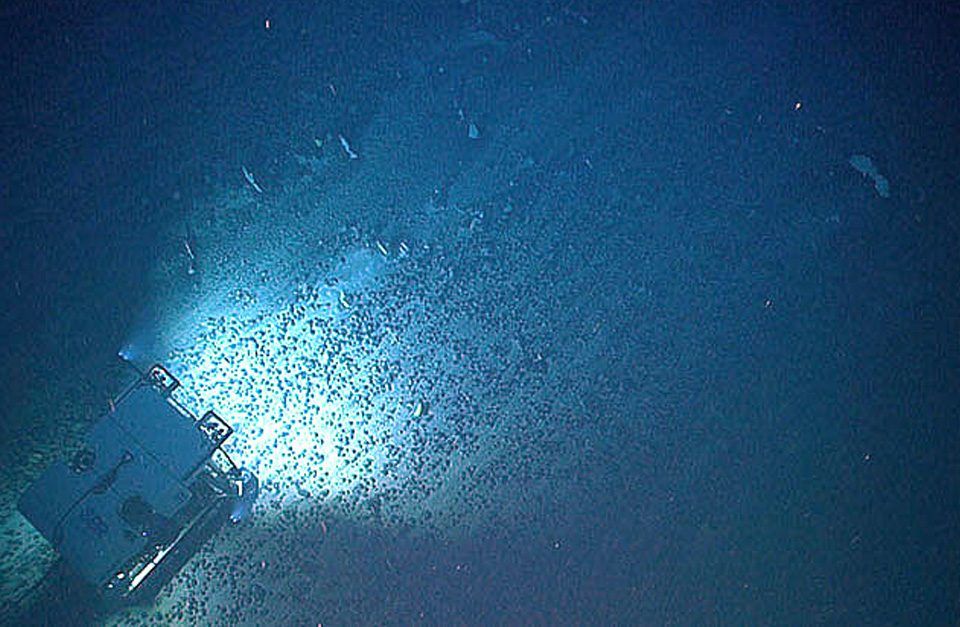
A federal judge in Honolulu vacated the Endangered Species Act review underpinning the first-ever US lease sale for deep-sea mining. The sale covers 31 million acres of Pacific seabed northeast of American Samoa's Manu'a Islands and was set for Thursday, Nov. 19. Judge Jill Otake ruled that the National Marine Fisheries Service examined only the paperwork of selling leases, not the mining those leases exist to enable.

The order does not cancel the auction. It removes the finding that the sale would not harm protected species, leaving the Interior Department to decide whether to proceed without it. The Marine Minerals Administration, the Interior office running the sale, did not answer questions about whether it will go ahead. The same lawyers are challenging a second sale scheduled for December near Guam and the Northern Mariana Islands.

Why it matters

The ruling tests whether the US can hand out ocean mining rights before anyone knows what industrial mining does to deep-sea life.

Questions about this story

Free account needed to ask — your question is kept and asked for you right after sign-up. Answers are public.

No questions yet — be the first to ask.

Key Indicators

31M
Acres of federal seabed in the American Samoa lease sale
Two blocks northeast of the Manu'a Islands, offered as the first US deep-sea mining leases.
3
Days between the ruling and the scheduled auction
Otake issued the order on Monday, Nov. 16; the sale was set for Thursday, Nov. 19.
45+
Countries calling for a ban or pause on deep-sea mining
The industry does not yet exist in commercial form anywhere.
0
Commercial deep-sea mining operations in US waters
Leases would start with mapping and sampling, not extraction.

Voices

Curated perspectives — historical figures and your fellow readers.

Sign up to generate historical perspectives on this story.

People Involved

Organizations Involved

Timeline

2024 December 2026

9 events Latest: Yesterday
Tap a bar to jump to that date
  1. Second sale set for the Marianas

    Upcoming Scheduled

    Leases near the Northern Mariana Islands and Guam face a parallel legal challenge.

  2. Auction status unanswered

    Latest Status

    The Marine Minerals Administration does not respond to questions about the Nov. 19 sale.

  3. Trump orders faster mining approvals

    Executive action

    An executive order directs NOAA to expedite approvals for seabed mining companies.

  4. Wildlife agency clears the sale in 10 days

    Regulatory

    NOAA Fisheries agrees to an informal review and issues a "not likely to adversely affect" letter.

  5. Marine Minerals Administration created

    Institutional

    Interior merges two offshore energy bureaus into one leasing office.

  6. American Samoa halts seabed mining

    Policy

    The territory imposes a moratorium, citing significant risks to marine biodiversity.

Scenarios

1

Interior pulls the American Samoa auction

Likely Resolves by Nov 20, 2026

Discussed by: Earthjustice attorneys and legal analysts quoted by Courthouse News and the Honolulu Star-Advertiser

With the wildlife finding vacated, Interior decides it cannot sell leases whose environmental clearance a court has thrown out. The auction is postponed and the Marine Minerals Administration restarts the consultation, which the government's own lawyers described as work the agency has not yet done at all. The 31 million acres stay unleased into 2027.

2

Auction proceeds Thursday with the wildlife finding voided

Possible Resolves by Nov 20, 2026

Discussed by: Legal analysts quoted by Bloomberg Law and InsideTrade, who note the order does not bar the sale

Otake's order vacates the review but does not order Interior to stop, and bidders would be on notice that a court found the underlying consultation unlawful. The sale goes ahead, bids are recorded, and the leases immediately become the subject of fresh litigation over whether they can be issued at all.

3

December Marianas sale blocked on the same grounds

Likely Resolves by End of 2026

Discussed by: Earthjustice attorneys, who say they expect a similar ruling

A second sale, covering waters off the Northern Mariana Islands and Guam, is tentatively scheduled for Dec. 16 and rests on the same kind of informal review. The same lawyers have already sued. A ruling along the lines of Otake's would strip that sale's environmental approval before the auction, and similar challenges could reach planned sales off Alaska and Virginia.

4

Full consultation clears the way for a re-run sale

Possible Resolves by Q3 2027

Discussed by: Earthjustice attorneys, who say a full review will take time

NOAA Fisheries does what Otake said it must and completes a formal consultation covering not just the lease sale but the mining that follows. That produces a biological opinion weighing extinction risk to blue, fin, sei and sperm whales, sea turtles and coral. If it clears the project, Interior can re-offer the acreage on firmer legal ground.

Historical Context

3 moments from history that rhyme with this story — and how they unfolded.

June 1978

Snail Darter Halts Tellico Dam (1978)

The Supreme Court ruled 6-3 in Tennessee Valley Authority v. Hill that the Endangered Species Act barred completion of a nearly finished Tennessee dam because it would destroy the habitat of a three-inch fish called the snail darter. The project had already cost about $100 million.

Then

Construction stopped, and a special congressional committee created by the 1978 amendments voted unanimously that the dam should not be exempted.

Now

Congress passed a rider exempting Tellico anyway in 1979, and the dam was finished. The case established that the law's text could stop a nearly complete federal project.

Why this matters now

Otake's order rests on the same logic: a statute written to prevent extinction requires a look at consequences before approval, not after. It also shows the remedy is political as much as legal.

1991

Spotted Owl Injunctions in the Pacific Northwest (1991)

A federal judge in Seattle halted federal timber sales across millions of acres of old-growth forest to protect the northern spotted owl, which had been listed as threatened. The order froze a large share of the region's logging economy.

Then

Timber communities lost jobs and fought the ruling politically; the first Bush administration convened a cabinet-level response.

Now

The litigation produced the Northwest Forest Plan in 1994, which rewrote federal forest management across the region.

Why this matters now

One district judge's endangered-species ruling can stall an entire national program and force a rewrite of how an agency does its environmental analysis -- the position the American Samoa leases are now in.

December 2024

Norway Shelves Its First Seabed Mining Round (2024)

Norway had approved opening a large area of its continental shelf for mineral exploration and planned a first licensing round. The government scrapped that round as part of a budget agreement with the Socialist Left Party.

Then

No exploration licenses were issued, and the plan moved to a slower process.

Now

Norway remains one of the countries weighing seabed minerals, but without active leases, and the decision showed that political coalitions, not only courts, can stall the industry.

Why this matters now

The US is running the opposite experiment: pushing leases ahead of the science. Norway's retreat shows the alternative path -- and how quickly a licensing plan can be reversed before any mining happens.

Sources

(8)