


Pull to refresh
Logo
Kemp's ridley sea turtles set another Texas nesting record

Kemp's ridley sea turtles set another Texas nesting record

New Capabilities

A 48-year egg-relocation program has turned a near-empty coastline into the species' second nesting colony

Overview

Updated 9 minutes ago

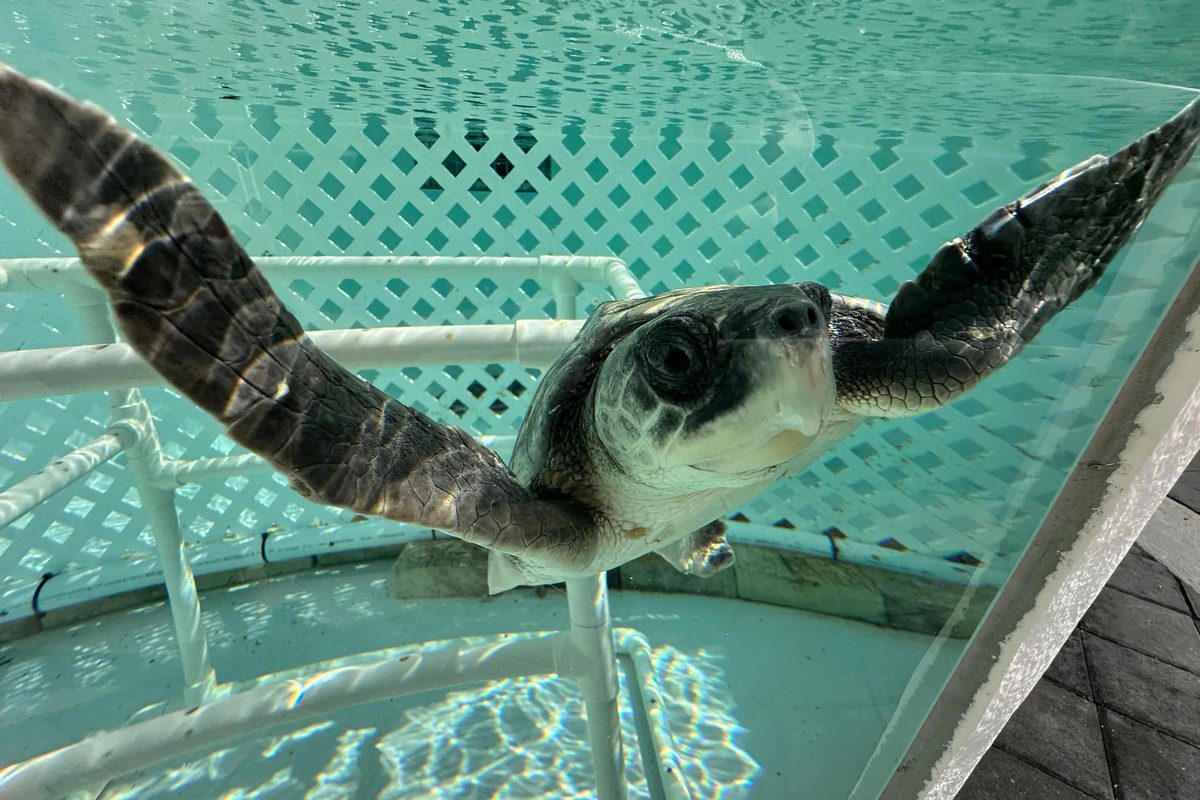
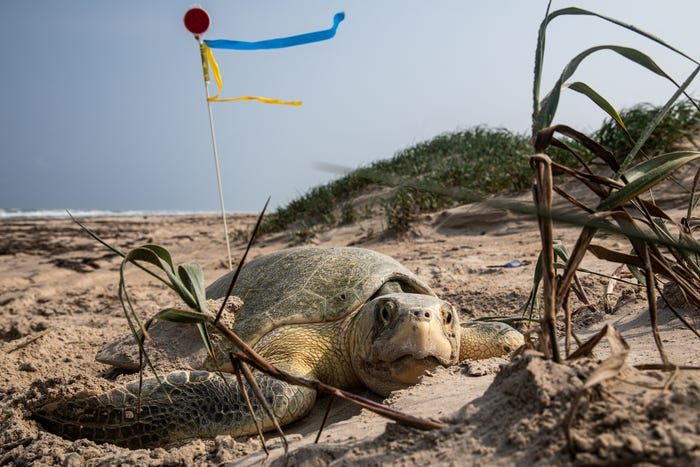
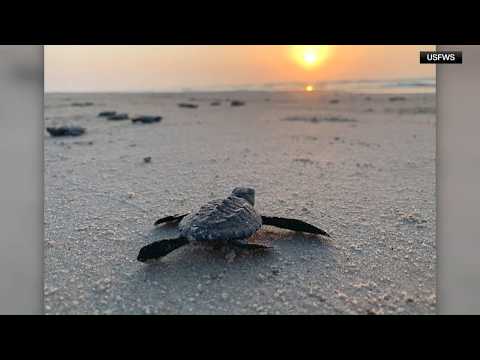
In 1978, biologists began moving Kemp's ridley eggs from a beach in Mexico to Padre Island, Texas, and releasing the hatchlings there. Texas recorded roughly one nest every three years at the time. This season it recorded 697, up 55% from 449 in 2025 and a second straight state record.

The gain came from an unusual lever: relocation and imprinting, not habitat protection. Hatchlings raised on Padre Island in the 1970s and 1980s started returning to nest in 1996. Their descendants now make up most of the Texas colony, which is growing fast enough that turtles have begun arriving in small groups rather than one at a time.

Why it matters

A species once down to a few hundred nests across its whole range is rebuilding a second colony in Texas, one imprinted hatchling at a time.

Questions about this story

Free account needed to ask — your question is kept and asked for you right after sign-up. Answers are public.

No questions yet — be the first to ask.

Key Indicators

697
Kemp's ridley nests on the Texas coast in 2026
A state record for the second consecutive year.
55%
Increase over the 2025 Texas total
Up from 449 nests last season.
449
Nests documented in Texas in 2025
The previous state record, itself a jump from earlier years.
370
Nests at North Padre Island and Padre Island National Seashore
The largest single concentration in the state.
208
Nests on South Padre Island
The second-largest concentration on the coast.

Voices

Curated perspectives — historical figures and your fellow readers.

Sign up to generate historical perspectives on this story.

People Involved

Organizations Involved

Timeline

1978 November 2026

8 events Latest: 4 days ago
Tap a bar to jump to that date
  1. Season confirmed at 697 nests, up 55%

    Latest Announcement

    The Fish and Wildlife Service, National Park Service and partners report 697 nests for 2026 against 449 in 2025.

  2. Nest table tops out at 697

    Data

    The running statewide table shows 697 nests, including 370 at North Padre Island and 208 at South Padre Island.

  3. Statewide count passes the old record

    Milestone

    Crews had documented 604 Kemp's ridley nests by June 11, surpassing every previous Texas season.

  4. Busiest April on record

    Season

    April 2026 produced more Kemp's ridley nests than any April previously recorded in Texas.

  5. Texas sets a record with 449 nests

    Milestone

    The 2025 season produced 449 Kemp's ridley nests, the highest Texas count to that point.

  6. First tagged turtles return to Padre Island

    Milestone

    Turtles tagged as hatchlings in the reintroduction program are found nesting at Padre Island, an early sign the imprinting worked.

  7. Species collapses to about 350 nests

    Population

    By the mid-1980s, some seasons recorded only about 350 nests across the species' entire nesting range.

  8. Egg transfer program begins

    Conservation

    Biologists start moving a share of Rancho Nuevo eggs to Padre Island, incubating them and releasing hatchlings on the beach to imprint.

Scenarios

1

Texas nesting passes 700 again in 2027

Likely Resolves by End of 2027

Discussed by: National Park Service and Fish and Wildlife Service season summaries

The 2026 season broke the state record two years running, and the returning adults are the descendants of turtles imprinted on Padre Island in the 1980s. If survival through the juvenile years holds, the Texas colony keeps adding nesters each spring. Two straight records make a third plausible, though a single bad weather season or a heavy hurricane landfall during incubation could interrupt it.

2

Texas tally falls back below 500

Possible Resolves by End of 2027

Discussed by: Turtle Island Restoration Network and academic nesting modelers

Kemp's ridley nesting swings widely year to year, and a 2023 modeling paper cited by nest monitors projected no sustained increase in the species' nesting through 2048. If the 2026 jump reflected favorable tides and warm water rather than a larger breeding population, the count could drop sharply. A major storm during the April-to-July window would compound that.

3

Biologists intervene on hatchling sex ratios

Possible Resolves by End of 2030

Discussed by: Sea turtle researchers studying temperature-dependent sex determination

Kemp's ridley hatchling sex is set by sand temperature during incubation, and warmer nests produce more females. Researchers have flagged the resulting female-skewed population as a long-term risk. A formal shading, watering or nest-relocation program aimed at cooling nests would mark the shift from monitoring the problem to acting on it.

Historical Context

3 moments from history that rhyme with this story — and how they unfolded.

1947

Rancho Nuevo arribada filmed (1947)

A Mexican pilot filmed what became the first documentation of a Kemp's ridley arribada: tens of thousands of turtles nesting on a single stretch of beach in Tamaulipas in one day. The footage established the species' primary nesting site.

Then

Rancho Nuevo became the anchor for all later Kemp's ridley research and protection.

Now

That single beach still hosts the large majority of the species' nests, which keeps the population exposed to one region's weather and development.

Why this matters now

Texas is the second colony. The nest transfer program exists to reduce the species' dependence on that one beach.

1982-1992

California condor capture and captive breeding (1982-1992)

With roughly two dozen condors left in the wild, biologists captured the remaining birds and built a captive breeding program. Releases into the wild began in 1992 and continue today.

Then

The wild population dropped to zero while the captive flock was established.

Now

Released birds now nest in California, Arizona and Baja California, though lead poisoning still limits recovery.

Why this matters now

Shows the same core wager as the Kemp's ridley program: take animals into human care, then rebuild a wild population from released offspring. It also shows the timeline runs in decades, not seasons.

1972-2007

Bald eagle recovery after the DDT ban (1972-2007)

The United States banned the pesticide DDT in 1972 and listed the bald eagle under the Endangered Species Act. Nesting pairs in the lower 48, down to roughly 400 in 1963, climbed steadily for three decades.

Then

Reproduction recovered once the chemical stopped thinning eggshells.

Now

The eagle was removed from the endangered list in 2007 and now nests across the country.

Why this matters now

A contrasting mechanism. The eagle recovered after a single chemical was removed from the environment; the Kemp's ridley is being rebuilt by moving eggs and imprinting hatchlings on new beaches.

Sources

(6)