
Pull to refresh
Logo
Green turtles reclassified from endangered to least concern

Green turtles reclassified from endangered to least concern

Rule Changes

The global label changed in October 2025; the recovery behind it took five decades and is uneven across ocean basins

Overview

Updated 1 hour ago

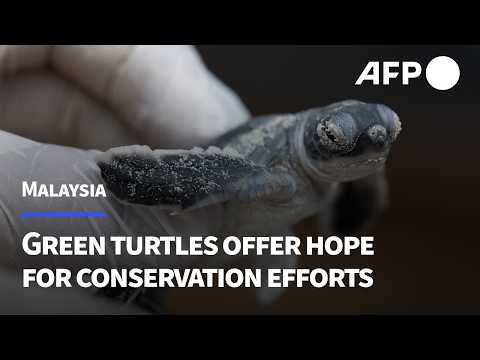
On Malaysia's Turtle Islands, green turtle nesting has tripled since the 1970s to more than 20,000 nests a year. Across the species' range, numbers rose enough that the International Union for Conservation of Nature (IUCN) moved green turtles off its endangered list in October 2025 and rated them least concern.

The rating covers the species worldwide, not every population. Six of the seven other sea turtle species remain vulnerable or worse, and green turtle populations in the southwest Pacific, the east Pacific and the north Indian Ocean are still below historic levels. Some are declining.

Why it matters

The label is global; the recovery is not. Several green turtle populations still depend on the hunting bans that produced this result.

Questions about this story

Free account needed to ask — your question is kept and asked for you right after sign-up. Answers are public.

No questions yet — be the first to ask.

Key Indicators

28%
Rise in global green turtle numbers since the 1970s
IUCN's estimate of the worldwide increase behind the reclassification.
173%
Increase in egg clutches at Aldabra Atoll since 1980
Surveys counted more than 15,000 clutches across the atoll in 2019.
20,000
Green turtle nests per year in Sabah's Turtle Islands
Nesting there has tripled since the 1970s, according to Sabah Parks.
8 of 11
Regional green turtle populations rated at low risk
A 2025 assessment found most regional populations stable or improving, not all.
1 in 1,000
Hatchlings that survive to breeding age
Green turtles reach sexual maturity at roughly 20 to 35 years old.
6
Other sea turtle species still listed as vulnerable or worse
Only the flatback's status is unclear, because of data shortages.

Voices

Curated perspectives — historical figures and your fellow readers.

Sign up to generate historical perspectives on this story.

People Involved

Organizations Involved

Timeline

1968 November 2026

8 events Latest: Today
Tap a bar to jump to that date
  1. Report from Sabah's Turtle Islands

    Today Report

    Al Jazeera aired footage from the Turtle Islands, where nesting has tripled since the 1970s to more than 20,000 nests a year.

  2. IUCN moves green turtles to least concern

    Conservation status

    The Red List downgraded the species from endangered, citing roughly 28% growth in global numbers since the 1970s.

  3. Aldabra clutches hit 15,000

    Research

    Researchers estimated more than 15,000 clutches across the atoll, a 173% increase over 1980.

  4. Omadal women's cooperative starts egg relocation

    Community program

    A 20-woman group began moving eggs to hatcheries, later funding the work from handicraft and catering sales.

  5. Sabah bans turtle meat and eggs

    Policy

    The state outlawed consumption of turtle meat and eggs, closing the main local market for the animals.

  6. Aldabra track surveys begin

    Research

    Jeanne Mortimer started counting nesting tracks, beginning the record that later documented the recovery.

  7. Sabah protects the Turtle Islands

    Policy

    The three islands off Borneo became a state park, ending unrestricted egg collection on the beaches.

  8. Seychelles bans turtle hunting

    Policy

    The ban gave Aldabra's nesting females their first lasting safeguard, after decades in which thousands were taken each year.

Scenarios

1

Green turtle keeps its least concern rating at the next IUCN reassessment

Likely Resolves by End of 2028

Discussed by: IUCN Red List assessors and the conservation groups that submitted the 2025 data

The 2025 rating rested on a 28% global increase since the 1970s and low-risk ratings for 8 of 11 regional populations. If those trends hold, the next global assessment keeps the species in least concern. A sharp decline in a large rookery, such as the southwest Pacific population around Raine Island, would put that at risk.

2

A government lifts its ban on harvesting green turtles or their eggs

Unlikely Resolves by Nov 14, 2028

Discussed by: Jeanne Mortimer, who wrote four decades ago that evidence of recovery would bring demands to resume hunting

The recovery was built on bans on taking turtles and eggs, and Mortimer warns that a 'least concern' label can make those bans look unnecessary. A single national or state government repealing its ban would test whether the global rating protects populations that are still depleted locally.

3

Aldabra passes 20,000 clutches in a single season

Possible Resolves by End of 2030

Discussed by: Aldabra researchers, who say nesting may still be below the atoll's carrying capacity

Nesting at Aldabra rose from 2,000 to 3,000 clutches a year in the 1960s to more than 15,000 by 2019, and researchers say the increase shows no sign of flattening. A season above 20,000 clutches would extend a run that already spans five decades.

Historical Context

3 moments from history that rhyme with this story — and how they unfolded.

1982, effective 1986

Commercial whaling moratorium (1982)

The International Whaling Commission voted to end commercial whaling after centuries of hunting had driven several large whale species close to collapse. Humpback populations in particular had been reduced across the southern hemisphere.

Then

Whaling nations including Japan, Norway and Iceland objected or continued hunting under reservations, so the ban was never universal.

Now

Several humpback populations recovered strongly enough that Australia removed the species from its national threatened list in 2022, while other populations remain endangered.

Why this matters now

A global hunting ban lifted a species' overall status while leaving regional populations in trouble, the same pattern now visible in green turtles.

1972 to 2007

Bald eagle recovery and delisting (2007)

The United States banned the pesticide DDT in 1972 and protected the bald eagle under the Endangered Species Act in 1973. Breeding pairs in the lower 48 states had fallen to about 417 in 1963.

Then

Populations climbed steadily through the 1980s and 1990s as DDT thinned in the food chain and nests were guarded.

Now

The eagle was removed from the endangered list in 2007, when counts reached roughly 9,800 breeding pairs, and it has continued to increase.

Why this matters now

It took 35 years between the pesticide ban and delisting, a reminder that green turtles' 25-to-35-year maturation sets the pace of any recovery.

1994 to 2023

Gray whale delisting and later die-off (1994)

The eastern North Pacific gray whale was removed from the US endangered species list in 1994 after its population rebounded from whaling. Numbers later fell during a series of unusual mortality events beginning in 2019.

Then

Delisting was treated as a completed recovery, and monitoring continued at a lower intensity.

Now

The die-off revived debate over how much margin a delisted species needs before a status change is treated as permanent.

Why this matters now

Delisting is a judgment about current trends, not a guarantee; green turtle watchers make the same argument about the least concern label.

Sources

(9)