
Pull to refresh
Logo
Daily Brief
Following
Why Sign Up
Air Canada jet collides with fire truck on active LaGuardia runway, killing both pilots

Air Canada jet collides with fire truck on active LaGuardia runway, killing both pilots

Built World
By Newzino Staff |

An air traffic controller cleared a rescue vehicle onto a runway where a plane was seconds from landing, exposing systemic gaps in ground-traffic safety at one of America's busiest airports

Yesterday: LaGuardia closes; 637 flights canceled

Overview

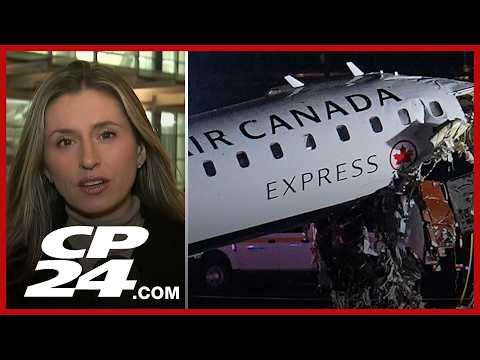
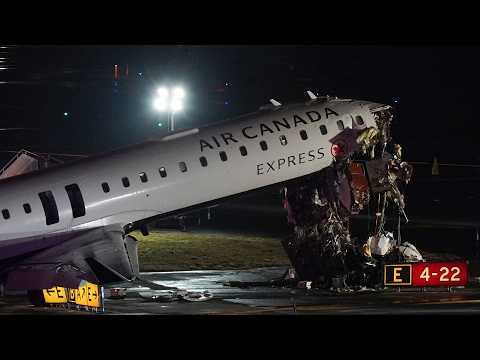
Late Sunday night, an Air Canada Express regional jet landing at New York's LaGuardia Airport struck a Port Authority fire truck that had been cleared to cross the active runway. Both pilots—Captain Antoine Forest, 30, and First Officer MacKenzie Gunther—were killed when the cockpit was destroyed on impact. Forty-one of the 76 people aboard were hospitalized, and the airport shut down for 14 hours, canceling more than 600 flights.

Why it matters

U.S. airports average nearly 1,800 runway incursions a year; this crash shows what happens when one isn't caught in time.

Key Indicators

2
Pilots killed
Captain Antoine Forest and First Officer MacKenzie Gunther died when the cockpit was destroyed on impact.
41
People hospitalized
Nine passengers remained hospitalized the following day with serious injuries including broken bones and a brain bleed.
637
Flights canceled
LaGuardia closed for 14 hours, with disruptions rippling across the Northeast and beyond.
~1,760
Runway incursions per year (U.S.)
The Federal Aviation Administration recorded approximately 1,760 runway incursions in fiscal year 2023 and a similar number in 2024.
5 of 24
FAA safety recommendations implemented
A March 2025 Inspector General audit found that only 5 of 24 recommendations from a 2023 safety review had been completed.

Interactive

Exploring all sides of a story is often best achieved with Play.

Ever wondered what historical figures would say about today's headlines?

Sign up to generate historical perspectives on this story.

Sign Up

Debate Arena

Two rounds, two personas, one winner. You set the crossfire.

People Involved

Organizations Involved

Timeline

  1. LaGuardia closes; 637 flights canceled

    Consequence

    The airport shut down after the collision and did not reopen until 2:00 PM Monday, canceling 637 flights and delaying 174 more. Disruptions cascaded across the Northeast.

  2. NTSB deploys 25-member team, recovers black boxes

    Investigation

    The National Transportation Safety Board sent 25 specialists to the crash site and recovered both the cockpit voice recorder and flight data recorder. Runway 4 was closed through Friday for the on-scene investigation.

  3. United Airlines Flight 2384 aborts takeoff, declares emergency

    Incident

    A United Boeing 737 MAX 8 bound for Chicago aborted takeoff twice after anti-ice warning lights and a foul cabin odor. The crew declared an emergency, and fire rescue units were dispatched.

  4. Controller clears fire truck to cross Runway 4

    Incident

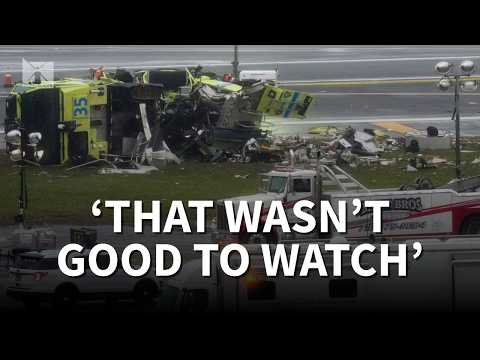
    Air traffic control cleared Port Authority ARFF Truck 1 to cross Runway 4 at Taxiway Delta while Air Canada Express Flight 8646 was on short final approach to the same runway.

  5. CRJ-900 strikes fire truck on Runway 4

    Incident

    The Air Canada Express jet, traveling at approximately 93 to 105 miles per hour, struck the fire truck. The cockpit was destroyed, killing both pilots instantly. The aircraft came to rest near Taxiway Echo with its tail on the ground.

  6. Inspector General audit finds most FAA safety fixes incomplete

    Investigation

    A Department of Transportation Inspector General report found only 5 of 24 runway-safety recommendations from a 2023 review had been implemented.

  7. FAA convenes national safety summit on runway incursions

    Policy

    After serious runway incursions nearly tripled in five years, the FAA held an industry-wide summit and launched new prevention initiatives including $200 million in airport grants.

  8. Near-collision at JFK between Delta and American Airlines jets

    Precedent

    A Delta 737 aborted takeoff at JFK when an American Airlines 777 crossed the active runway, missing each other by 1,400 feet. The NTSB later blamed distractions affecting the American crew.

Scenarios

1

NTSB finds controller error, FAA overhauls ground-crossing procedures

Discussed by: Aviation safety analysts at The Air Current; former NTSB officials quoted in CNN and Bloomberg coverage

The investigation determines the air traffic controller's decision to clear the truck across an active runway while a plane was on final approach was the primary cause. The FAA responds with mandatory procedural changes—such as requiring a dedicated ground controller during emergency responses and automated runway-occupancy alerts at all airports with ARFF operations. This is the most widely expected outcome given the ATC audio evidence.

2

Investigation reveals systemic gaps beyond one controller's mistake

Discussed by: CNN investigative unit reporting on NASA pilot safety filings; Department of Transportation Inspector General

Investigators find that the controller's error was enabled by deeper problems: the lack of automated conflict alerts between ground vehicles and landing aircraft, incomplete implementation of runway-safety technology, and LaGuardia's constrained geometry that places crossing points dangerously close to touchdown zones. The NTSB issues broad recommendations for technology mandates and airport redesign, echoing its post-JFK near-miss recommendations. The March 2025 Inspector General finding that most safety fixes remain incomplete becomes a focal point.

3

Families sue; litigation exposes internal warnings that went unheeded

Discussed by: Legal analysts; precedent from prior aviation disaster litigation

Wrongful death and personal injury lawsuits are filed against the FAA, the Port Authority, and Jazz Aviation. Discovery produces internal documents showing that pilots and safety officers had repeatedly flagged runway-crossing risks at LaGuardia—including the dozen reports in NASA's safety database over the prior two years—without triggering meaningful changes. The litigation extends the story's life well beyond the NTSB investigation timeline.

4

Congress mandates accelerated runway-safety technology deployment

Discussed by: Aviation industry groups; congressional transportation committee members

The political visibility of the crash—at a major airport serving New York, with graphic ATC audio widely circulated—generates enough pressure for Congress to mandate and fund faster deployment of automated runway-occupancy detection systems and cockpit ground-traffic alerts. The 2024 FAA Reauthorization Act's existing provisions are strengthened with specific deadlines and penalties for noncompliance.

Historical Context

Tenerife airport disaster (1977)

March 1977

What Happened

Two Boeing 747s—KLM Flight 4805 and Pan Am Flight 1736—collided on a foggy runway at Los Rodeos Airport in Tenerife, Canary Islands. The KLM captain began his takeoff roll while the Pan Am jet was still on the runway. All 248 people aboard the KLM plane and 335 of 396 aboard the Pan Am plane were killed—583 dead, making it the deadliest accident in aviation history.

Outcome

Short Term

International aviation authorities overhauled radio communication standards. The word 'takeoff' was banned from all ATC communications except the actual takeoff clearance itself.

Long Term

The disaster became the foundational case for Crew Resource Management training, which teaches flight crews to challenge authority and communicate assertively. It also drove investment in airport surface detection radar.

Why It's Relevant Today

Tenerife showed that miscommunication between a controller and a vehicle on a runway can be catastrophic. Nearly 50 years later, the LaGuardia collision demonstrates that the same fundamental vulnerability—a controller losing track of who is on the runway—persists despite decades of procedural reform.

Linate Airport runway collision (2001)

October 2001

What Happened

At Milan's Linate Airport, SAS Flight 686, an MD-87 with 110 people aboard, struck a Cessna Citation business jet that had inadvertently taxied onto the active runway in dense fog. All 114 people on both aircraft were killed, along with 4 ground workers. The airport's ground radar was malfunctioning, signage was inadequate, and low-visibility procedures had not been followed.

Outcome

Short Term

Italian authorities grounded operations at Linate and launched a criminal investigation. Several airport and ATC officials were convicted.

Long Term

European airports were required to install stop-bar lighting systems and improve taxiway signage. The disaster accelerated investment in airport surface surveillance technology across the continent.

Why It's Relevant Today

Linate demonstrated that a single breakdown in runway awareness—compounded by missing safety technology—can turn a routine taxi into a fatal collision. The LaGuardia crash similarly involves a vehicle on an active runway and the absence of automated alerts that could have warned either the controller or the pilots.

JFK near-miss between Delta and American Airlines (2023)

January 2023

What Happened

At New York's John F. Kennedy International Airport, a Delta Air Lines 737 was accelerating for takeoff when an American Airlines 777 crossed the same runway. The planes came within 1,400 feet of colliding. The NTSB found that the American crew, distracted by weather messages and a new passenger announcement procedure, taxied across the wrong runway.

Outcome

Short Term

The incident was one of several serious near-misses in early 2023 that prompted the FAA to convene a national runway safety summit.

Long Term

The FAA launched new incursion-prevention initiatives, distributed $200 million in airport safety grants, and reported a 73% drop in serious incursion rates in fiscal year 2024. But a March 2025 audit found most of the specific recommendations from the safety review remained unimplemented.

Why It's Relevant Today

The JFK near-miss was the warning shot. It triggered a reform effort that reduced the rate of the most dangerous incursions—but did not close the gap fast enough to prevent the LaGuardia collision three years later. The incomplete implementation documented by auditors is now central to questions about whether this crash was preventable.

Sources

(12)