Washington mid-air collision: From tragedy to safety reckoning
Rule Changes
The deadliest U.S. aviation accident in over two decades exposes systemic FAA failures; one year later, families push for safety reforms as key legislation stalls in Congress
The deadliest U.S. aviation accident in over two decades exposes systemic FAA failures; one year later, families push for safety reforms as key legislation stalls in Congress
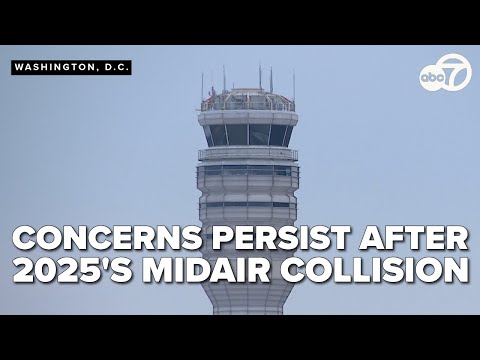
The National Transportation Safety Board concluded its investigation into the January 2025 collision between American Airlines Flight 5342 and a Black Hawk helicopter over the Potomac River—the deadliest U.S. aviation accident since 2001. All 67 people aboard both aircraft died, including 28 members of the figure skating community returning from a national development camp. The NTSB found the crash was '100% preventable' and issued 50 safety recommendations, with 32 directed at the Federal Aviation Administration.
FAA officials had ignored controller warnings about dangerous helicopter routes near Reagan National Airport for years. From 2021 to 2024, helicopters and commercial aircraft had more than 15,000 close-proximity events. The helicopter's altitude-measuring equipment was faulty and its position-broadcasting system had been disabled.
Air traffic controllers relied on pilots to 'see and avoid' each other—a practice the NTSB has criticized since the 1950s. The agency called for a comprehensive overhaul of airspace design, military-civilian coordination, and the FAA's safety culture.
Questions about this story
Free account needed to ask — your question is kept and asked for you right after sign-up. Answers are public.
No questions yet — be the first to ask.
Key Indicators
67
Total fatalities
Deadliest U.S. aviation accident since American Airlines Flight 587 in November 2001
50
NTSB recommendations
Safety recommendations issued, with 32 directed at the FAA and 8 at the U.S. Army
15,000+
Prior close calls
Near-miss events between helicopters and commercial aircraft at Reagan National from October 2021 to December 2024
75 ft
Minimum separation
The closest permissible distance between helicopters and aircraft on the pre-crash helicopter route
Images from Openverse under Creative Commons licenses.
Videos from YouTube.
Voices
Curated perspectives — historical figures and your fellow readers.
Simone Weil
(1909-1943) ·Modernist · politics
Fictional AI pastiche — not real quote.
"The bureaucrat who ignored fifteen thousand warnings has perfected a form of murder that leaves his hands clean and his conscience intact—this is the real machinery of oppression, where power means never having to see the consequences of one's inattention."
0% found this insightful
Mark Twain
(1835-1910) ·Gilded Age · wit
Fictional AI pastiche — not real quote.
"I see they've taken the old principle of "see and avoid" and applied it to flying machines traveling at speeds that would make a locomotive blush—a fine demonstration that government officials can ignore a problem with the same diligence a mule ignores arithmetic. Sixty-seven souls perished so that bureaucrats might continue their experiments in whether catastrophe or common sense arrives first."
0% found this insightful
Ever wondered what historical figures would say about today's headlines?
Sign up to generate historical perspectives on this story.
24 events
Latest: February 4th, 2026 · 8 months ago
Showing 8 of 24
JK to step
Tap a bar to jump to that date
Jump to
February 2026
House Speaker Promises ROTOR Act Vote
LatestLegislative
Speaker Mike Johnson commits to bringing the ROTOR Act to a House vote, though timing remains unclear. The bill has stalled since failing to be included in the January 30 FY2026 appropriations deadline.
House Passes FY2026 Appropriations Without ROTOR Act
Legislative
The House repasses five full-year FY2026 appropriations bills without including the ROTOR Act, despite bipartisan Senate passage in December and urgent advocacy from families and safety advocates.
January 2026
NTSB Final Report Published
Investigation
The NTSB publishes its complete 500+ page final report detailing systemic failures in airspace design, safety oversight, and risk management.
Families Launch Safety Advocacy Campaign
Memorial
One year after the crash, victim families including Doug Lane and Rachel Feres intensify advocacy for aviation safety reforms, working with legislators on the ROTOR Act and pushing for mandatory ADS-B technology.
Senators Push ROTOR Act in Appropriations Bill
Legislative
Senators Cruz and Cantwell urge congressional leaders to include the ROTOR Act in the FY2026 appropriations package before the January 30 funding deadline, warning of continued collision risk without ADS-B requirements.
Families Intensify One-Year Anniversary Advocacy
Memorial
On the one-year anniversary, victim families including Doug Lane and Rachel Feres intensify advocacy for aviation safety reforms. Lane states families have channeled grief into sustained advocacy, understanding that regulatory change requires years of persistent effort.
One-Year Anniversary Commemorations
Memorial
Families, first responders, and communities in Washington, D.C., and Wichita hold memorial services marking one year since the crash. Flags fly at half-staff at Department of Transportation buildings.
Senators Introduce FAA Reform Bill
Legislative
Senators Cantwell, Duckworth, Warner, Markey, and Shaheen introduce the FAA SMS Compliance Review Act of 2026 to strengthen the agency's safety management system.
NTSB Releases Final Report
Investigation
The NTSB presents 74 findings and 50 safety recommendations, blaming 'deep, underlying systemic failures' at the FAA and U.S. Army. Chair Homendy calls the crash '100% preventable.'
U.S. Transportation Secretary Sean P. Duffy announces that the FAA is formalizing permanent restrictions for helicopters and powered-lift aircraft from operating in certain areas near Reagan National Airport, unless conducting essential operations.
December 2025
Government Admits Fault
Legal
The federal government admits in court filings that it breached its duty of care to victims. The filing acknowledges that the air traffic controller did not follow proper procedures and the Army crew failed to maintain safe visual separation.
Senate Passes ROTOR Act
Legislative
The Senate unanimously passes the ROTOR Act, which would require all aircraft—civilian and military—to be equipped with ADS-B technology. The bill stalls in the House.
September 2025
First Wrongful Death Lawsuit Filed
Legal
Rachel Crafton files the first federal lawsuit against American Airlines, PSA Airlines, the U.S. Army, and the federal government over the death of her husband Casey Crafton.
July 2025
Permanent Restrictions Formalized
Regulatory
A Letter of Agreement between Reagan National and Pentagon Heliport air traffic control towers formalizes permanent restrictions on helicopter activity.
June 2025
New Helicopter Routes Take Effect
Regulatory
The FAA implements updated helicopter route charts with reduced boundaries for restricted zones and a new Broad Creek Transition route, creating greater separation from commercial aircraft.
March 2025
NTSB Issues Urgent Recommendations
Investigation
The NTSB issues urgent safety recommendations to the FAA regarding helicopter routes near Reagan National Airport.
Legacy on Ice Memorial
Memorial
A two-hour tribute show at Capital One Arena honors the victims, featuring performances by notable figure skaters including Maxim Naumov, whose parents Evgenia Shishkova and Vadim Naumov died in the crash.
February 2025
NTSB Releases Preliminary Report
Investigation
The NTSB publishes preliminary findings revealing the helicopter was flying higher than permitted and its ADS-B system had not transmitted data for over two years.
January 2025
FAA Restricts Helicopter Flights
Regulatory
The FAA restricts helicopter operations near Reagan National Airport, closing routes to all but essential flights including police, medical, air defense, and presidential transport.
NTSB Launches Investigation
Investigation
The National Transportation Safety Board dispatches a go-team to the crash site. Chair Jennifer Homendy briefs media on initial findings.
Flight 5342 Departs Wichita
Incident
American Airlines Flight 5342, a Bombardier CRJ700 operated by PSA Airlines, departs Dwight D. Eisenhower National Airport in Wichita, Kansas, with 64 people aboard including 28 figure skating community members.
Mid-Air Collision Over Potomac
Incident
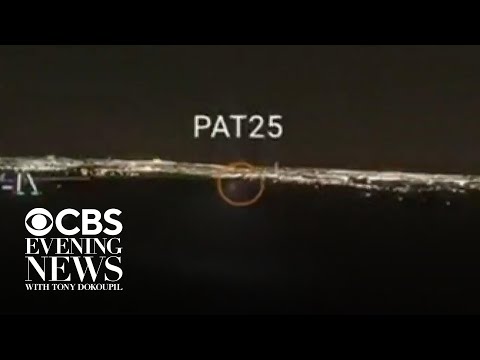
Flight 5342 collides with Army Black Hawk helicopter PAT25 at approximately 300 feet altitude, one-half mile from Reagan National Airport's Runway 33. All 67 people aboard both aircraft are killed.
January 2023
FAA Denies Supervisor's Request
Background
A regional FAA supervisor requests reduced air traffic at Reagan National Airport due to safety concerns. The FAA denies the request.
2013
Near-Miss Warning Goes Unheeded
Background
An eerily similar near-miss between a helicopter and commercial aircraft occurs at Reagan National. The FAA declines to relocate the helicopter route or enhance pilot warnings.
Scenarios
1
Congress Mandates ADS-B for All Aircraft
Possible
Discussed by: Senators Jerry Moran, Maria Cantwell, and aviation safety advocates; NTSB Chair Homendy
The ROTOR Act, which passed the Senate unanimously in December 2025, becomes law—requiring all aircraft operating in controlled airspace to use ADS-B technology with limited exceptions. This would close the loophole that allowed the Army helicopter to fly with its position-broadcasting system disabled. Implementation would likely take several years and face resistance from military operators citing operational security concerns.
2
FAA Overhauls Safety Management System
Likely
Discussed by: Senators Warner, Duckworth, and Shaheen; FAA Administrator Bedford; victim families' advocacy groups
The FAA SMS Compliance Review Act passes, creating an independent expert panel to review agency-wide safety practices. The FAA implements a functioning safety management system that proactively identifies and addresses risks before accidents occur—rather than responding after tragedies. This would require cultural change at an agency that critics say has long prioritized efficiency over safety.
3
Litigation Reshapes Airline and Government Liability
Likely
Discussed by: Aviation attorneys at Kreindler & Kreindler and Clifford Law; FindLaw legal analysts
The 60+ wrongful death lawsuits result in significant settlements or verdicts, with the government's admission of fault strengthening plaintiffs' cases. Precedents established could increase airline and government exposure in future accidents, potentially driving more aggressive safety investments. However, American Airlines continues to deny responsibility, and litigation could stretch for years.
4
Recommendations Go Unimplemented
Possible
Discussed by: Former DOT Inspector General Mary Schiavo; NTSB historians citing Colgan Air precedent
The NTSB's 50 recommendations meet the same fate as many prior recommendations—acknowledged but not fully implemented. The FAA has repeatedly declined to require ADS-B In technology despite 17 NTSB recommendations since 2006. After the 2009 Colgan Air crash, Congress mandated a pilot records database, but it took 11 years to implement. Without sustained political pressure, reforms stall in bureaucratic delays.
5
ROTOR Act Passes House as Standalone Legislation
Possible
Discussed by: Speaker Mike Johnson, Sens. Cruz and Cantwell, House Transportation Committee leadership
After failing to be included in the FY2026 appropriations package, the ROTOR Act advances through the House Transportation and Infrastructure Committee and passes as standalone legislation. This would require sustained pressure from victim families and aviation safety advocates, but Johnson's commitment to a vote signals potential momentum. Implementation would still face military operational security concerns.
The ROTOR Act remains stalled in the House despite Senate passage and Johnson's promise of a vote. Competing legislative priorities, military resistance, and the complexity of ADS-B implementation timelines cause the bill to languish. Victim families continue advocacy but face the reality that aviation regulation changes often take years or decades to implement.
The FAA SMS Compliance Review Act of 2026, reintroduced January 28 with bipartisan support, passes Congress and is signed into law. An independent expert panel is established to comprehensively review the FAA's Safety Management System and recommend reforms to prevent systemic failures like those that enabled the Flight 5342 collision.
Historical Context
3 moments from history that rhyme with this story — and how they unfolded.
1 of 3
September 1978
Pacific Southwest Airlines Flight 182 (1978)
A PSA Boeing 727 collided with a Cessna 172 over San Diego, killing 144 people—at the time, the deadliest U.S. aviation accident. Air traffic controllers had told the PSA pilots about the Cessna, and they reported visual contact, but then lost sight of it. The PSA jet overtook the Cessna from above.
Then
San Diego's Lindbergh Field received major air traffic control upgrades. The FAA changed procedures to place all aircraft under mandatory radar control near airports.
Now
The crash accelerated development of the Traffic Collision Avoidance System (TCAS), now mandatory on all commercial aircraft. The NTSB had criticized 'see and avoid' as flawed since the 1950s—a criticism it repeated 47 years later after Flight 5342.
Why this matters now
Both accidents involved reliance on 'see and avoid' procedures that the NTSB has long considered inadequate. The 1978 crash led to TCAS, but the Flight 5342 helicopter lacked equivalent technology—and the FAA still hadn't required ADS-B In nearly five decades later.
2 of 3
February 2009
Colgan Air Flight 3407 (2009)
A Bombardier Q400 turboprop stalled and crashed into a house near Buffalo, New York, killing 50 people. Both pilots were fatigued—the captain had accessed company computers overnight, and the first officer had commuted from Seattle on a red-eye. The NTSB found inadequate training and poor cockpit discipline.
Then
The FAA issued a 'call to action' for regional carriers and increased training inspections. Congress passed the Airline Safety and FAA Extension Act of 2010, raising minimum pilot qualifications to 1,500 flight hours.
Now
Despite NTSB recommendations and $24 million in Congressional funding, the Pilot Records Database took 11 years to implement—not going live until May 2021. The crash marked the last fatal U.S. commercial airline accident before Flight 5342.
Why this matters now
The Colgan crash shows how long FAA reforms can take even after deadly accidents and Congressional mandates. Flight 5342 families cite this history as evidence that sustained advocacy will be necessary to ensure the NTSB's 50 recommendations are actually implemented.
3 of 3
March 1977
Tenerife Airport Disaster (1977)
Two Boeing 747s collided on a fog-covered runway in the Canary Islands, killing 583 people—still the deadliest aviation accident in history. A KLM captain initiated takeoff without clearance while a Pan Am 747 was still on the runway. Dense fog prevented either crew from seeing the other aircraft.
Then
Aviation authorities worldwide standardized radio terminology. The word 'takeoff' was restricted to clearance issuance only. Cockpit procedures were revised to challenge captain authority.
Now
The disaster catalyzed crew resource management (CRM) training, now universal in commercial aviation. The accident demonstrated how multiple small failures can align catastrophically—the same systemic analysis the NTSB applied to Flight 5342.
Why this matters now
Tenerife established the modern framework for understanding accidents as systemic failures rather than individual errors. NTSB Chair Homendy invoked this principle when she said the Flight 5342 investigation would not blame individual pilots or controllers, but rather the system that allowed multiple failures to align.