
Pull to refresh
Logo
Bering Sea crab hybrids surge outside the quota system

Bering Sea crab hybrids surge outside the quota system

Rule Changes

A 2018 marine heatwave collapsed snow crab. Seven years later, their hybrids with Tanner crab are nearly half of commercial-sized males, and management plans have no category for them.

Overview

Updated 1 hour ago

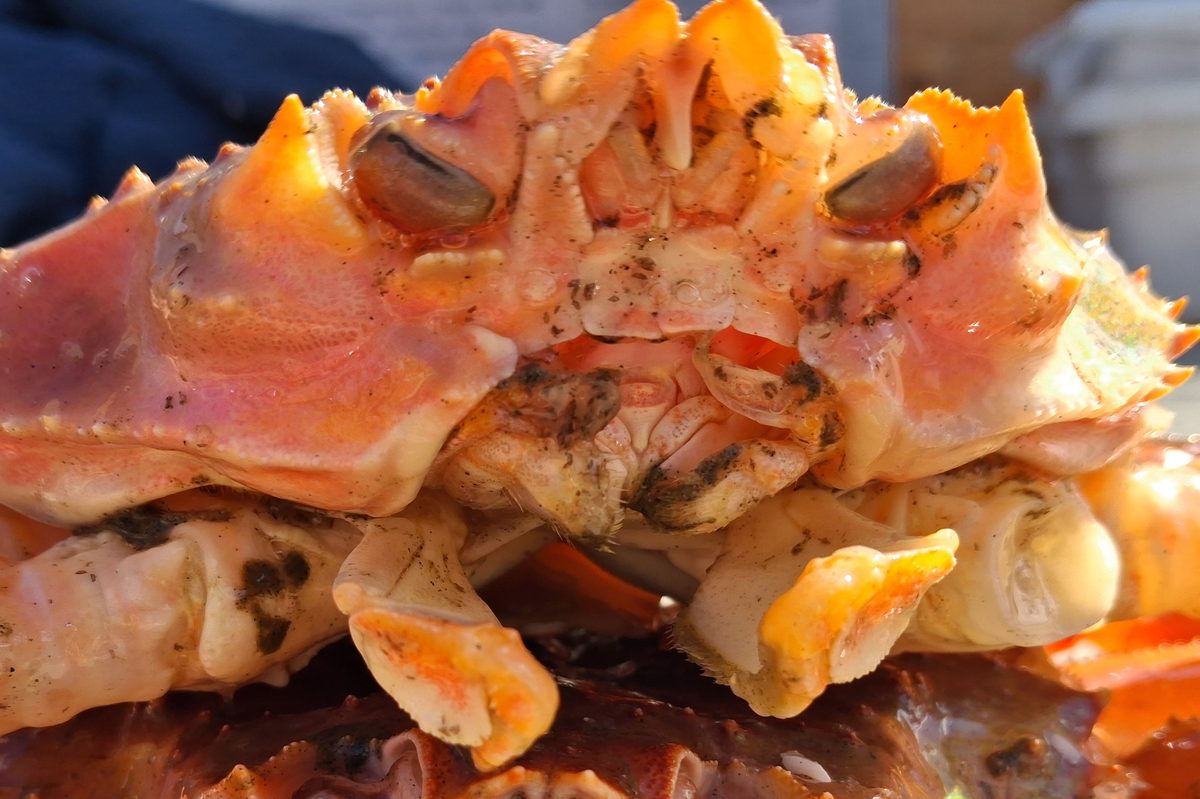
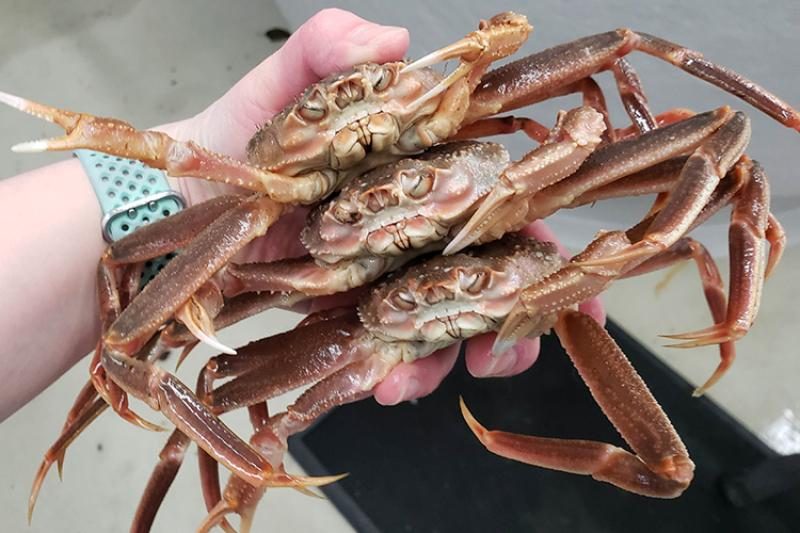
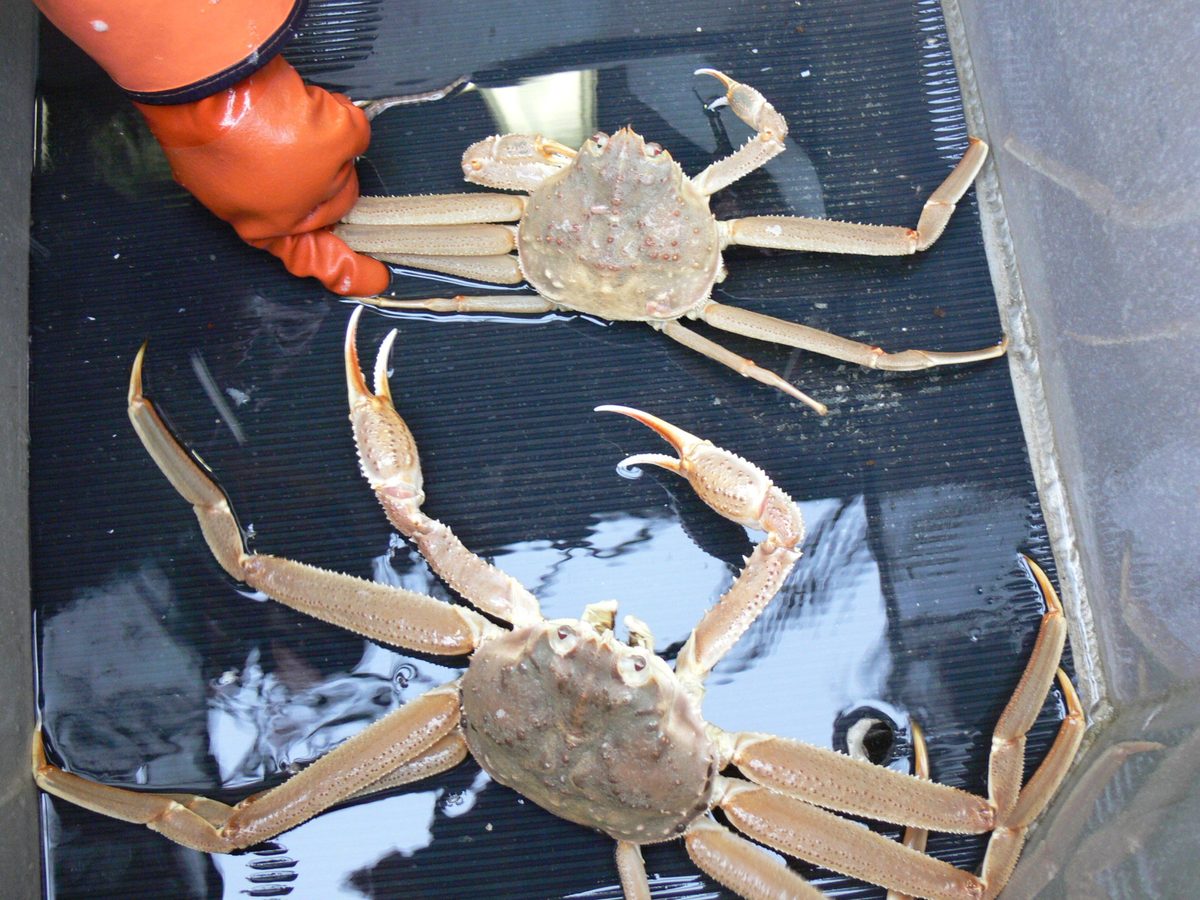
For decades, a snow crab crossed with a Tanner crab turned up rarely in the Bering Sea. In 2025, hybrids were 41.7% of commercial-sized males in the survey: nearly half the crabs big enough to keep.

A 2018–2019 marine heatwave left the sea nearly ice-free in spring and triggered a snow crab collapse. With snow crab gone, Tanner crab and their hybrids faced less competition and predation. The quota system has no separate category for them, so managers set limits on a species split the ocean no longer produces.

Why it matters

Quotas rest on a species count the ocean no longer matches; the Bering Sea fleet is landing crabs regulators cannot count.

Questions about this story

Free account needed to ask — your question is kept and asked for you right after sign-up. Answers are public.

No questions yet — be the first to ask.

Key Indicators

41.7%
Hybrid share of commercial-sized males
Share of harvestable-size male crabs that were snow-Tanner hybrids in the 2025 survey.
13.4x
Hybrid abundance versus historical average
2025 hybrid numbers compared with the 1988–2024 mean.
10%
Old ceiling on hybrid share
Before 2025, hybrids never exceeded this share of the exploitable male population.
5.1 million lb
Snow crab harvest limit, current season
A 45% cut from the prior season, with no hybrid allowance.
45%
Quota cut
Reduction in the snow crab limit compared with the season that let crews target hybrids.

Voices

Curated perspectives — historical figures and your fellow readers.

Sign up to generate historical perspectives on this story.

People Involved

Organizations Involved

Timeline

2018 November 2026

5 events Latest: 2 days ago
Tap a bar to jump to that date
  1. Study traces hybrid surge to snow crab collapse

    Latest Research

    Causal modelling rules out warming-driven range overlap as the cause.

  2. Season limit cut 45%, no hybrid allowance

    Regulation

    Regulators set 5.1 million pounds without a separate hybrid provision.

  3. Hybrids reach 41.7% of commercial-sized males

    Research

    Survey finds hybrid abundance 13.4 times the 1988–2024 average.

  4. Snow crab season closes

    Regulation

    Alaska shut the Bering Sea snow crab fishery; it stayed closed through 2024.

  5. Bering Sea runs nearly ice-free in spring

    Environment

    Marine heatwave leaves under 15% ice cover in March and April.

Scenarios

1

Council writes hybrids into the crab management plan

Possible Resolves by Dec 1, 2027

Discussed by: North Pacific Fishery Management Council's Scientific and Statistical Committee

The council's advisory scientists have taken up hybrids and said they would join a workshop on the subject, without recommending one. A plan amendment would have to define hybrids as their own stock, assign a quota, and reconcile that with the snow crab total. That runs through several council meetings plus federal review, so any change lands a year or more out.

2

Snow crab recovery shrinks the hybrid share

Possible Resolves by Nov 1, 2029

Discussed by: NOAA Alaska Fisheries Science Center survey results and the PNAS competition model

The study found snow crab suppress Tanner crab and hybrids through competition or predation, not temperature. If that relationship holds in reverse, a rebuilding snow crab population should push the hybrid share back down. The test is the next few bottom trawl surveys: the pre-2025 ceiling was 10% of exploitable males.

3

Hybrids keep getting logged as snow crab

Likely Resolves by Dec 1, 2027

Discussed by: Fishery managers and Alaska trade coverage of how hybrids are recorded

Regulations sort crabs by eye colour and mouth shape, and most hybrids get recorded as snow crab because their eyes read red. If the council takes no action, quotas keep being set on a count that silently includes hybrids. The current season, 5.1 million pounds with no hybrid allowance, is the template.

Historical Context

2 moments from history that rhyme with this story — and how they unfolded.

2018–2019

Bering Sea marine heatwave (2018–2019)

Winter ice in the Bering Sea failed to form, leaving less than 15% cover in March and April. Snow crab starved in large numbers, and the population crashed.

Then

The snow crab fishery shut from 2022 through 2024, costing the fleet hundreds of millions.

Now

Warm-affiliated Tanner crab expanded into the vacated ground, and their hybrids with snow crab followed roughly seven years later.

Why this matters now

The lag explains why quotas are being set now on a population reshaped by an event that ended years ago.

2022–2024

Snow crab fishery closure (2022–2024)

Alaska closed the Bering Sea snow crab season for three consecutive years. Lawmakers declared a cultural, economic and social emergency, and the Commerce Secretary issued a disaster determination.

Then

Crews idled and processors lost supply; the fleet absorbed losses in the hundreds of millions.

Now

Managers faced pressure to let boats land something, which is why the following season's snow crab limit was raised to encourage crews to target hybrids.

Why this matters now

The pivot from closing the fishery to raising a limit aimed at hybrids is the decision that made the definitional gap urgent.

Sources

(6)