
Pull to refresh
Logo
Two new sea spider species discovered in the Salish Sea after nearly a century

Two new sea spider species discovered in the Salish Sea after nearly a century

New Capabilities

UBC researchers combined DNA analysis with close-up imaging to document the region's first new sea spiders in nearly 100 years

August 26th, 2026: Two new sea spider species described

Overview

Updated 5 hours ago

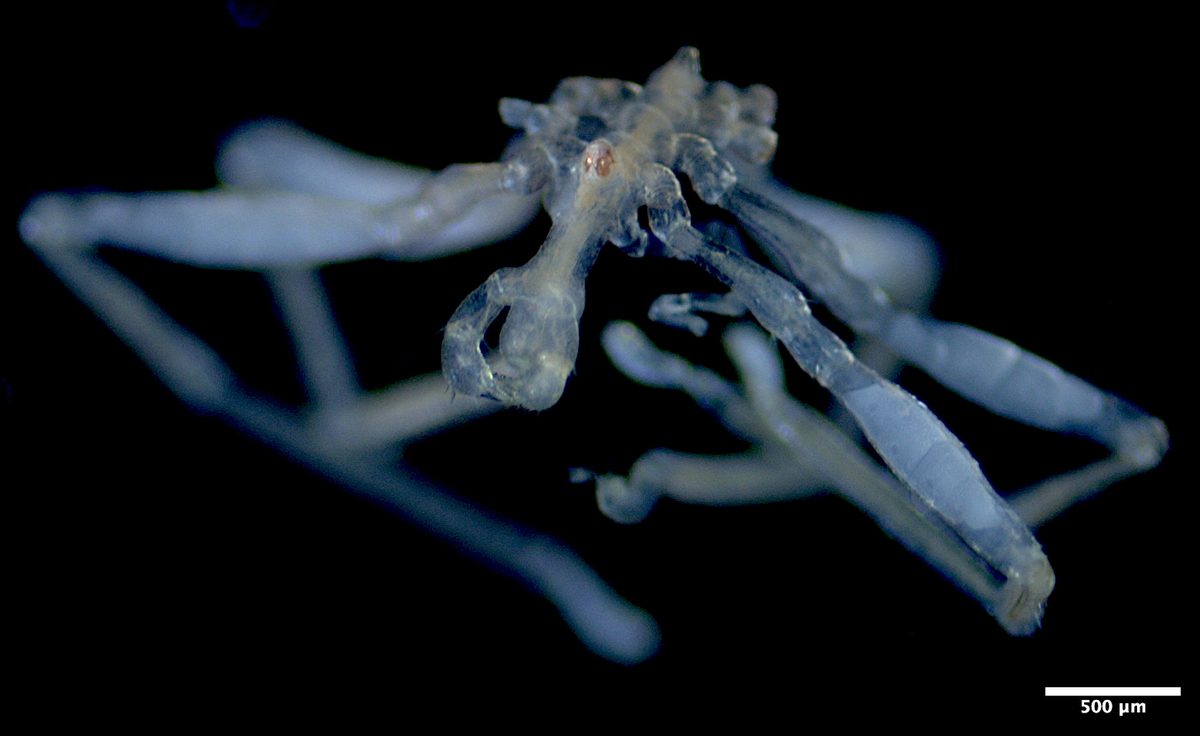
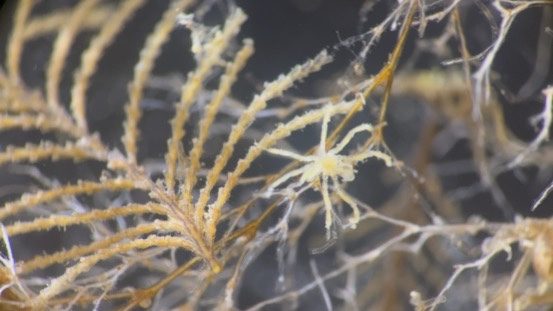
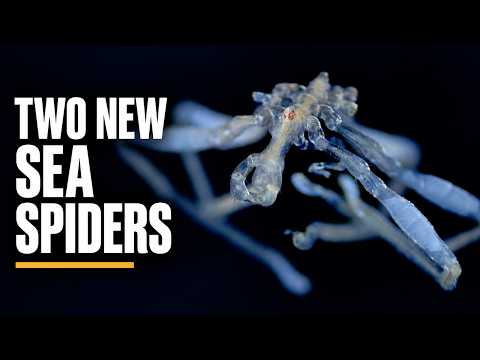
Sea spiders in the Salish Sea went nearly a century without a new species description. A University of British Columbia (UBC) master's student found two in a single field season of scuba diving.

The study, published August 26 in the journal Organisms Diversity & Evolution, is the first regional survey to pair close-up imaging with DNA analysis. It gives scientists a genetic baseline to measure how climate change and human activity reshape the region's marine invertebrates.

Why it matters

For the first time, Salish Sea sea spiders have a genetic baseline scientists can use to measure how climate change alters the region's marine life.

Questions about this story

Free account needed to ask — your question is kept and asked for you right after sign-up. Answers are public.

No questions yet — be the first to ask.

Key Indicators

2
New sea spider species described
Callipallene pilosuspedes and Tanystylum kiixin, both named in the August 2026 study.
20
Sea spider species previously documented in the Salish Sea region
Researchers described the region as under-studied for sea spiders before this survey.
150+
Individual sea spiders collected during field dives
Dives ran from September 2023 to August 2024 at Quadra Island, Vancouver, Bamfield, and Victoria.
≈100 years
Time since the region's last new sea spider description
Researchers describe the new finds as the first in nearly a century.

Voices

Curated perspectives — historical figures and your fellow readers.

Ever wondered what historical figures would say about today's headlines?

Sign up to generate historical perspectives on this story.

People Involved

Organizations Involved

Timeline

September 2023 August 2026

3 events Latest: August 26th, 2026 · 1 month ago
  1. Two new sea spider species described

    Latest Publication

    The study in Organisms Diversity & Evolution named Callipallene pilosuspedes and Tanystylum kiixin, the region's first new sea spider descriptions in nearly a century.

  2. Collections wrap with 150+ specimens

    Research

    The team gathered more than 150 individual sea spiders from depths up to 60 feet across a range of marine habitats.

  3. Field surveys launch across the Salish Sea

    Research

    Researchers began diving at Quadra Island, Vancouver, Bamfield, and Victoria to document sea spider diversity. The surveys ran through August 2024.

Scenarios

1

Salish Sea surveys uncover more new sea spider species

Likely Resolves by End of 2028

Discussed by: Lead author Cormac Toler-Scott, who told UBC News the region definitely holds more undocumented diversity

Toler-Scott collected more than 150 sea spiders in one field season and identified five species, two of them new. He and his co-authors expect additional undocumented species to surface with more surveys. A follow-up paper describing another new Salish Sea sea spider would confirm this path.

2

Hairy-legged sea spider found beyond its original collection site

Possible Resolves by End of 2029

Discussed by: The UBC research team, which collected only a single specimen of Callipallene pilosuspedes and could not assess its range

Only one hairy-legged specimen was collected, so its distribution is unknown. Additional dives that recover more specimens would let researchers map where it lives and whether it extends beyond the Salish Sea.

3

Sea spider genetic baseline feeds Salish Sea climate monitoring

Possible Resolves by End of 2029

Discussed by: Toler-Scott, who began the project specifically to measure climate and human impacts on Salish Sea invertebrates

The study produced the first genetic sequences for several regional species and an identification guide. If a monitoring program or later study adopts that guide, the region gains a tool for tracking climate impacts on marine invertebrates. That would fulfill the project's original aim.

Historical Context

2 moments from history that rhyme with this story — and how they unfolded.

2012-2014

Atlantic Coast leopard frog (2014)

In the early 2010s, biologist Jeremy Feinberg heard a leopard frog call in New York City-area wetlands that did not match known species. Genetic analysis showed it was a distinct species, Lithobates kauffeldi, found along the dense Atlantic coast corridor.

Then

The 2014 description made international news as a new amphibian found near New York City.

Now

It became a case study in how DNA analysis reveals species that physical inspection missed in supposedly well-known urban regions.

Why this matters now

Like the sea spiders, this species was found close to major cities through careful genetic work, showing how DNA analysis overturns the assumption that well-surveyed regions are fully catalogued.

2021

Rice's whale (2021)

Whales in the Gulf of Mexico had long been treated as an isolated population of Bryde's whales. Genetic analysis in 2021 confirmed they were a separate species, Balaenoptera ricei, with roughly 50 surviving individuals.

Then

The species was recognized as critically endangered, and its small population drew conservation attention.

Now

The confirmation showed molecular methods could split long-accepted species into distinct ones, with direct consequences for protection.

Why this matters now

Like the sea spiders, Rice's whale was hidden in plain sight in a heavily studied marine region, identified only after DNA analysis.

Sources

(7)