
Pull to refresh
Logo
Construction begins on Portugal's Lisbon-Porto high-speed rail line

Construction begins on Portugal's Lisbon-Porto high-speed rail line

Built World

First 71-km section between Porto and Oiã targets 1h15 Lisbon-Porto travel by 2032

Today: Government formally announces construction start

Overview

Updated 1 hour ago

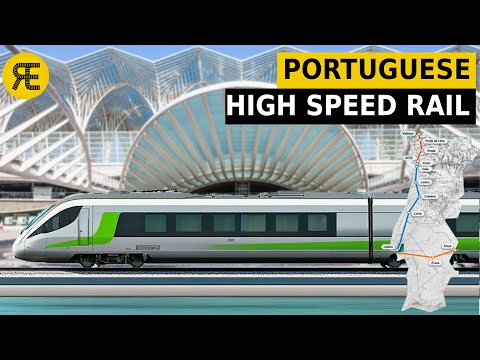
Portugal started building its first high-speed rail line on October 12, 2026, with a 71-kilometer first section from Porto-Campanhã to Oiã. The full line will cut the Lisbon-Porto journey from about 2 hours 45 minutes to 1 hour 15 minutes.

The €2 billion first section includes a new road-rail bridge over the Douro River, 8 kilometers of tunnels, and 19 kilometers of bridges and viaducts. The project aims to free capacity on the congested Linha do Norte for commuter and freight trains. It also connects Portugal to Europe's high-speed network, including a 3-hour Lisbon-Madrid link by 2034.

Why it matters

By 2032, Portugal's two largest cities will be 1h15 apart by train, changing travel for millions and linking the country to Europe's high-speed network.

Questions about this story

Free account needed to ask — your question is kept and asked for you right after sign-up. Answers are public.

No questions yet — be the first to ask.

Key Indicators

€2B
Cost of first section
Concession for the 71-km Porto-Oiã section, signed July 2025.
71 km
Length of first section
Double-track electrified line from Porto-Campanhã to Oiã.
300 km/h
Design speed
The new line is prepared for speeds up to 300 km/h.
1h15
Target Porto-Lisbon travel time
Down from about 2h45 on the current conventional line.
2030
First phase completion target
Full Porto-Lisbon service targeted for 2032.

Voices

Curated perspectives — historical figures and your fellow readers.

Ever wondered what historical figures would say about today's headlines?

Sign up to generate historical perspectives on this story.

People Involved

Organizations Involved

Timeline

April 2025 October 2026

5 events Latest: Today
Tap a bar to jump to that date
  1. Government formally announces construction start

    Today Announcement

    Government and IP mark the official start of high-speed rail construction.

  2. Construction begins on first section

    Construction

    Work starts on the Porto-Campanhã to Oiã section, the first physical step.

  3. Concession contract signed for Porto-Oiã section

    Contract

    IP and AVAN consortium sign 30-year concession for the 71-km first section.

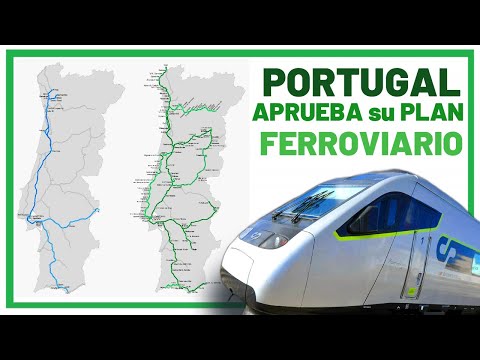
  4. Government approves National Railway Plan

    Policy

    Council of Ministers approves plan prioritizing high-speed rail investments.

Scenarios

1

Porto-Lisbon high-speed line opens on schedule in 2032

Likely Resolves by End of 2032

Discussed by: Portuguese government and Infraestruturas de Portugal

Construction proceeds on schedule. The first phase (Porto-Oiã) completes by 2030, and the second phase (Oiã-Soure and Soure-Carregado) by 2032. Direct services run between Porto and Lisbon in about 1h15, with possible stops at Gaia, Aveiro, Coimbra, and Leiria.

2

Santo Ovídio station dispute delays construction

Possible Resolves by End of 2027

Discussed by: Observador, Vila Nova de Gaia mayor Luís Filipe Menezes

The mayor of Vila Nova de Gaia continues to oppose the 60-meter-deep underground station at Santo Ovídio. If the dispute escalates into legal challenges or a redesign, the project could face delays. The minister of infrastructure has promised to hear the mayor's concerns.

3

Second phase funding gap delays full line

Possible Resolves by End of 2028

Discussed by: Portuguese government, European Commission

The Porto-Oiã section secured €875 million from the European Investment Bank and €480 million from the Connecting Europe Facility. The second phase (Soure-Carregado) has not yet been tendered. If EU support for the second phase falls short, the government may need to find alternative financing or delay the 2032 completion target.

Historical Context

2 moments from history that rhyme with this story — and how they unfolded.

September 1981

French TGV Sud-Est (1981)

France opened its first high-speed rail line between Paris and Lyon in September 1981, cutting travel time from about 4 hours to 2 hours. The line carried more passengers than projected in its first year.

Then

The TGV proved high-speed rail could attract passengers away from air and road travel in Europe.

Now

It spawned a network that now covers most of France and connects to neighboring countries.

Why this matters now

Portugal's Lisbon-Porto line follows the same model: a first high-speed line that proves the concept and anchors a wider network.

April 1992

Spanish AVE Madrid-Seville (1992)

Spain opened its first high-speed line, the AVE, between Madrid and Seville in April 1992, in time for the Seville Expo. The line was politically controversial due to its cost and the choice of standard gauge over Spain's broad gauge.

Then

The AVE was initially criticized for low ridership but gradually gained passengers.

Now

Spain now has one of the largest high-speed networks in the world, second only to China.

Why this matters now

Like Spain, Portugal is building its first high-speed line with EU support, facing political controversy but aiming for long-term network expansion.

Sources

(8)