
Pull to refresh
Logo
Daily Brief
Following
Why Sign Up
California's high-speed rail project

California's high-speed rail project

Built World
By Newzino Staff |

An 18-year bet on connecting San Francisco to Los Angeles by train

February 28th, 2026: Authority releases Draft 2026 Business Plan

Overview

California voters approved a bullet train in 2008 with a $33 billion price tag and a promise to whisk passengers from San Francisco to Los Angeles by 2020. Eighteen years later, no train has run, the price tag for the full San Francisco–Anaheim line has climbed to roughly $231 billion, and the first segment — Merced to Bakersfield in the Central Valley — is not expected to carry passengers before 2033. On February 28, 2026, the California High-Speed Rail Authority released its Draft 2026 Business Plan, the agency's first full strategic update since the Trump administration pulled $4 billion in federal grants and California abandoned its court fight to get them back.

Why it matters

If California can finish even the Central Valley segment, it will be the first true high-speed rail line in the United States — proof, or refutation, that the country can still build big.

Key Indicators

$231B
Estimated full Phase 1 cost
Current estimate to complete the 494-mile San Francisco to Los Angeles/Anaheim line.
$34.8B
Merced–Bakersfield segment cost
Cumulative spending needed to open the 171-mile Central Valley starter line.
2033
Earliest passenger service
Target year for first revenue service on the Central Valley segment.
80 mi
Guideway complete
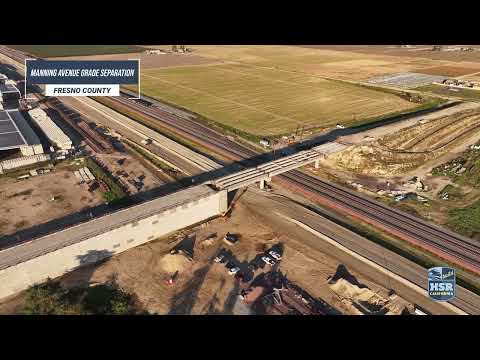
Continuous viaducts and trackbed finished as of early 2026, about 67% of the initial segment.
$1B/yr
Cap-and-trade funding through 2045
Annual state climate revenue dedicated to high-speed rail under the September 2025 extension.
$4B
Federal grants revoked
Funding pulled by the Trump administration in July 2025 after a Federal Railroad Administration review.

Interactive

Exploring all sides of a story is often best achieved with Play.

Ever wondered what historical figures would say about today's headlines?

Sign up to generate historical perspectives on this story.

Sign Up

Debate Arena

Two rounds, two personas, one winner. You set the crossfire.

People Involved

Organizations Involved

Timeline

  1. Authority releases Draft 2026 Business Plan

    Strategy

    The plan trims Phase 1 cost estimates by $1.7 billion, targets 2033 for Merced–Bakersfield service, and reorients delivery around incremental expansion funded by state cap-and-invest revenue.

  2. California drops federal funding lawsuit

    Legal

    The Authority abandons its July 2025 lawsuit challenging the grant terminations, calling the federal government 'not a reliable partner.'

  3. California extends cap-and-trade through 2045 with $1B/year for rail

    Funding

    The Legislature reauthorizes cap-and-trade as 'cap-and-invest' through 2045 and locks in roughly $1 billion a year for high-speed rail, replacing the variable percentage-based formula.

  4. Trump administration terminates $4B in federal grants

    Funding

    Transportation Secretary Sean Duffy cancels the 2010 $928M grant and the 2023 $3.07B grant, ending federal participation in the project.

  5. FRA issues critical compliance report

    Federal review

    A 315-page Federal Railroad Administration report flags missed deadlines, budget shortfalls, and ridership projections it deems unsupported.

  6. Ian Choudri appointed CEO

    Leadership

    Choudri takes over the rail authority and begins reshaping its delivery strategy ahead of the 2026 business plan.

  7. Federal-State Partnership grant adds $3.07 billion

    Funding

    The FRA awards California a $3.07 billion Federal-State Partnership grant, the largest single federal investment in the project to date.

  8. Biden administration restores federal funding

    Funding

    The Biden administration reverses the 2019 grant termination, restoring the $929 million.

  9. First Trump administration tries to revoke federal grant

    Funding

    The Federal Railroad Administration moves to claw back $929 million in federal funding, beginning a multi-year legal fight.

  10. Newsom narrows project to Central Valley

    Strategy

    In his first State of the State, Governor Newsom says completing the full SF–LA line as planned is no longer realistic and refocuses the project on Merced–Bakersfield.

  11. Construction begins in Fresno

    Construction

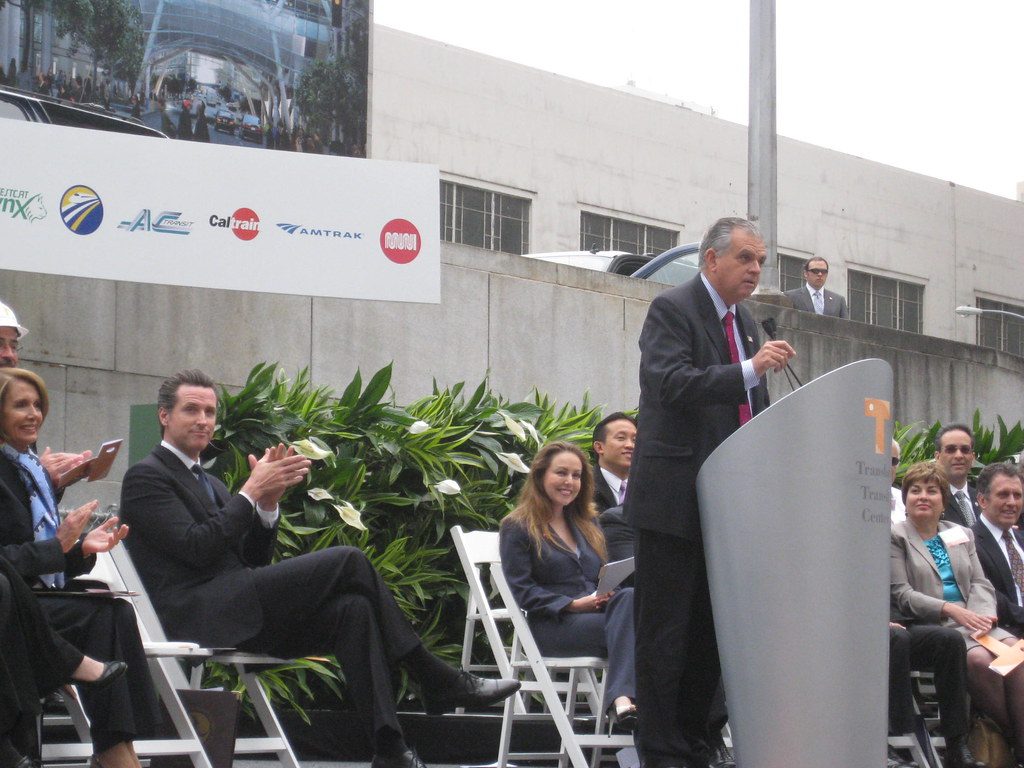
    Crews break ground on the first construction package in the Central Valley, seven years after voter approval.

  12. Federal stimulus brings $2.5B to the project

    Funding

    The Obama administration awards California $2.5 billion in American Recovery and Reinvestment Act funds, later supplemented by an additional $929 million grant.

  13. California voters approve Proposition 1A

    Ballot measure

    Voters authorize $9.95 billion in state bonds to build a high-speed rail system from San Francisco to Los Angeles, on the promise of 2-hour-40-minute trips by 2020 at a $33 billion total cost.

Scenarios

1

Central Valley line opens around 2033, becomes first true U.S. high-speed rail

Discussed by: California High-Speed Rail Authority, Streetsblog California, Railway Age

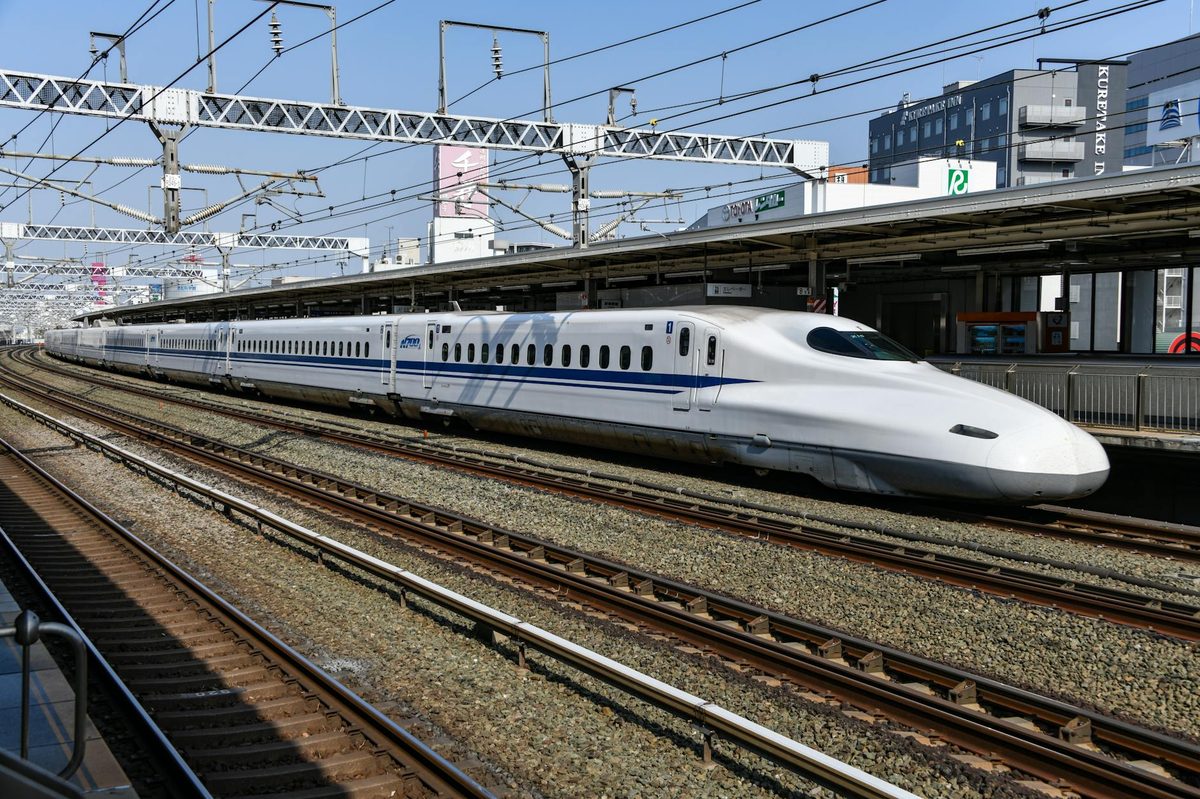
The Authority finishes the 171-mile Merced–Bakersfield segment on its current trajectory, funded by the locked-in $1B/year cap-and-invest stream and remaining Proposition 1A bond proceeds. Service begins in 2033 with electrified trains running at up to 220 mph between Central Valley cities. The line carries modest ridership but proves the country can build high-speed rail, opening political space for incremental extensions to Gilroy and Palmdale through the 2030s.

2

Project stalls in Central Valley, becomes a regional commuter line

Discussed by: California Policy Center, federal Department of Transportation, Reason Foundation

Even with stable cap-and-invest funding, costs to extend beyond the Central Valley prove prohibitive without federal partnership. Once Merced–Bakersfield opens, political appetite for spending tens of billions more on tunneling through the Tehachapi and Pacheco mountains evaporates. The line operates indefinitely as a regional Central Valley service, never reaching San Francisco or Los Angeles, becoming the cautionary 'train to nowhere' critics predicted.

3

Federal funding returns under a future administration

Discussed by: Governor Newsom, congressional Democrats, U.S. High Speed Rail Association

A future federal administration restores high-speed rail as a national priority, treating California's Central Valley line as the proof-of-concept it was originally meant to be. New federal grants accelerate the Bakersfield-to-Palmdale and Merced-to-Gilroy extensions, with the SF-to-LA connection completed in the 2040s. This pattern would echo the 2019–2021 cycle when federal funding was pulled and then restored across administration changes.

4

Cap-and-invest revenue underdelivers, forcing scope cuts

Discussed by: Legislative Analyst's Office, CalMatters

California's cap-and-invest carbon market produces less revenue than projected as the state's emissions fall faster than the cap, shrinking allowance prices. The $1B/year commitment becomes harder to sustain politically as it competes with wildfire response and other climate priorities. The Authority is forced to slow construction or further narrow the initial operating segment, pushing 2033 service into the late 2030s.

Historical Context

Boston's Big Dig (1991–2007)

1991–2007

What Happened

Boston's Central Artery/Tunnel project rerouted I-93 underneath downtown, replacing an elevated highway with a tunnel network. Originally estimated at $2.8 billion with completion by 1998, it ultimately cost about $24 billion including financing and was substantially complete only in 2007.

Outcome

Short Term

The project finished roughly nine years late and at nearly nine times its original budget, becoming the canonical American example of megaproject cost overrun.

Long Term

Boston ended up with the infrastructure it paid for — the elevated highway is gone and downtown is reconnected to the waterfront — but the political fallout made future federal partners more cautious about large urban infrastructure commitments.

Why It's Relevant Today

Like California high-speed rail, the Big Dig demonstrated that American megaprojects routinely run multiples over their original cost and decades past their original timeline — and that the underlying infrastructure can still ultimately be built and used.

Channel Tunnel (1988–1994)

December 1988 – May 1994

What Happened

Britain and France jointly built a 31-mile rail tunnel under the English Channel, financed entirely by private capital with no government guarantees. The project ran roughly 80% over budget at about £4.65 billion and opened a year late.

Outcome

Short Term

The operating company, Eurotunnel, struggled financially for years and went through multiple debt restructurings before becoming profitable.

Long Term

The tunnel carries millions of passengers and substantial freight annually, and Eurostar has reshaped travel between London, Paris, and Brussels — vindicating the underlying infrastructure thesis even as the financing structure failed.

Why It's Relevant Today

The Channel Tunnel shows that high-speed rail megaprojects can be transformative even when the original financing model collapses — a useful frame for evaluating California's pivot away from federal funding toward state climate revenue.

Spain's AVE high-speed network buildout (1992–present)

April 1992 – present

What Happened

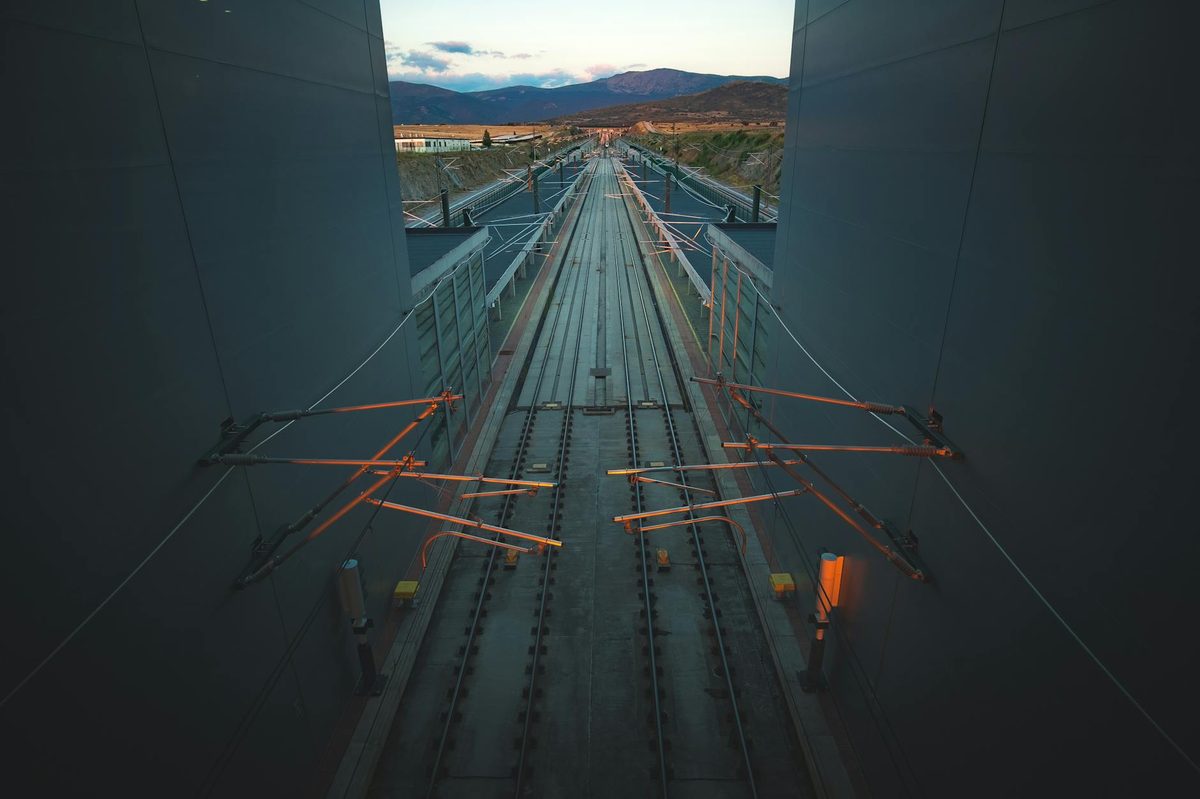
Spain opened its first high-speed line from Madrid to Seville in 1992 and has since built more than 2,300 miles of dedicated high-speed track, second only to China globally. Construction relied on heavy EU structural funds and a national policy commitment to connect every provincial capital to Madrid.

Outcome

Short Term

Spain achieved the largest high-speed network in Europe, with travel times like Madrid–Barcelona compressed from over six hours to under three.

Long Term

Some lines have been criticized for low ridership relative to cost, but the network has reshaped Spanish domestic travel and largely displaced short-haul aviation between major cities.

Why It's Relevant Today

Spain's experience shows what sustained, multi-decade public funding can build — and it is the model California is implicitly attempting with its $1B-a-year cap-and-invest commitment, swapping U.S. federal grants for a stable state revenue stream.

Sources

(10)