

Pull to refresh
Logo
Ningbo opens China's first cross-sea urban rail bridge

Ningbo opens China's first cross-sea urban rail bridge

Built World

61.45 km line puts Xiangshan county inside the city's half-hour commuting circle

3 days ago: Ningbo-Xiangshan line opens to passengers

Overview

Updated 1 hour ago

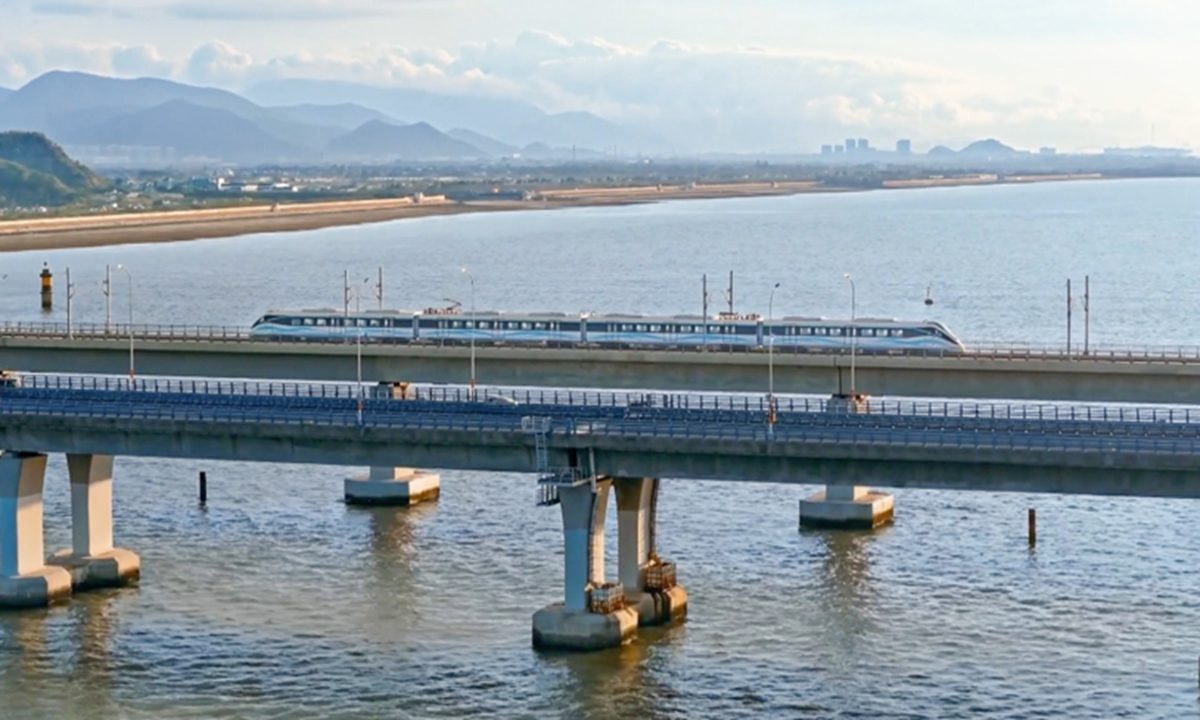
On September 22, a train crossed the East China Sea on a new cable-stayed bridge in Ningbo, a port city south of Shanghai. The bridge anchors a 61.45 km urban railway that links the city center with Xiangshan, a peninsula county to the south.

It's the first cross-sea bridge built for an urban railway in China and the world's largest ballastless-track cable-stayed rail bridge. The fastest trip from Ningbo's core to Xiangshan now takes about half an hour at 160 km/h, pulling the county into the city's commuting circle for the first time and easing pressure on the parallel Yongguan Expressway.

Why it matters

The rail link pulls a once-isolated coastal county into a half-hour commuting circle, reshaping where people live, work, and vacation along Ningbo's coast.

Questions about this story

Free account needed to ask — your question is kept and asked for you right after sign-up. Answers are public.

No questions yet — be the first to ask.

Key Indicators

61.45 km
Line length
The Ningbo-Xiangshan line has 10 stations, two underground and eight elevated.
160 km/h
Maximum train speed
The fastest Ningbo-to-Xiangshan trip is about 30 minutes.
8.276 km
Cross-sea bridge length
The bridge's main span is 688 m; its sea-crossing section runs 6.2 km.
360 km
Total metro network mileage
Up from 297 km, the line extends the network to Xiangshan for the first time.
26.76B yuan
Total project investment
Official investment figure for the whole line, roughly $3.8 billion.

Voices

Curated perspectives — historical figures and your fellow readers.

Ever wondered what historical figures would say about today's headlines?

Sign up to generate historical perspectives on this story.

People Involved

Organizations Involved

Timeline

February 2023 September 2026

3 events Latest: 3 days ago
  1. Ningbo-Xiangshan line opens to passengers

    Latest Launch

    First train departs Xiaoyangjiang Station; Xiangshan gets its first rail link to the city center.

  2. Track laying starts on the bridge

    Construction

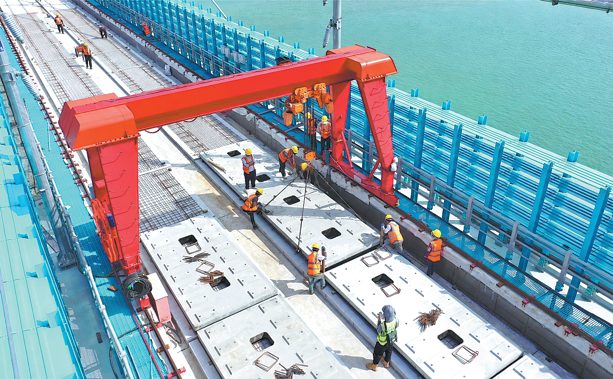
    CREC4 begins laying ballastless track on the cable-stayed bridge, the project's riskiest segment.

  3. Construction begins on Xiangshan Port bridge

    Construction

    Work starts on the 8.276 km cross-sea bridge, the line's control project, in the East China Sea.

Scenarios

1

Ningbo opens Line 10 by year-end, extending the network

Likely Resolves by End of 2026

Discussed by: cnnb.com.cn, the Ningbo municipal news outlet, reported Line 10 is racing toward completion within 2026

Ningbo Rail Transit has said Line 10, connecting the urban districts with Cixi, is on track to open before year-end. If it does, the network expands past 360 km and the cross-sea line becomes part of a larger regional grid rather than a single coastal spur.

2

Cross-sea bridge clears first typhoon season without extended closure

Possible Resolves by Oct 31, 2026

Discussed by: Engineers at CREC4 and China Railway Siyuan designed the bridge for 46.5 m/s design wind speeds

The bridge sits in an area that takes strong typhoons each summer and fall. Builders ran more than 20 wind tunnel tests and installed a 3-meter diversion barrier plus 78 dampers to suppress vortex vibration. The tail of this year's typhoon season is the first live test of those systems.

3

Xiangshan tourism revenue rises double digits in first full year

Possible Resolves by Sep 22, 2027

Discussed by: Ningbo Marine Economy Development Bureau deputy director Zhang Honghui cited tourism and industry links as the line's main payoff

Officials expect rail access to boost Xiangshan's beaches, fishing ports, and film studios. The county already extended its autumn fishing festival from a short event to an August-to-October season. First-year visitor and revenue data will show whether the connection converts curiosity into lasting traffic.

Historical Context

3 moments from history that rhyme with this story — and how they unfolded.

2000

Oresund Bridge (2000)

A 7.8 km combined road-and-rail link between Copenhagen and Malmo opened in July 2000. Trains cross in about 35 minutes and run every 20 minutes.

Then

It merged two cities into a single labor market, the Oresund Region.

Now

Rail carries most cross-link travelers, making it the leading example of cross-sea rail commuting.

Why this matters now

It is the clearest precedent for what Ningbo wants: a cross-sea rail link that turns a separate county into a functional suburb.

May 2008

Hangzhou Bay Bridge (2008)

A 35.7 km highway bridge opened across Hangzhou Bay, the water between Ningbo and Shanghai. It cut the road trip between the two cities from about four hours to roughly two and was the world's longest sea crossing at the time.

Then

It redirected traffic and sparked development in Jiaxing and Cixi, towns along the crossing.

Now

It became the template for Chinese sea-crossing infrastructure that later provinces copied.

Why this matters now

Built in the same region and for the same reason, Ningbo's new bridge extends the logic one step: moving commuters by rail, not just cars, across the bay.

October 2018

Hong Kong-Zhuhai-Macau Bridge (2018)

A 55 km sea crossing, the world's longest, opened after nine years of construction. It linked Hong Kong, Zhuhai, and Macau by road for the first time.

Then

It cut road travel from Hong Kong to Zhuhai from about four hours to under one.

Now

Traffic took years to reach forecasts, a reminder that mega sea crossings often fill slowly.

Why this matters now

A caution for expectations of instant ridership on the Ningbo-Xiangshan line.

Sources

(8)