

Pull to refresh
Logo
Louisville school board authorizes litigation as JCPS works to close budget gap

Louisville school board authorizes litigation as JCPS works to close budget gap

Money Moves Louisville, KY local

District cut $115 million and 352 positions after a state audit found a $188 million shortfall; officials warn next year could be $20-30 million worse

Overview

Updated 1 hour ago

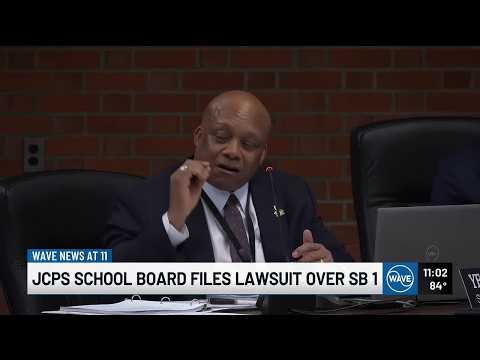
Jefferson County Public Schools is digging out of a $188 million budget hole. At its Sept. 22 meeting, the board voted 5-0 to authorize a litigation strategy in closed session; the target was not disclosed.

The district has cut $115 million and eliminated 352 positions, trimming the gap to $51 million, or $132 million with one-time costs. Officials expect next year to be $20-30 million worse, and cash reserves could dip below zero this fall. A new board takes over in January, with school closures among the options.

Why it matters

If the recovery stalls, Louisville families face school closures and deeper cuts as a new board takes over in January.

Monday: what changed in Louisville, KY

One short email a week with the openings, closings, permits and council votes we covered. Free. Unsubscribe in one click.

Questions about this story

Free account needed to ask — your question is kept and asked for you right after sign-up. Answers are public.

No questions yet — be the first to ask.

Key Indicators

$51M
Remaining budget gap
Down from a $188 million shortfall disclosed by the state audit; $132 million counting one-time costs.
$115M
Spending already cut
Includes $44.24 million from stipends and curriculum changes plus $27.8 million from eliminating positions.
352
Positions eliminated
Bulk of cuts hit academics and schools divisions, including 148 instructional coaches.
$100M
Payroll line of credit
Backstop when cash runs low before property taxes arrive; cash balance is projected below zero in fall 2026 and 2027.
192
Audit recommendations
32 fully implemented, 99 partially implemented, 52 in beginning stages, 9 handled through alternative actions.

Voices

Curated perspectives — historical figures and your fellow readers.

Sign up to generate historical perspectives on this story.

People Involved

Organizations Involved

Timeline

2026 September 2026

4 events Latest: September 23rd, 2026 · 1 month ago
Tap a bar to jump to that date
  1. District reports gap cut to $51M

    Latest Report

    JCPS says deficit reduced from $188 million to $51 million; $115 million cut and 352 positions eliminated.

  2. Board authorizes litigation, receives budget update

    Board Meeting

    Board votes 5-0 to authorize litigation strategy and receives FY 2026-27 working budget and recovery update.

  3. State audit finds $188M JCPS shortfall

    Audit

    Auditor Allison Ball's audit finds a $188 million shortfall and delivers 192 recommendations.

  4. JCPS presents corrective action plan

    Testimony

    Superintendent Brian Yearwood presents the plan to Kentucky's Interim Joint Committee on Education.

Scenarios

1

JCPS meets its three-year deficit elimination target

Possible Resolves by Q2 2029

Discussed by: JCPS district officials (WLKY)

The district projects the deficit will be eliminated within three years. That requires continued spending cuts, the $100 million line of credit to bridge cash-flow gaps before property taxes arrive, and no major unexpected costs. The new board taking office in January would need to stick with the existing plan.

2

New board approves school closures or deeper cuts

Possible Resolves by Q2 2027

Discussed by: Board member Taylor Everett (WLKY)

Everett says school closures, salary cuts, and program cuts are all on the table. The financial situation is projected to worsen by $20-30 million in 2027, and a new board arrives in January. That combination could push the board to close or consolidate schools, or approve cuts beyond the $115 million already made.

3

Kentucky escalates state oversight of JCPS

Unlikely Resolves by End of 2027

Discussed by: State Auditor Allison Ball; district critics

If JCPS misses recovery milestones or cash reserves stay below zero, the state could move beyond the corrective action plan and 192 recommendations. Possible responses include a state-appointed financial manager or expanded state authority over district finances, similar to interventions used in other states.

Historical Context

3 moments from history that rhyme with this story — and how they unfolded.

June 2016

Detroit Public Schools state emergency management (2016)

Michigan governors had appointed emergency financial managers for Detroit schools for years as deficits mounted. In June 2016, the legislature created a new Detroit Public Schools Community District, leaving roughly $600 million in old debt behind for the state to pay down.

Then

A new district started fresh while the state absorbed legacy debt payments.

Now

State emergency management became a template for how distressed districts get restructured nationwide.

Why this matters now

Shows how far state intervention can go if a district's finances don't recover on their own.

May 2013

Chicago Public Schools mass closures (2013)

Mayor Rahm Emanuel's appointed board voted to close 50 elementary schools, citing low enrollment and budget pressure. It was one of the largest single-year mass closures in U.S. history.

Then

Community protests, displaced students, and longer commutes to new schools.

Now

The closures remained a political wound in Chicago and reshaped the national debate on school consolidation.

Why this matters now

JCPS board member Taylor Everett has explicitly said school closures are on the table as a cost-saving option.

February 2010

Central Falls, Rhode Island takeover (2010)

Struggling with a budget crisis and poor performance, the state took over Central Falls schools. The superintendent then fired all teachers and staff at the city's high school.

Then

All staff were terminated, sparking a national firestorm over teacher dismissals.

Now

The case became a symbol of hard-line state intervention in local school governance.

Why this matters now

Represents the outer limit of state power if a local recovery effort fails.

Sources

(4)