
Pull to refresh
Logo
Nantong–Ningbo high-speed line begins overhead wire installation

Nantong–Ningbo high-speed line begins overhead wire installation

Built World

Stringing 301 km of catenary is the last major system before test running, with project completion targeted for December 2027.

Overview

Updated 51 minutes ago

On November 19, crews strung the first messenger wire on a new railway between Nantong and Ningbo, the opening move in wiring the entire 301 km line for electric traction. That wire is the load-bearing strand from which the contact wire hangs, the surface a train's pantograph slides along at speed.

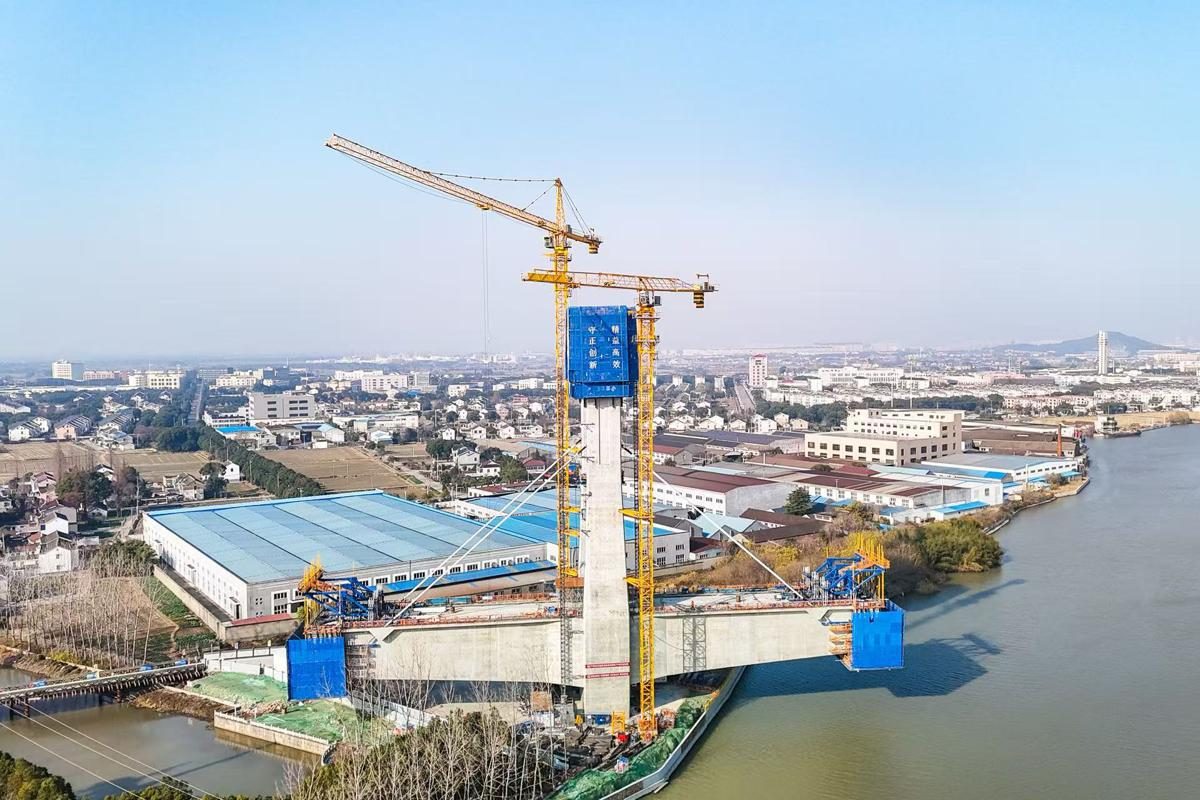
Track laying began October 14 and the line's tunnels and bridges are essentially finished. What remains is electrical and signalling work, the part that turns a civil structure into a working railway. Completion is targeted for December 2027, when the line is meant to put Ningbo about an hour from Suzhou and Shanghai.

Why it matters

Once energized, the line is meant to put Ningbo about an hour from Suzhou and Shanghai, redrawing commute and freight routes across the delta.

Questions about this story

Free account needed to ask — your question is kept and asked for you right after sign-up. Answers are public.

No questions yet — be the first to ask.

Key Indicators

301
New track length
Length of newly built line between Nantong West and Ningbo.
350 km/h
Design speed
Speed the line is engineered to carry in service.
11
Stations on the line
Includes Nantong West, Suzhou North, Jiaxing South, Cixi and Ningbo.
27.5 kV
Contact-line voltage
Voltage the overhead system delivers to train pantographs.
Dec 2027
Targeted completion
Five-year construction period running from the November 2022 start.

Voices

Curated perspectives — historical figures and your fellow readers.

Sign up to generate historical perspectives on this story.

People Involved

Organizations Involved

Timeline

July 2022 November 2026

5 events Latest: Today
Tap a bar to jump to that date
  1. First messenger wire installed

    Today Electrification

    Crews string the first load-bearing wire, opening full-line overhead system work.

  2. Full-line track laying begins

    Construction

    The first 500-metre rail pair is laid, starting track work along the whole route.

  3. First overhead pole erected

    Electrification

    A 9.5-metre, 1.62-tonne steel pole goes up at Cicheng North in Zhejiang.

  4. Construction starts

    Construction

    Work begins on the Jiangsu and Zhejiang sections under a five-year schedule.

  5. Feasibility study approved

    Approval

    The National Development and Reform Commission approves the project, clearing the way for construction.

Scenarios

1

Overhead system is energised and joint commissioning starts in 2027

Likely Resolves by Q3 2027

Discussed by: Project schedule published by China State Railway Group and reported by Xinhua

Wiring the full 301 km, installing substations and energising the line are the steps before test trains run. If the electrical contracts hold to the pace set since September, the line moves into joint commissioning and testing in the first half of 2027, with trial trains running the whole route before passenger service.

2

Line opens to passengers before the end of 2027

Possible Resolves by End of 2027

Discussed by: Five-year construction schedule cited by Baidu Baike and Wikipedia

The project carries a five-year construction period from the November 2022 start, with completion listed for December 7, 2027. A December 2027 completion usually leaves little room before revenue service, so an opening inside 2027 depends on commissioning starting early in the year.

3

Opening slips into 2028

Unlikely Resolves by End of 2027

Discussed by: No current forecast; this tracks the risk implied by the December 2027 completion date

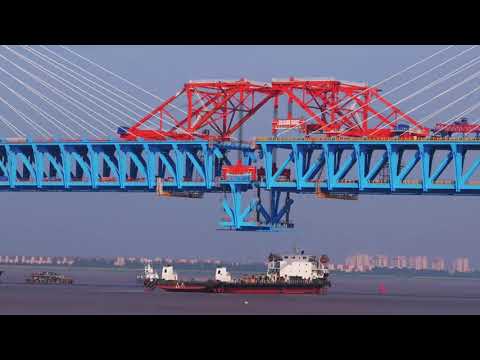
Systems installation is the phase where slippage is hardest to absorb, because wire stringing, substation work and signalling checks must finish before a train can run. Delays on the Hangzhou Bay crossing or in station construction would push first service past the 2027 target.

Historical Context

2 moments from history that rhyme with this story — and how they unfolded.

1930s–1944

Suzhou–Jiaxing railway (1930s–1944)

A railway between Suzhou and Jiaxing operated from the 1930s until 1944, giving the two cities a direct north-south link. It closed, and for decades afterwards rail traffic between them routed through Shanghai.

Then

The direct connection disappeared, and passengers and freight took the long way around through Shanghai.

Now

The corridor stayed without a direct rail link for the rest of the century, which shaped how the delta's network grew around Shanghai.

Why this matters now

The Nantong–Ningbo line reopens that north-south axis, bypassing Shanghai through Suzhou and Jiaxing, so the delta's network stops being purely radial.

October 2008

Hangzhou Bay crossing enters the national plan (2008)

A rail crossing of Hangzhou Bay was written into China's medium-and-long-term railway network plan in its 2008 adjustment. The sea crossing that carries this line is 29.158 km long and took until 2022 to reach construction.

Then

The crossing stayed a planning line item while the surrounding network was built out.

Now

It became the fixed point the whole Nantong–Ningbo alignment had to serve, and the longest single piece of civil work on the route.

Why this matters now

Fourteen years passed between the plan entry and the start of construction, which is why the bridge remains the schedule risk now that wiring has begun.

Sources

(7)