
Pull to refresh
Logo
Mount Sinai opens a city-funded surgical innovation center on the Upper East Side

Mount Sinai opens a city-funded surgical innovation center on the Upper East Side

Built World New York, NY local

A $23 million complex across three hospital buildings gives device developers surgical suites, a cadaver lab and an animal angiography suite in one place. New York City paid $11.6 million of the cost.

Overview

Updated 1 hour ago

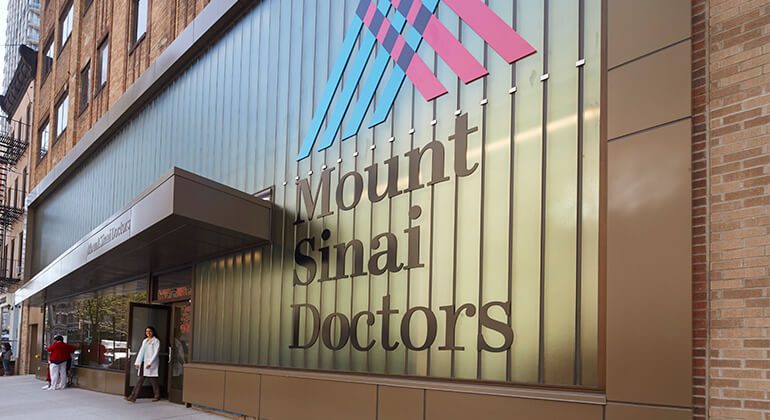
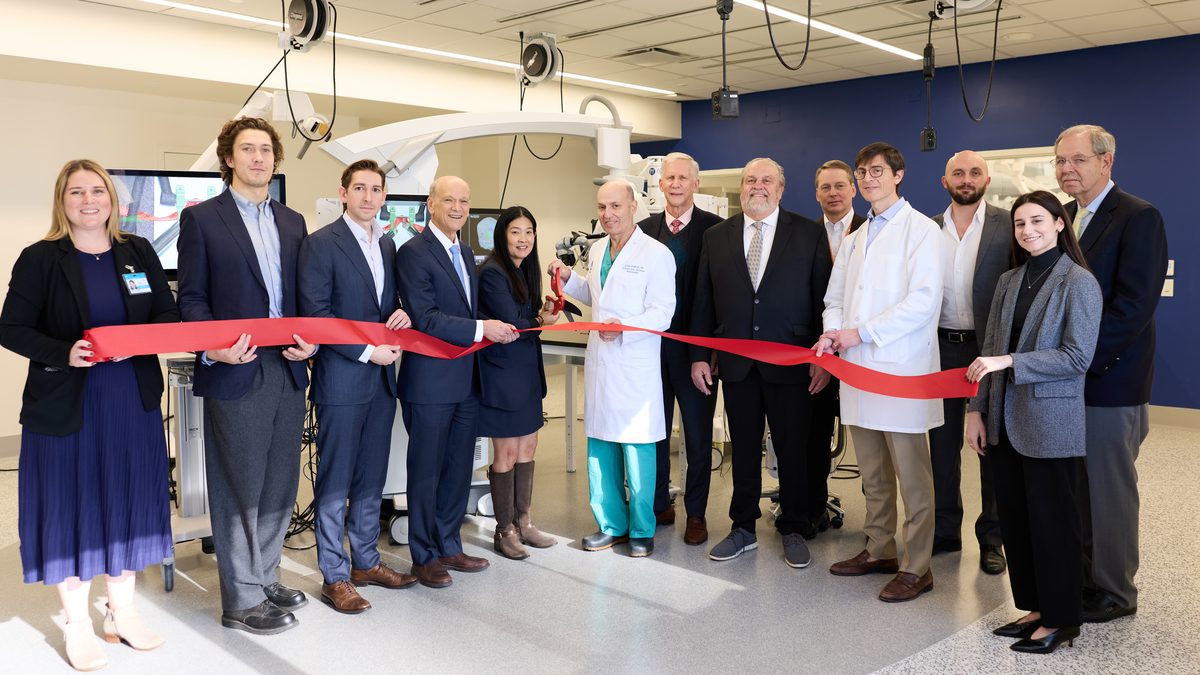
A surgeon with an idea for a new device usually needs three things in three places: a machine shop, a cadaver lab and an operating room rigged for testing. Construction is finished on the Comprehensive Center for Surgical Innovation, a $23 million complex that puts them on one campus across three Mount Sinai Hospital buildings, New York YIMBY reported on November 23.

New York City's Economic Development Corporation put $11.6 million into it through LifeSci NYC, the city's grant program for life-sciences projects. That public money makes the center an economic-development bet as well as a medical one, and its payoff will be measured in devices that reach patients, not in the building.

Why it matters

New York put $11.6 million into a device lab whose payoff arrives, if at all, years from now in operating rooms.

Last Monday's email for New York, NY

Sent Nov 23. It carried:

Get next Monday's: one short email a week. Free. Unsubscribe in one click.

Questions about this story

Free account needed to ask — your question is kept and asked for you right after sign-up. Answers are public.

No questions yet — be the first to ask.

Key Indicators

$23M
Total project cost
Cost of the three-facility complex at the Mount Sinai Hospital campus.
$11.6M
City grant from LifeSci NYC
Awarded by the New York City Economic Development Corporation in August 2022.
50%
Share of cost covered by the city grant
The $11.6 million grant covers just over half of the $23 million project.
3
Buildings in the complex
Two floors of the Annenberg Building and BioDesign's lab in the Atran Building.
15+
BioDesign concepts in testing
Innovation projects under validation across more than 10 areas of health care, as of November 2026.

Voices

Curated perspectives — historical figures and your fellow readers.

Sign up to generate historical perspectives on this story.

Organizations Involved

Timeline

1974 November 2026

4 events Latest: Today
Tap a bar to jump to that date
  1. Surgical innovation center finishes construction

    Today Construction

    Three facilities open: surgical suites and anatomy lab, an animal angiography suite, and a prototyping shop.

  2. City awards the $11.6 million grant

    Funding

    NYCEDC commits LifeSci NYC money, covering just over half the project cost.

  3. BioDesign launches inside neurosurgery

    Institutional

    Mount Sinai's Department of Neurosurgery starts an in-house device incubator.

  4. Annenberg Building opens

    Construction

    The 437-foot Skidmore, Owings & Merrill tower on the Mount Sinai campus, later home to the center's main facilities.

Scenarios

1

First center-developed device enters human clinical trials

Possible Resolves by Q2 2029

Discussed by: Mount Sinai BioDesign, which describes the center's pipeline as running through preparation for human clinical trials

The center exists to move prototypes from bench testing to the point where regulators allow testing in people. A single concept clearing that bar by mid-2029 would show the model works as designed. The trigger is a device developed at the center appearing as an investigational device in a registered study.

2

BioDesign spins out a venture-funded device company

Possible Resolves by Q2 2029

Discussed by: Academic technology-transfer analysts who track university spinout rates

The device industry's usual path out of a hospital lab is a startup that licenses the invention and raises outside money. The center's prototyping shop and animal testing suite are the infrastructure that makes a spinout credible to investors early. The trigger is a disclosed equity financing for a company built on a center-developed device.

3

Pipeline stalls: concepts stay pre-clinical and no device advances

Unlikely Resolves by Q2 2029

Discussed by: Critics of publicly funded research incubators, who argue the payoff timelines rarely match the grant cycles

Most device concepts die before human testing, and a 15-project portfolio can run for years without a single regulatory filing. If the center's output stays at bench and animal testing through 2029, the city's $11.6 million buys real estate and equipment but no products yet.

Historical Context

2 moments from history that rhyme with this story — and how they unfolded.

December 1980

Bayh-Dole Act (1980)

Before 1980, federal agencies generally kept title to inventions made with federal research money, and licensing them to companies was slow and inconsistent. The Bayh-Dole Act let universities, nonprofits and small businesses own those inventions and license them out.

Then

Universities set up technology-transfer offices to patent and license faculty work.

Now

Academic medical centers became routine sources of licensed drugs and devices, and startups built around university patents became standard.

Why this matters now

BioDesign's model, in which a hospital's surgeons invent devices that outside companies build and sell, rests on the ownership rules Bayh-Dole established.

1959

Research Triangle Park (1959)

North Carolina's state government and three universities, Duke, North Carolina State and the University of North Carolina, pooled land and money to build a research park between Raleigh, Durham and Chapel Hill. Private developers had shown no interest in the site.

Then

The park filled slowly over the following decades rather than at once.

Now

It became one of the largest research employment clusters in the United States.

Why this matters now

Research Triangle Park is the template New York City is following with LifeSci NYC: public money for research space the private market would not build alone.

Sources

(1)