


Pull to refresh
Logo
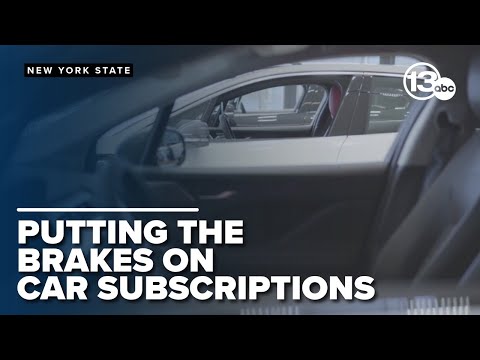
New York bans subscription fees for pre-installed car features

New York bans subscription fees for pre-installed car features

Rule Changes New York, NY local

Governor Kathy Hochul signed a law that takes effect Feb. 27, 2027, and allows fines for automakers that charge to unlock hardware already in the vehicle.

Overview

Updated 1 hour ago

New York has enacted a ban on automakers charging subscription fees to unlock features already built into a vehicle, such as heated seats or remote start, when those features carry no ongoing service cost.

The law takes effect Feb. 27, 2027, and lets the state fine manufacturers that charge for installed hardware. Dealers counter that subscriptions let buyers choose features without raising the price of every car.

Why it matters

If other states copy New York, automakers lose a recurring-revenue model built on hardware buyers already own.

Last Monday's email for New York, NY

Sent Nov 23. It carried:

Get next Monday's: one short email a week. Free. Unsubscribe in one click.

Questions about this story

Free account needed to ask — your question is kept and asked for you right after sign-up. Answers are public.

No questions yet — be the first to ask.

Key Indicators

Feb. 27, 2027
Date the ban takes effect
Automakers have until then to adjust software and billing.
2
Legislative chambers that passed the bill
The state Senate and Assembly approved it before Hochul signed.
$0
Allowed subscription fee for pre-installed hardware
Applies only when the feature has no ongoing service cost.

Voices

Curated perspectives — historical figures and your fellow readers.

Sign up to generate historical perspectives on this story.

People Involved

Organizations Involved

Timeline

November 2025 November 2026

2 events Latest: Yesterday
  1. Hochul signs ban on car-feature subscriptions

    Latest Rule Change

    Law bars fees to unlock pre-installed features with no ongoing service cost.

  2. Legislature passes car-subscription ban

    Legislation

    Both chambers approve the bill; it waits for Governor Hochul.

Scenarios

1

Automakers challenge New York's ban in court

Possible Resolves by Q2 2027

Discussed by: No public prediction identified; included as a measurable legal risk.

A major automaker or auto-industry trade group sues to block the law before it takes effect, arguing that New York is regulating interstate commerce or software licensing in a way that conflicts with federal law. A court could issue an injunction or let the ban proceed.

2

New York issues first fines under the ban

Possible Resolves by Feb 27, 2028

Discussed by: No public prediction identified; included as a measurable enforcement outcome.

After the law takes effect, New York officials test it by penalizing an automaker that continues charging a subscription for installed hardware. The case would set a marker for how aggressively the state reads the law's exception for ongoing services.

3

Another state enacts a similar ban

Possible Resolves by End of 2028

Discussed by: No public prediction identified; included as a measurable copycat outcome.

Lawmakers in another state use New York's law as a template, arguing that pre-installed hardware should not carry recurring fees. The bill would need to pass both chambers and be signed by a governor.

Historical Context

2 moments from history that rhyme with this story — and how they unfolded.

2022

BMW heated-seat subscription (2022)

BMW included heated seats in some cars but charged a monthly subscription to activate them in South Korea and other markets. The plan drew widespread criticism and became a shorthand for hardware paywalls.

Then

BMW said it was testing the model and had no plans to bring it to the U.S.

Now

Automakers still sell software-locked features, but the backlash made heated seats a cautionary example.

Why this matters now

New York's law targets the exact business model BMW tested: charging to unlock hardware already in the vehicle.

2016

Tesla software-locked battery range (2016)

Tesla sold a Model S 60 with a 75 kWh battery limited by software; owners could pay to unlock the extra range. The car contained the硬件, but the software gate controlled access.

Then

Tesla later discontinued the 60 kWh option.

Now

The episode showed software could gate hardware already in the car, laying groundwork for feature subscriptions.

Why this matters now

It established the precedent New York is now restricting: automakers can build a feature into a car and charge separately to turn it on.

Sources

(2)