
Pull to refresh
Logo
NYPD won't enforce NYC bus fares while MTA's enforcement team is suspended

NYPD won't enforce NYC bus fares while MTA's enforcement team is suspended

Rule Changes New York, NY local

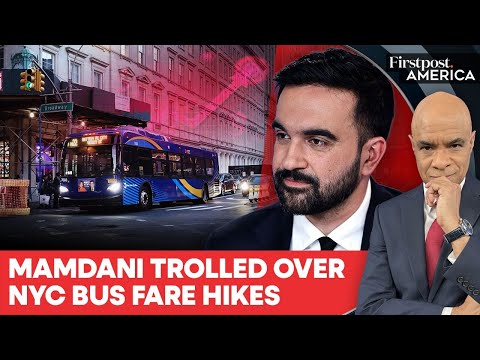
The $3 bus fare now goes largely unenforced as Mayor Mamdani pushes his free-bus proposal

Overview

Updated 43 minutes ago

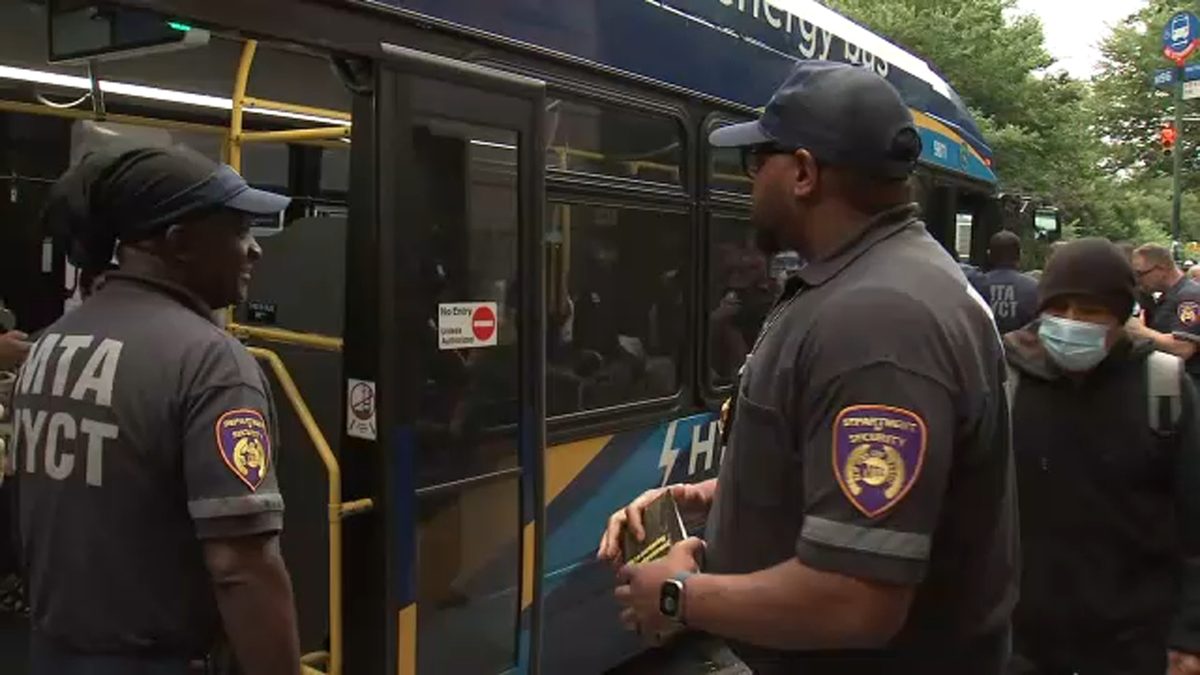
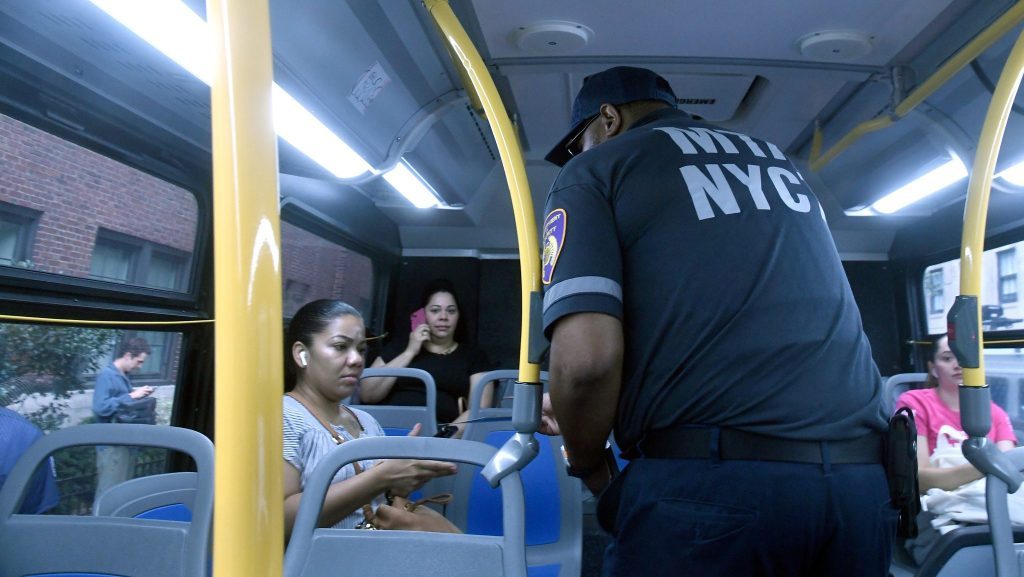
New York City's $3 bus fare is effectively unenforced this week. The Metropolitan Transportation Authority (MTA) suspended its 350-person EAGLE fare enforcement team after two caught-on-camera confrontations with riders, and the NYPD says it won't fill the gap.

The standoff costs the transit agency more than $300 million a year to riders who don't pay, an estimated half of all bus passengers. It also hands Mayor Zohran Mamdani fresh argument for his signature proposal: making buses free.

Why it matters

The MTA loses $300 million a year to unpaid bus fares; the enforcement vacuum may push the city toward making buses free.

Monday: what changed in New York, NY

One short email a week with the openings, closings, permits and council votes we covered. Free. Unsubscribe in one click.

Questions about this story

Free account needed to ask — your question is kept and asked for you right after sign-up. Answers are public.

No questions yet — be the first to ask.

Key Indicators

$300M+
Annual MTA loss to unpaid bus fares
The agency estimates roughly half of bus riders don't pay.
~50%
Bus riders who skip the fare
The MTA's estimate of riders who walk past the driver without paying.
350
EAGLE agents suspended
The MTA's fare enforcement unit is on the bench pending investigation.
$3
NYC bus fare
The fare currently in effect for city buses.

Voices

Curated perspectives — historical figures and your fellow readers.

Sign up to generate historical perspectives on this story.

People Involved

Organizations Involved

Timeline

August 2026 October 2026

5 events Latest: Yesterday
Tap a bar to jump to that date
  1. NYPD says it won't enforce bus fares

    Latest Statement

    Gothamist reports the NYPD has no plans to assist with EAGLE enforcement, leaving the fare unenforced.

  2. MTA weighs body cameras for EAGLE team

    Policy Development

    Agency considers equipping agents with body cameras and adding a clearer complaint process.

  3. MTA suspends EAGLE fare enforcement team

    Policy Change

    Chair Janno Lieber announces the suspension pending an investigation into the confrontations.

  4. Alleged assault on Brooklyn high school aide

    Incident

    EAGLE agents allegedly pin Kyle Taylor against a bus shelter and shove him to the ground in Brownsville.

  5. EAGLE officer tackles passenger in the Bronx

    Incident

    Video shows an EAGLE officer tackling a man getting off a Bx39 bus; three more officers restrain him.

Scenarios

1

EAGLE team returns with body cameras and new rules

Likely Resolves by Q2 2027

Discussed by: MTA officials, Gothamist reporting

After the investigation, the MTA reinstates its 350 agents with body cameras, a clearer complaint process, and retraining. Lieber has said he expects the team to come back as 'an even better operation.' The key unknown is how long the probe takes and whether the NYPD changes its refusal.

2

Mamdani wins free bus funding in city budget

Possible Resolves by Q2 2027

Discussed by: Mayor's office, transit advocates

Mayor Mamdani proposes a funding mechanism to replace bus fare revenue and makes free buses part of the city budget. He has not yet said where the money would come from. The NYPD refusal and EAGLE pause strengthen his case that fare enforcement is not worth the cost.

3

Fare evasion spikes while enforcement stays frozen

Possible Resolves by Q1 2027

Discussed by: MTA fare data, rider advocates

With no one checking fares, the share of non-paying bus riders climbs above the current half, and the MTA's revenue losses grow. The agency then faces pressure to either restore enforcement or accept deeper budget cuts. The risk is that once skipping the fare becomes the norm, it is hard to reverse.

Historical Context

3 moments from history that rhyme with this story — and how they unfolded.

1990s

Broken Windows fare enforcement (1990s)

In the mid-1990s, Police Commissioner William Bratton and Mayor Rudy Giuliani made subway fare evasion a top enforcement priority under Broken Windows policing. Officers arrested and fined thousands of turnstile jumpers, arguing that cracking down on small offenses deterred bigger crime.

Then

Crime fell sharply in the city, and the approach was widely credited, though criminologists still debate how large a role it played.

Now

Fare enforcement became a permanent part of transit policing and set the model for the EAGLE team's aggressive tactics.

Why this matters now

The EAGLE team is a direct descendant of that 1990s approach. The current backlash shows how much the politics of fare enforcement have flipped.

2020-2021

COVID-19 transit enforcement pullback (2020-2021)

When the pandemic emptied New York's subways in 2020, ridership collapsed and the NYPD largely stopped enforcing fares. Turnstile jumping and unpaid bus fares became common.

Then

The MTA lost billions in fare revenue and never fully recovered ridership.

Now

Fare evasion became normalized, and the agency has struggled to reverse the habit ever since.

Why this matters now

It is a preview of what an enforcement vacuum looks like at scale: once skipping the fare becomes the norm, it is hard to claw back.

December 2019

Kansas City becomes first major U.S. city with free buses (2019)

Kansas City, Missouri became the first major U.S. city to eliminate fares on all its buses. The city council approved it with support from transit riders and business groups.

Then

Ridership rose, and the city used federal pandemic aid to keep the policy going.

Now

It became a test case for free transit, though other cities have been slow to follow.

Why this matters now

Mamdani's free-bus proposal is the largest version yet of this model, and the enforcement pause gives him a window to argue for it.

Sources

(1)