
Pull to refresh
Logo
Nigeria completes Ebola contact monitoring with no secondary cases

Nigeria completes Ebola contact monitoring with no secondary cases

Force in Play

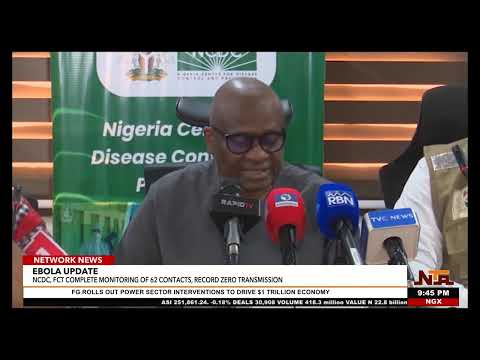
62 contacts, 21 days, zero onward infections. The regional outbreak that produced the case is still growing.

Overview

Updated 1 hour ago

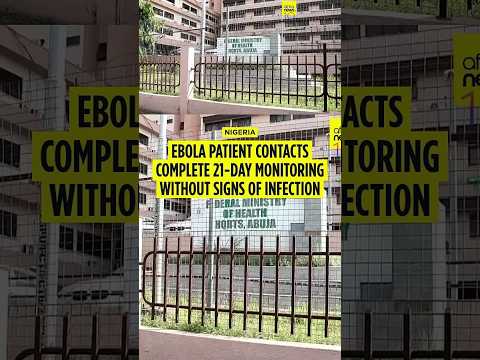
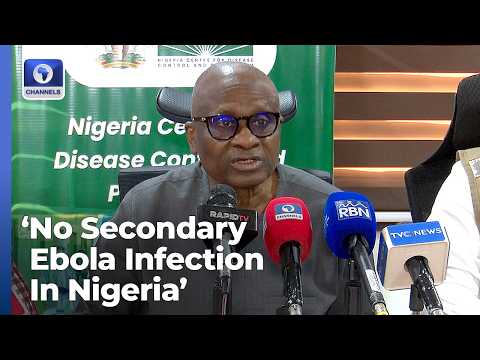
A 42-year-old Swiss woman flew from Uganda to Abuja on October 3, developed symptoms four days later, and was treated at a private clinic in Nigeria's capital. On October 20, laboratory tests confirmed she had Ebola — Nigeria's first case in more than a decade. Health workers traced 62 people who may have been exposed. On November 13, the last of them finished 21 days of monitoring without becoming ill.

That clears the first test of Nigeria's response. It does not end the outbreak. World Health Organization rules require a full 42-day countdown from the recovery or departure of the last confirmed patient before a country can declare the outbreak over. The Bundibugyo strain behind the case has no approved vaccine or treatment, and it is still spreading in the Democratic Republic of the Congo, where more than 11,000 people have been infected and more than 5,000 have died.

Why it matters

One imported Ebola case can seed an outbreak in a megacity. Nigeria's all-clear shows containment held; the regional outbreak is still growing.

Questions about this story

Free account needed to ask — your question is kept and asked for you right after sign-up. Answers are public.

No questions yet — be the first to ask.

Key Indicators

62
Contacts monitored
People traced after possible exposure to Nigeria's only confirmed case, across hospitals, households and other settings.
0
Secondary infections detected
Thirteen contacts developed fever or other symptoms during monitoring; all 62 tested negative for Bundibugyo virus.
42
Days in WHO's end-of-outbreak countdown
The clock starts at the recovery or departure of the last confirmed patient, not at the last contact's discharge.
11,000+
Cases in the DRC outbreak
Government data cited by Al Jazeera; cases have been reported in eight Congolese provinces.
5,000+
Deaths in the DRC outbreak
The second-largest Ebola outbreak on record, according to Al Jazeera's reporting.

Voices

Curated perspectives — historical figures and your fellow readers.

Sign up to generate historical perspectives on this story.

People Involved

Organizations Involved

Timeline

May 2026 November 2026

7 events Latest: 2 days ago
Tap a bar to jump to that date
  1. All 62 contacts finish 21 days without illness

    Latest Milestone

    Thirteen reported symptoms but tested negative. Seven other alerts across five states also tested negative.

  2. Patient discharged from hospital after recovery

    Recovery

    She tests negative and leaves care in Switzerland, starting the end-of-outbreak clock.

  3. Patient evacuated to Switzerland for treatment

    Evacuation

    Admitted to hospital in Geneva; her husband is isolated in Zurich as a contact.

  4. Nigeria confirms its first Ebola case in over a decade

    Diagnosis

    Laboratory tests confirm Bundibugyo virus disease in the Federal Capital Territory.

  5. Admitted to a private health facility in Abuja

    Illness

    Clinicians raise an alert through the NCDC's event-based surveillance system.

  6. Index patient arrives in Abuja from Uganda

    Travel

    She flies in via Addis Ababa and develops symptoms four days after landing.

  7. Bundibugyo Ebola outbreak identified in eastern DRC

    Outbreak

    Cases first detected in Ituri province. The outbreak later spreads to eight Congolese provinces and to Uganda, France, Kenya and Nigeria.

Scenarios

1

Nigeria declared free of Ebola transmission

Likely Resolves by End of 2026

Discussed by: NCDC and WHO officials, who have both framed the 42-day countdown as the remaining step

With no secondary cases and no positive alerts, Nigeria's countdown runs out. The government or WHO then issues a formal end-of-outbreak declaration, closing the imported-case chapter while the Congolese outbreak continues.

2

A new imported case resets Nigeria's countdown

Possible Resolves by Jan 31, 2027

Discussed by: Jide Idris, who said finishing contact monitoring does not remove the risk of importation through international travel

Nigeria's airports and land borders stay open, and the Congolese outbreak is still producing cases. A new traveller arriving with symptoms would force a fresh round of tracing and restart the 42-day clock from zero.

3

The Bundibugyo outbreak reaches a ninth province or a new country

Possible Resolves by Feb 28, 2027

Discussed by: WHO and Congolese health authorities tracking spread across eight provinces plus Uganda, France, Kenya and Nigeria

The outbreak keeps expanding inside the Democratic Republic of the Congo and through travel. A confirmed case in a province or country not previously affected would widen the response and raise the odds of further importation into Nigeria.

Historical Context

3 moments from history that rhyme with this story — and how they unfolded.

July-October 2014

Lagos Ebola importation (2014)

A Liberian-American businessman flew into Lagos with Ebola and died days later, putting the virus into a city of more than 20 million. Nigerian health workers traced contacts aggressively, including at the private hospital where he was treated, and isolated suspected cases.

Then

The outbreak was confined to a small cluster and the WHO declared Nigeria Ebola-free in October 2014, roughly three months after the case arrived.

Now

The response became a reference case for how fast contact tracing can stop an imported filovirus in a dense city, and it built the surveillance systems the NCDC used this time.

Why this matters now

Nigeria's 2026 response followed the same playbook: find contacts fast, monitor for 21 days, then wait out the longer countdown before declaring the country clear.

December 2013-June 2016

West Africa Ebola outbreak (2014-2016)

Ebola spread from Guinea into Liberia and Sierra Leone, reaching capital cities where tracing broke down. More than 28,000 people were infected and more than 11,000 died before the outbreak was brought under control.

Then

Entire health systems were overwhelmed, and outside responders built treatment units and tracing operations from scratch.

Now

The outbreak set the standards now used to declare an outbreak over, including the 42-day countdown applied to Nigeria's case.

Why this matters now

It is the benchmark for what goes wrong when an imported case is not caught quickly, and the reason a 21-day all-clear is treated as a checkpoint rather than a finish line.

2007

Bundibugyo virus first identified (2007)

A previously unknown ebolavirus species was identified in Bundibugyo district in western Uganda, causing an outbreak that health workers initially could not type with existing tests.

Then

The outbreak was contained with isolation and contact tracing rather than medical countermeasures.

Now

Nearly two decades later, no vaccine or approved treatment exists for the strain, which is why the current Congolese outbreak relies on the same basic tools.

Why this matters now

Nigeria's case was Bundibugyo virus disease, a strain for which the vaccines used against Zaire Ebola are not approved. Containment, not medicine, is what kept the case from spreading.

Sources

(7)