
Pull to refresh
Logo
Daily Brief
Following
Why Sign Up
North American midstream operators consolidate around oil hubs

North American midstream operators consolidate around oil hubs

Money Moves
By Newzino Staff |

Specialist pipeline companies are absorbing producer-owned gathering systems and tightening control of the export chokepoints

Yesterday: Gibson closes Chauvin deal and sanctions Hardisty Connection project

Overview

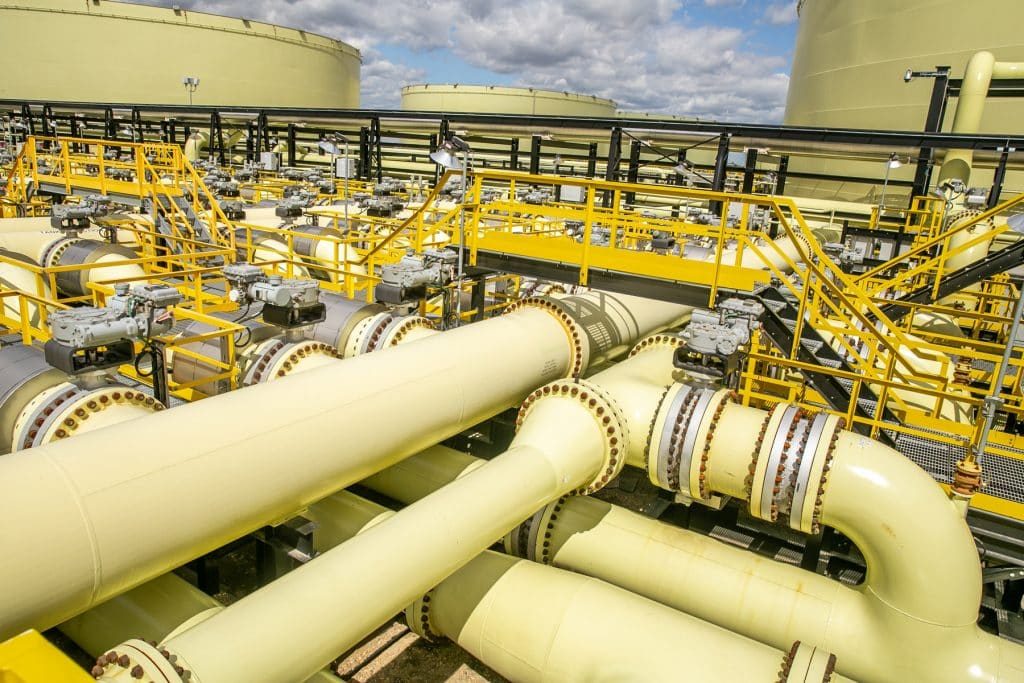
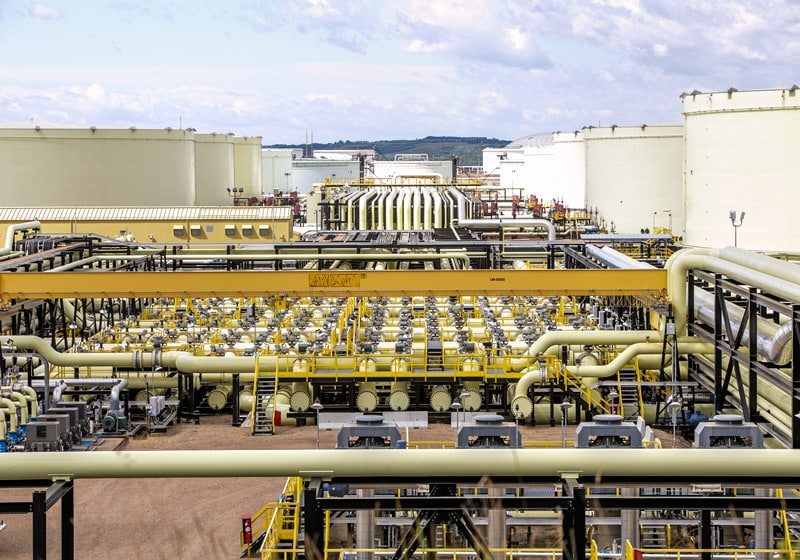
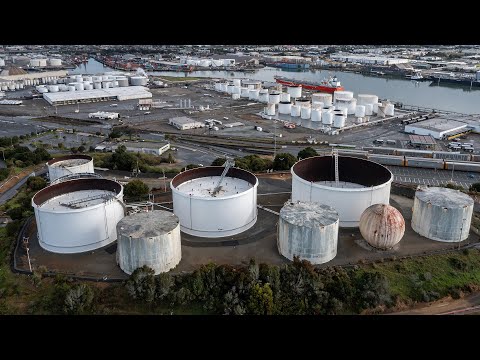
Canada's most important crude staging hub just got more concentrated. On May 1, Gibson Energy closed a C$400 million purchase of a 75-kilometer gathering pipeline from oil producer Teine Energy, then immediately sanctioned a project to wire those barrels directly into its Hardisty terminal — the Alberta facility that already handles roughly one in four barrels exported from Western Canada.

Why it matters

Specialist operators are absorbing the gathering pipelines that feed North America's oil export hubs — deciding who tolls every barrel leaving the basin.

Key Indicators

C$400M
Chauvin acquisition price
Gibson's purchase of Teine Energy's 75-kilometer crude oil gathering pipeline system.
30K → 45K
Barrels per day, current to expanded
Effective capacity of the acquired pipeline today and after the planned 2026-sanctioned expansion.
1 in 4
WCSB export barrels touching Gibson Hardisty
Share of Western Canadian Sedimentary Basin crude exports that pass through Gibson's existing Hardisty terminal.
3.5M
Daily barrels through Hardisty hub
Total throughput at the Alberta hub where Gibson, Enbridge and others operate competing terminal and pipeline assets.
$18.8B
Largest recent U.S. midstream deal
ONEOK's 2023 acquisition of Magellan Midstream — the megadeal that opened the current consolidation cycle.

Interactive

Exploring all sides of a story is often best achieved with Play.

Ever wondered what historical figures would say about today's headlines?

Sign up to generate historical perspectives on this story.

Sign Up

Debate Arena

Two rounds, two personas, one winner. You set the crossfire.

People Involved

Organizations Involved

Timeline

  1. Gibson closes Chauvin deal and sanctions Hardisty Connection project

    M&A

    Gibson takes ownership of the 75-kilometer, 30,000 bbl/d gathering pipeline and approves a project to physically link it to its core Hardisty terminal. A pipeline expansion to 45,000 bbl/d is signaled for sanctioning by year-end 2026.

  2. Canadian Competition Bureau issues no-action letter

    Regulatory

    The Bureau signals it will not challenge the Chauvin deal under the Competition Act, clearing the way for closing.

  3. Gibson announces Chauvin acquisition and bought-deal equity offering

    M&A

    Gibson agrees to buy Teine Energy's Chauvin Infrastructure Assets for C$400 million and launches a C$200 million bought-deal equity raise to help fund it.

  4. Gibson sanctions Wink-to-Gateway integration; extends Edmonton contracts

    Capital project

    Gibson signals 20- and 10-year contract extensions at its Edmonton terminal and unveils 2026 growth capital of C$150 million.

  5. ONEOK closes EnLink Midstream acquisition

    M&A

    ONEOK takes full control of EnLink in a roughly $4.3 billion deal, integrating natural gas, NGL, crude, and CO2 transportation assets.

  6. Curtis Philippon appointed Gibson Energy CEO

    Leadership

    Philippon takes over with an explicit mandate to grow infrastructure EBITDA and deepen Gibson's Hardisty footprint.

  7. Pembina buys Enbridge's joint-venture stakes for C$3.1 billion

    M&A

    Pembina takes full ownership of Alliance Pipeline, Aux Sable, and NRGreen — a Canadian parallel to the U.S. consolidation pattern.

  8. ONEOK closes Magellan acquisition

    M&A

    Deal closes, creating a roughly $60 billion-enterprise-value diversified midstream company spanning crude, refined products, and natural gas liquids.

  9. ONEOK announces $18.8 billion Magellan Midstream deal

    M&A

    U.S. midstream operator ONEOK announces a cash-and-stock acquisition of Magellan Midstream Partners, opening the current consolidation cycle.

Scenarios

1

Gibson sanctions Chauvin pipeline expansion to 45,000 bbl/d

Discussed by: Gibson Energy management; sell-side coverage at RBC, BMO, and TD Cowen

Gibson has publicly signaled it expects to sanction the Chauvin pipeline expansion before the end of 2026. With long-term take-or-pay and area-of-dedication contracts already in place from Teine, the commercial underpinning is largely set. The question is timing and capital cost, not whether it happens.

2

Producer-owned gathering systems keep migrating to specialist midstream

Discussed by: PwC 2026 Energy Deals Outlook; Bain & Company; RBN Energy

Capital-disciplined upstream producers — especially private-equity- and pension-backed ones like Teine — increasingly treat gathering pipelines as non-core. Specialist midstreams with hub positions can squeeze more value out of the same assets through connectivity. Expect more bolt-on deals in the C$200 million to C$2 billion range across the Western Canadian Sedimentary Basin and the Permian.

3

A larger midstream player bids for Gibson Energy

Discussed by: Energy M&A analysts; Canadian banking sector commentary

Gibson is a mid-cap with a uniquely concentrated position at one of the most strategic crude hubs in North America. In a consolidation cycle that has already absorbed Magellan, EnLink, and Inter Pipeline, mid-cap operators with scarce hub assets are natural targets for Pembina, Enbridge, or a U.S. acquirer seeking Canadian heavy-oil exposure. A bid is not imminent but becomes more probable the longer the cycle runs.

4

Egress capacity tightens, Canadian crude differentials widen

Discussed by: Alberta Energy Regulator; midstream sell-side analysts

If gathering and hub consolidation outpaces long-haul export capacity additions, more barrels concentrate at fewer hubs without a matching outbound lift. That can widen the discount on Western Canadian Select against U.S. benchmarks, even as midstream operators collect higher fees on the constrained system. Whether this materializes depends on Trans Mountain utilization, Enbridge Mainline expansions, and U.S. demand for heavy crude.

Historical Context

ONEOK acquires Magellan Midstream (2023)

May–September 2023

What Happened

ONEOK announced a cash-and-stock acquisition of Magellan Midstream Partners valued at $18.8 billion including assumed debt, then closed it on September 25, 2023. The deal combined ONEOK's natural gas liquids network with Magellan's refined products and crude oil pipelines into a roughly $60 billion enterprise-value company.

Outcome

Short Term

Magellan units stopped trading on the New York Stock Exchange and ONEOK absorbed roughly 12,000 miles of refined-products pipelines.

Long Term

The deal opened the current U.S. midstream consolidation cycle, which has since produced ONEOK's $4.3 billion EnLink takeout, Energy Transfer's $3.25 billion WTG Midstream deal, and Enterprise Products' $950 million Piñon Midstream acquisition.

Why It's Relevant Today

Magellan is the template the Gibson–Chauvin deal echoes at smaller scale: specialist midstream operators using consolidation to deepen hub control rather than chase new geographies.

Pembina buys Enbridge's joint-venture stakes (2024)

April 2024

What Happened

Pembina Pipeline closed a C$3.1 billion (US$2.3 billion) acquisition of Enbridge's interests in Alliance Pipeline, Aux Sable, and NRGreen. Enbridge moved capital toward its core liquids and gas-transmission franchises; Pembina took full operational control of jointly held assets.

Outcome

Short Term

Pembina absorbed the assets without dilutive equity, raising 2026 EBITDA guidance to C$4.125–4.425 billion.

Long Term

Established the Canadian midstream-specialist consolidation pattern: large utility-style pipelines selling non-core JV stakes to focused operators with relevant hub or basin exposure.

Why It's Relevant Today

Same playbook as the Chauvin deal: a non-specialist owner sells a strategically located asset to the operator best positioned to integrate it. Pembina's appetite also makes Gibson a plausible future target.

Brookfield Infrastructure takes over Inter Pipeline (2021)

May–October 2021

What Happened

After a contested bid against Pembina, Brookfield Infrastructure Partners took over Calgary-based Inter Pipeline for roughly C$8.6 billion in equity value. Inter Pipeline owned crude oil gathering and storage assets across Western Canada, plus the Heartland Petrochemical Complex.

Outcome

Short Term

Inter Pipeline was delisted, ending one of the few remaining mid-cap, pure-play Canadian midstream operators on public markets.

Long Term

Reduced the field of independent Canadian midstream targets and pushed Brookfield deeper into Alberta hydrocarbon infrastructure.

Why It's Relevant Today

Shows how mid-cap Canadian midstream operators with unique asset positions become takeover candidates once a consolidation cycle accelerates — a live question for Gibson Energy itself.

Sources

(13)