


Pull to refresh
Logo
Daily Brief
Following
Why Ranks Sign Up
US spy agency builds the largest satellite network in history

US spy agency builds the largest satellite network in history

New Capabilities

The National Reconnaissance Office is trading a few giant satellites for hundreds of small ones, most launched by SpaceX

Today: NROL-95 launches from Florida

Overview

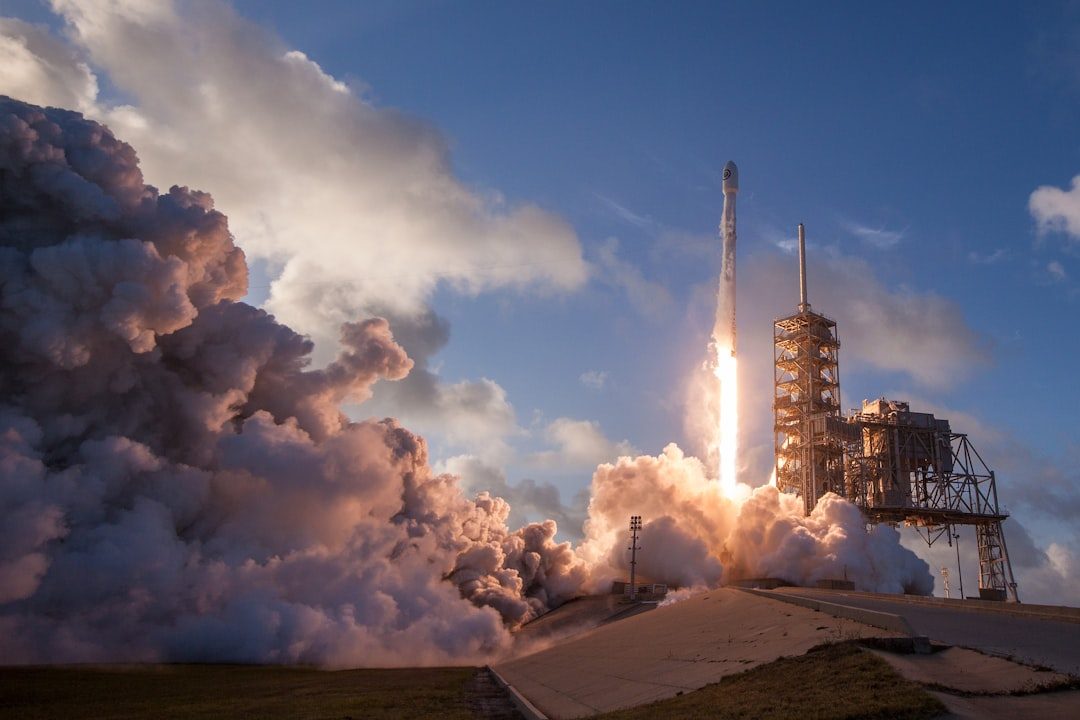
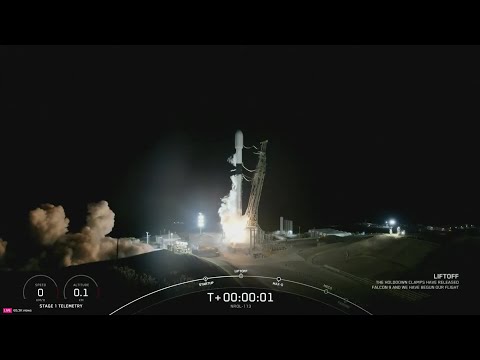
A SpaceX Falcon 9 lifted off from Cape Canaveral, Florida, at 3:10 a.m. Eastern on July 30, carrying a classified payload called NROL-95 for the National Reconnaissance Office, the US agency that builds and runs spy satellites. It was the agency's fourth launch of 2026. The booster, on its seventh flight, landed for reuse.

The single launch matters less than the pattern behind it. Since May 2024, the agency has put more than 200 satellites into orbit, swapping a small fleet of school-bus-sized spacecraft for a swarm of cheaper ones. That swarm now feeds targeting data to US forces, including in the Middle East, and is slated to become the sensor layer for the Golden Dome missile-defense program.

Why it matters

The US is building the largest spy-satellite network ever, shrinking the gap between spotting a target and acting on it from hours to minutes.

Questions about this story

No questions yet — be the first to ask.

Key Indicators

200+
Satellites deployed since 2024
The agency calls it the largest US government satellite constellation ever built.
400,000+
Intelligence collections in 2025
The agency's own count of images and signals gathered by the new network last year.
$185B
Estimated Golden Dome cost
The missile-defense program that will lean on these satellites for tracking data.
$6.45B
SpaceX Space Force awards, May 2026
Two contracts, including a sensor network to track missiles from orbit.
7th
Flight for the NROL-95 booster
The reusable first stage landed again after launch, cutting the cost of orbital access.

Voices

Curated perspectives — historical figures and your fellow readers.

Ever wondered what historical figures would say about today's headlines?

Sign up to generate historical perspectives on this story.

Play

Exploring all sides of a story is often best achieved with Play.

Log in to play. Track your picks, climb the leaderboards. Log in Sign Up
Predict 3 ways this could play out. Contrarian picks score more — points lock when the scenario resolves. Log in to play
Higher or Lower Two numbers from this story. Guess which is bigger. 5 rounds to set a streak. Log in to play
Timeline Five events from this story — drag them oldest to newest. Log in to play
Connections Sixteen names from the news. Find the four hidden groups of four. Log in to play

People Involved

Organizations Involved

Timeline

May 2024 July 2026

7 events Latest: Today
Tap a bar to jump to that date
  1. NROL-95 launches from Florida

    Today Launch

    A Falcon 9 carries the classified NROL-95 payload from Cape Canaveral, the agency's fourth launch of 2026. The booster lands on its seventh flight.

  2. Scolese steps down

    Leadership

    Christopher Scolese leaves after nearly seven years as director, the architect of the proliferated-satellite push.

  3. 14th proliferated launch

    Launch

    SpaceX flies the agency's 14th dedicated proliferated-architecture mission, described as part of Golden Dome's future backbone.

  4. SpaceX wins missile-tracking contract

    Contract

    Space Systems Command awards SpaceX $4.16 billion for a sensor network to detect and track missiles from orbit, part of $6.45 billion in awards.

  5. First NRO launch of 2026

    Launch

    A Falcon 9 carries another batch of reconnaissance satellites from Vandenberg, opening a busy launch year.

  6. Constellation moves to operational phase

    Milestone

    Officials say the network is entering operational use, with roughly 100 satellites expected on orbit by year's end.

  7. First proliferated batch reaches orbit

    Milestone

    The agency launches NROL-146, the first batch of its new small-satellite constellation, from Vandenberg, California.

Historical Context

3 moments from history that rhyme with this story — and how they unfolded.

1960–1972

Corona program (1960–1972)

The US flew its first spy satellites under the secret Corona program, ejecting film canisters that parachuted back to Earth for planes to catch mid-air. The first 12 attempts failed. When it worked, one mission returned more coverage of the Soviet Union than all prior U-2 spy-plane flights combined.

Then

Corona let Washington count Soviet missiles directly and defused fears of a 'missile gap.'

Now

It established space reconnaissance as the backbone of US intelligence, a mission the current constellation reinvents at scale.

Why this matters now

Corona created the mission the agency now performs. The shift today is not what it does, but how many satellites it uses and how fast the data moves.

December 1976

KH-11 KENNEN satellites (1976–present)

The agency launched the first KH-11, a satellite the size of a school bus that beamed digital images to the ground in near-real time instead of dropping film. Each one cost billions and took years to build. Only a few flew at any time.

Then

The KH-11 gave analysts sharp, timely images and set the standard for decades.

Now

It locked the agency into a model of a few exquisite, irreplaceable satellites, expensive to build and easy for an adversary to target.

Why this matters now

The proliferated architecture is a direct reaction to the KH-11 model. Many cheap satellites are harder to blind than a handful of costly ones.

1987–1993

Brilliant Pebbles (1987–1993)

Under the Strategic Defense Initiative, the Pentagon proposed Brilliant Pebbles: thousands of small, autonomous space-based interceptors to knock down missiles. It promised to replace a few large platforms with a swarm of cheap ones. The program was scaled back and canceled in 1993.

Then

Costs, technical doubts, and treaty limits killed the space-based interceptor plan.

Now

The idea of a proliferated space layer for missile defense stayed dormant until launch costs fell far enough to revive it.

Why this matters now

Golden Dome revives the Brilliant Pebbles concept, and this satellite network is meant to be its sensor layer. Cheap, reusable launch is what changed the math.

Sources

(9)