Simone Weil
Fictional AI pastiche — not real quote.
"The bureaucrat's fondest dream: a machine to answer the cries of the afflicted so that no human soul need be troubled by them."
Voice pilots, multilingual text translation, and algorithmic tools disclosures reveal an operational AI layer the public rarely sees
2 days ago: Disclosures Reveal Broader 311 AI Stack Beyond ChatbotNew here? Follow stories to track developments over time. Create a free account to get updates when stories you care about change.
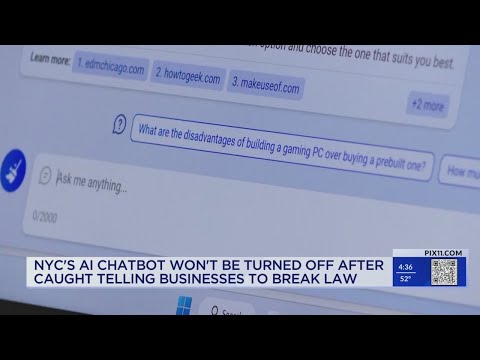
New York City's most visible artificial intelligence experiment — the MyCity business chatbot — was shut down in February 2026 after repeatedly giving illegal advice. But while that failure dominated headlines, the city was simultaneously deploying AI-powered tools across its 311 system that most residents never heard about: a voice assistant pilot built on Microsoft and Nuance technology, and an AI-driven multilingual translation service handling text and SMS in at least nine languages. The full picture only emerges when you cross-reference the city's annual algorithmic tool disclosures, 311 operational data, and recent AI governance documents.
The stakes are straightforward. NYC 311 fielded more than 3.4 million calls in 2024 — and over 70 percent of those were not service requests but simply people seeking information. The city's plan, laid out under former Chief Technology Officer Matt Fraser, was to route that informational demand through AI-powered channels: voice bots, chatbots, and automated translation. Now, with a new mayor, a new CTO, a dead chatbot, and sweeping new AI oversight legislation, every piece of that strategy is in play.

Exploring all sides of a story is often best achieved with Play.
Fictional AI pastiche — not real quote.
"The bureaucrat's fondest dream: a machine to answer the cries of the afflicted so that no human soul need be troubled by them."
Sign up to generate historical perspectives on this story.
Two rounds, two personas, one winner. You set the crossfire.
Watch two AI personas debate this story using real evidence
Choose one persona for each side of the debate
Select debater for this side:
Make your prediction before the referee scores
Pick the question both personas must answer in the final round
Debate Oracle! You called every round!
Sharp Instincts! You know your debaters!
The Coin Flip Strategist! Perfectly balanced!
The Contrarian! Bold predictions!
Inverse Genius! Try betting the opposite next time!
Can you match the quotes to the right people?
-- ?
The consolidated technology agency for New York City, responsible for running 311, managing city cybersecurity, and governing all AI and algorithmic tool deployments across city agencies.
The City Council committee that oversees technology policy and passed the GUARD Act, creating an independent office to audit every AI tool used by city agencies.
Microsoft acquired Nuance Communications in 2021, combining Nuance's voice recognition and conversational AI capabilities with Microsoft's cloud platform — the same stack underlying NYC 311's voice infrastructure and the MyCity chatbot.
Cross-referencing NYC's algorithmic tool compliance reports, 311 API documentation, and AI governance filings reveals that the city piloted an LLM-powered voice system for 311 using Microsoft and Nuance technology, and separately deployed AI-powered multilingual translation for 311 text and SMS — an operational AI layer that received almost no public attention.
Mayor Mamdani named Lisa Gelobter — an Obama-era digital services officer and founder of tEQuitable — as CTO and Commissioner of OTI, signaling a focus on digital equity and public service.
Mayor Mamdani announced the termination of the MyCity chatbot at a press conference on the city's budget gap, calling it 'functionally unusable' and costing roughly half a million dollars.
Fraser departed as CTO with the end of the Adams administration, leaving the future of his 311 AI expansion plans uncertain.
Governor Hochul signed the Responsible AI Safety and Education Act, requiring large AI developers to publish safety protocols and report incidents within 72 hours. Takes effect March 19, 2026.
The New York City Council unanimously passed the GUARD Act, creating an independent Office of Algorithmic Data Accountability to audit and publish a registry of every AI tool used by city agencies.
CTO Matt Fraser outlined plans to expand the MyCity AI chatbot to cover all 311 content — not just business queries — and to add a voice component for phone-based interaction.
The Committee on Technology held hearings on 311 operations, including the text SMS translation service supporting nine languages and plans for further AI integration.
The Markup and THE CITY reported that the MyCity chatbot was telling business owners they could take workers' tips, discriminate against housing voucher holders, and other illegal actions.
NYC established a Steering Committee to oversee AI use within city government and an advisory network with private-sector and academic representatives.
Mayor Adams released the city's first AI Action Plan and launched the MyCity business chatbot, built on Microsoft's cloud platform. The same day, it emerged the mayor was using AI voice cloning to make robocalls in languages he does not speak.
Mayor Adams created the Office of Technology and Innovation by merging multiple city technology agencies, placing 311, cybersecurity, and AI policy under one roof.
Microsoft completed its $19.7 billion acquisition of Nuance Communications, the company providing voice recognition and interactive voice response technology to NYC 311.
New York City launched its 311 non-emergency services hotline, which grew to handle millions of contacts annually across phone, text, web, and mobile.
Discussed by: GovTech, StateScoop analysts covering municipal AI adoption and digital equity priorities
Lisa Gelobter inherits the existing 311 AI infrastructure — voice, translation, automated routing — and expands it under the GUARD Act's oversight regime. The failed MyCity chatbot serves as a cautionary tale, and the new administration deploys AI tools with more robust testing, disclosure, and public accountability. NYC becomes a model for how cities can use AI in public services without the reputational damage of the chatbot era.
Discussed by: City & State New York, THE CITY, analysts tracking Mamdani's budget-focused governance priorities
The new administration, burned by the chatbot debacle and facing a $12 billion budget gap, treats all AI tools with caution. The 311 voice pilot is wound down or frozen. Translation services continue because they serve a clear language-access mandate, but broader AI integration stalls as the GUARD Act's new Office of Algorithmic Data Accountability begins reviewing every tool. The leadership transition creates a gap where existing deployments operate without a clear champion.
Discussed by: The Markup, Surveillance Technology Oversight Project, municipal AI governance researchers
Once the Office of Algorithmic Data Accountability begins operations under the GUARD Act, its mandate to publish a registry of every AI tool prompts the first comprehensive public accounting of how AI is already embedded in 311. Advocates and journalists use the registry to ask pointed questions about tools that were deployed without public consultation. The disclosure regime, rather than the technology itself, becomes the story — and other cities watch to see whether transparency undermines or legitimizes municipal AI.
Discussed by: GovTech, Citibot, Salesforce municipal reports
While New York's political transition creates uncertainty, cities like Denver, Kyle (Texas), and Arlington move faster on AI-powered 311 systems. Denver's Sunny chatbot already handles 72 languages. Kyle's Agentforce-powered system has processed over 12,000 requests. New York's scale and complexity — 3.4 million calls, 175 languages — remain unmatched, but smaller cities demonstrate that AI-driven 311 can work reliably, shifting the question from whether to deploy to how fast.
Mayor Michael Bloomberg launched 311 as a single non-emergency phone number for all city services, consolidating dozens of agency-specific hotlines. It was one of the first municipal systems to generate large-scale, structured data about what residents actually need from their government.
Call volume exceeded projections within months. The system became a primary channel for noise complaints, pothole reports, and service requests.
311 became the template for cities nationwide. The data it generated enabled predictive analytics, resource allocation, and eventually the infrastructure on which AI tools are now being layered.
Every AI tool now being deployed on 311 — voice bots, translation, chatbots — is built atop the infrastructure and data pipelines that originated with this 2003 system. The current story is about what happens when a 23-year-old platform meets large language models.
A Canadian tribunal ruled that Air Canada was liable for a refund its chatbot incorrectly promised a customer. Air Canada argued the chatbot was a 'separate legal entity responsible for its own actions.' The tribunal called this suggestion 'remarkable' and ruled that organizations are responsible for all information on their platforms.
Air Canada paid the refund and the ruling was widely cited as a precedent for chatbot liability.
The decision established that deploying a chatbot does not create a liability shield — governments and corporations alike are accountable for what their AI tells the public.
NYC's MyCity chatbot was telling business owners to break the law around the same time this ruling landed. The legal precedent means the city's quiet 311 AI deployments carry real liability risk if the tools provide inaccurate information — a key reason oversight frameworks like the GUARD Act exist.
New York City's Local Law 144, requiring bias audits of AI-powered hiring tools, took effect after a year of delays and industry pushback. Researchers at the 2024 Fairness, Accountability, and Transparency conference documented widespread non-compliance, calling it 'null compliance' — the law existed, but enforcement was minimal.
Most employers subject to the law either ignored it or performed audits that critics called performative.
The experience convinced City Council members that voluntary compliance was insufficient, directly motivating the more aggressive GUARD Act with its independent oversight office.
Local Law 144's failure is the reason the GUARD Act creates an independent office with audit and enforcement power, rather than relying on agencies to self-report. The 311 AI tools now fall under this stronger regime.