
Pull to refresh
Logo
Oklahoma City Council approves data center rezoning after months of deferrals

Oklahoma City Council approves data center rezoning after months of deferrals

Built World Oklahoma City, OK local

Beltline Energy's planned large-scale data center campus clears a 6-3 vote with caps on water use, noise and backup generators.

Overview

Updated 58 minutes ago

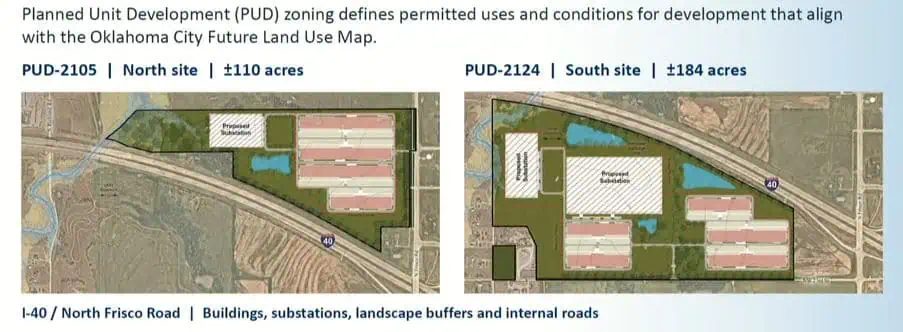
Oklahoma City Council voted 6-3 on Oct. 27 to rezone 184 acres near NW 23rd Street and Frisco Road for a Beltline Energy data center. The approval, a Planned Unit Development (PUD) case known as PUD-2124, came after the item was deferred 12 times since March and over protests from nearby residents in Oklahoma City and Yukon.

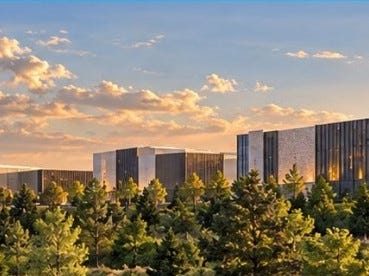
The rezoning lets Beltline build a very large data center campus, but with conditions: daily water use capped at 75,000 gallons, outdoor noise limited to 55 decibels, no on-site power generation except solar and backup generators, and a required agreement with the city on community benefits. The fight now shifts to whether those limits are enforceable and whether the city extends its temporary ban on new data center approvals.

Why it matters

The vote tests whether Oklahoma City can impose enforceable limits on hyperscale data centers while a citywide moratorium remains in place.

Questions about this story

Free account needed to ask — your question is kept and asked for you right after sign-up. Answers are public.

No questions yet — be the first to ask.

Key Indicators

184 acres
Rezoned area
PUD-2124 covers about 184 acres at NW 23rd Street and Frisco Road.
6-3
Council vote
The approval passed with three council members opposed.
75,000 gallons/day
Daily water cap
Maximum allowed water use for the facility under the approved conditions.
55 dB
Outdoor noise limit
Roughly the volume of a normal conversation or a consumer-sized electric fan.
12
Agenda deferrals
Times the zoning items were postponed before the vote.
$17M
Expected tax revenue
Projected sales tax and franchise fees, all going to Oklahoma City.

Voices

Curated perspectives — historical figures and your fellow readers.

Sign up to generate historical perspectives on this story.

People Involved

Organizations Involved

Timeline

March 2026 October 2026

3 events Latest: October 27th, 2026 · 3 weeks ago
  1. Council approves PUD-2124 in 6-3 vote

    Latest Zoning

    Rezoning allows Beltline data center with water, noise and generator limits.

  2. Oklahoma City imposes data center moratorium

    Policy

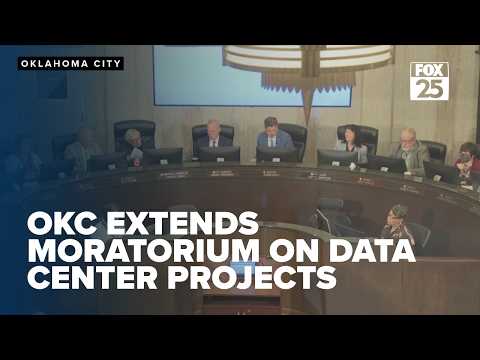
    Council pauses new data center approvals to study electricity and water use.

  3. Data center zoning items first deferred

    Procedure

    Council postpones Beltline zoning requests, beginning a series of 12 deferrals.

Scenarios

1

Beltline finalizes community benefits agreement and begins construction

Likely Resolves by End of 2027

Discussed by: Oklahoma City planning staff and Beltline representatives

The rezoning requires a community benefits agreement before construction. If the city and Beltline sign one and building permits issue, the project moves into construction. The conditions on water, noise and generators would then be tested in practice.

2

Oklahoma City extends data center moratorium while Beltline project proceeds

Likely Resolves by Q2 2027

Discussed by: Mayor David Holt and city planning officials

Holt said he will seek at least a six-month extension of the moratorium at the start of 2027. Because the Beltline request was in the pipeline before the moratorium, an extension would not automatically stop this project. It would, however, keep other data center proposals on hold.

3

Residents challenge rezoning in court or force public vote

Possible Resolves by Q2 2027

Discussed by: Yukon residents and neighborhood groups

Opponents could file a legal challenge to PUD-2124 or pursue a referendum on future data center approvals. A court challenge would focus on whether the city followed zoning procedures. A referendum would not automatically undo this project because it was already approved.

Historical Context

2 moments from history that rhyme with this story — and how they unfolded.

1970s

Nuclear power plant siting protests (1970s)

Utilities proposed large nuclear plants, and nearby residents organized against them over water use, accident risk and property values. The fights often pitted regional energy needs against concentrated local costs.

Then

Some projects were delayed or canceled.

Now

The fights led to more environmental review and local bargaining over safety and economic benefits.

Why this matters now

The Beltline vote shows the same pattern for data centers: a facility with regional benefits and concentrated local costs.

1980s-1990s

Waste-to-energy incinerator siting fights (1980s-1990s)

Cities proposed trash-burning power plants, and neighborhoods challenged them over air pollution, truck traffic and noise. Host communities demanded a say in operating conditions.

Then

Many projects were canceled or scaled back.

Now

Host communities began demanding payments and enforceable operating limits.

Why this matters now

Oklahoma City's conditions on noise, water and decommissioning are a similar attempt to make a large facility's local costs explicit.

Sources

(6)