

Pull to refresh
Logo
Medicare sets an office payment rate for sacroiliac joint fusion

Medicare sets an office payment rate for sacroiliac joint fusion

Rule Changes

CPT 27279 will pay about $19,441 in a physician office from January 2027. Coverage is still each Medicare contractor's call.

Overview

Updated 1 hour ago

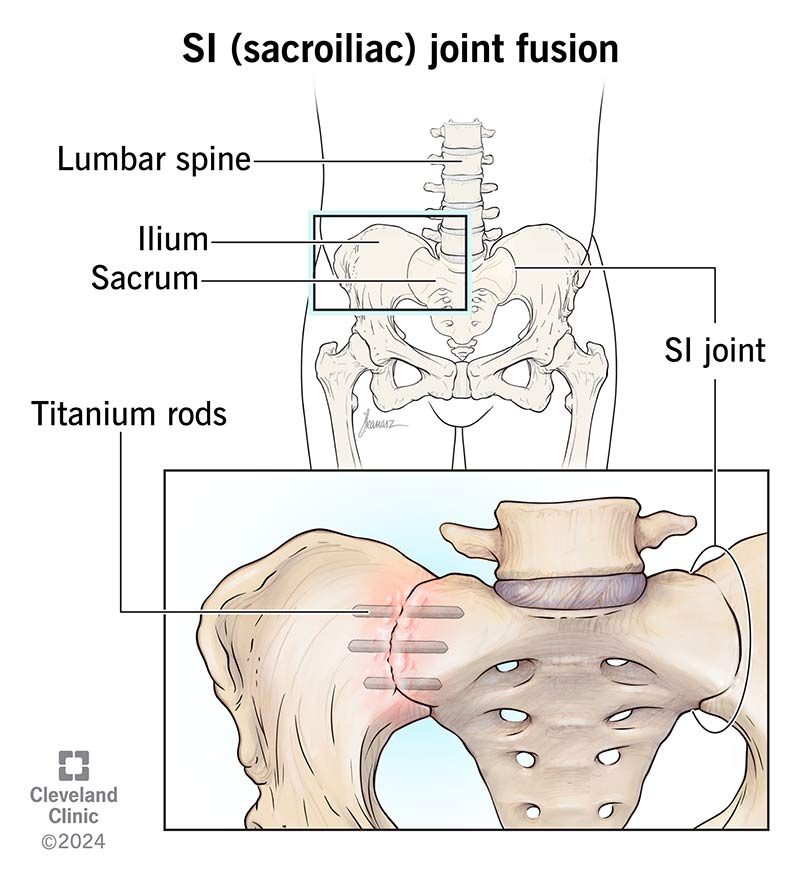
Starting January 1, 2027, Medicare will pay about $19,441 when a sacroiliac joint fusion is performed in a physician's office. Until then, CPT 27279 had only a facility payment rate, so the procedure had no office rate at all.

Medicare keeps two price lists for the same operation: a lower facility rate for hospitals and surgery centers, which bill separately for overhead, and a higher non-facility rate for practices that supply their own room, staff and equipment. The 2027 rule adds the second list for CPT 27279, but it does not make the office a covered place to do the procedure, and physician fees for the codes fall.

Why it matters

If contractors don't follow, the rate buys nothing: an office-payable code that no Medicare contractor will cover.

Questions about this story

Free account needed to ask — your question is kept and asked for you right after sign-up. Answers are public.

No questions yet — be the first to ask.

Key Indicators

$19,441
2027 national office payment for CPT 27279
Before geographic adjustment, sequestration and patient cost sharing.
$20,022
2027 hospital outpatient payment for CPT 27278 and 27279
Facility payment, paid separately from the physician's fee.
$15,518
2027 ambulatory surgery center payment for CPT 27279
ASCs will pay $15,794 for CPT 27278.
1,000+
Office-based posterior SI joint procedures with PainTEQ products
Company-reported total since the CPT 27278 office rate took effect.
-14.9%
Estimated 2027 payment change for sacroiliac joint arthrodesis codes
From an analysis of the final rule; most interventional pain procedures fall 2% to 6%.

Voices

Curated perspectives — historical figures and your fellow readers.

Sign up to generate historical perspectives on this story.

People Involved

Organizations Involved

Timeline

December 2023 January 2027

6 events Latest: 4 days ago
Tap a bar to jump to that date
  1. New rates take effect

    Upcoming Payment rule

    CPT 27279 gets its first non-facility payment rate, alongside higher hospital outpatient and surgery center payments for both SI fusion codes.

  2. PainTEQ publicizes the office rate

    Latest Statement

    The device maker announces that CPT 27279 will pay roughly $19,441 in an office and notes that coverage rules are separate.

  3. CMS releases the 2027 physician fee schedule

    Payment rule

    The final rule, CMS-1848-F, adopts practice-expense inputs for CPT 27279 and sets the conversion factor lower than 2026.

  4. Facility practice expense cut in half

    Payment rule

    The CY 2026 fee schedule halves the indirect practice expense assigned to facility services, shifting relative pay toward offices and away from hospitals and surgery centers.

  5. Medicare creates an office rate for CPT 27278

    Payment rule

    The companion code, for devices that do not pierce the cortex, gets a non-facility payment rate. Office-based procedures follow.

  6. CPT 27279 flagged as potentially misvalued

    Rulemaking

    A specialty-society summary of the 2024 Medicare fee schedule notes the code was nominated as potentially misvalued because it lacked separate practice-expense inputs.

Scenarios

1

A Medicare contractor covers office-based SI joint fusion

Possible Resolves by End of 2027

Discussed by: PainTEQ, Douglas Beall and interventional pain specialty coverage analyses

Contractors review the new rate and revise local coverage determinations to name the physician office as a covered site of service for CPT 27279. Once one large contractor moves, office-based labs in that jurisdiction can schedule the procedure without sending patients to a hospital.

2

Contractors keep CPT 27279 facility-only and the office rate goes unused

Possible Resolves by End of 2027

Discussed by: Beall's caveat that coverage remains each contractor's decision

The rate exists on paper but no contractor policy extends coverage to the office. Physicians who perform the procedure keep scheduling hospitals and surgery centers, and the new non-facility rate produces little billing.

3

CMS revisits the CPT 27279 office inputs in the 2028 rule

Unlikely Resolves by Nov 30, 2027

Discussed by: Payment analyses of the CY 2027 fee schedule

The 2027 rule cut baseline physician payment and an analysis estimated a 14.9% decline for sacroiliac joint arthrodesis codes. If utilization in offices grows, CMS could reopen the practice-expense inputs or the code's valuation in the next fee schedule cycle.

Historical Context

3 moments from history that rhyme with this story — and how they unfolded.

2024

Office rate for CPT 27278 (2024)

Medicare created a non-facility payment rate for CPT 27278, the sacroiliac fusion code covering devices that do not pierce the cortex. PainTEQ says more than 1,000 posterior SI joint procedures have since been performed in physician offices using its products.

Then

Office-based labs gained a billing code with an office rate and began scheduling posterior SI joint procedures.

Now

It set the template: the 2027 rule extends the same structure to the cortex-piercing code.

Why this matters now

CPT 27279 is the second half of the same split. What happened with 27278 is the closest available evidence for how fast offices adopt 27279.

November 2025

Indirect practice expense reallocation (November 2025)

The CY 2026 Physician Fee Schedule final rule cut the indirect practice expense allocated per work relative value unit for facility services to half the non-facility amount. Analysts estimated a 7% to 10% gain for office-based services and an 8% to 11% loss for hospital outpatient departments and surgery centers.

Then

Payment tilted toward physician offices relative to hospitals and surgery centers.

Now

The change was built into the 2026 baseline, so the CY 2027 rule inherits it.

Why this matters now

The office rate for CPT 27279 lands inside a payment architecture already shifting money toward non-facility settings.

2001-2025

Two decades of interventional pain payment erosion (2001-2025)

A published review found Medicare's practice-cost index rose 59% between 2001 and 2025, while inflation-adjusted Medicare physician payment fell about 33% across specialties and about 41% in interventional pain management. Utilization of interventional techniques per 100,000 beneficiaries dropped 16.8% between 2019 and 2024.

Then

Independent pain practices absorbed rising costs against falling real payment.

Now

Site of service became a bigger determinant of whether a practice survives than the procedure itself.

Why this matters now

A new office code matters more to a practice when the professional fee alone no longer covers the work.

Sources

(8)