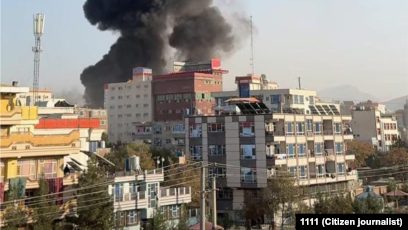
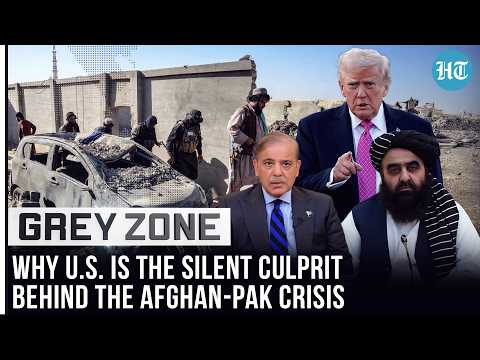
Pakistan and Afghanistan are in their most intense military confrontation since the Taliban took power in 2021. On March 17, 2026, Pakistan struck a 2,000-bed hospital in Kabul, killing approximately 400 people and injuring nearly 250 — the conflict's deadliest single incident, according to Afghan officials.
Pakistan denied responsibility. The conflict stems from Pakistan's demands that the Taliban crack down on Tehrik-i-Taliban Pakistan (TTP) militants sheltering on Afghan soil. A five-day Eid al-Fitr ceasefire mediated by Saudi Arabia, Turkey, and Qatar held from March 19-24, 2026.
On April 2, 2026, both sides opened peace talks in Urumqi, China. Pakistan demands verifiable Taliban action against TTP; the Taliban views the strikes as sovereignty violations. International mediators, including China, are working to secure a lasting ceasefire and reopen border trade, amid UN concerns about humanitarian fallout.
Why it matters
Nuclear-armed neighbors' border war risks regional instability; peace talks could stabilize South Asia trade routes.
Questions about this story
Free account needed to ask — your question is kept and asked for you right after sign-up. Answers are public.
No questions yet — be the first to ask.
Key Indicators
~400
Killed in Kabul hospital strike
Pakistani airstrike on March 17, 2026 devastated 2,000-bed hospital; Afghan officials report ~400 dead, ~250 injured
150+
Pakistani soldiers killed (Afghan claim)
Afghanistan's Ministry of Defence claims over 150 Pakistani soldiers killed since March 4, 2026
150+
Taliban fighters killed (Pakistan claim)
Pakistan claims over 150 Taliban fighters killed in recent operations
5 days
Eid ceasefire held
Mediated pause March 19-24, 2026; no reported violations, operations paused
April 2, 2026
China-mediated peace talks begin
Talks in Urumqi focus on ceasefire, TTP crackdown, border reopening
22 events
Latest: April 2nd, 2026 · 6 months ago
Showing 8 of 22
JK to step
Tap a bar to jump to that date
Jump to
April 2026
Pakistan and Afghanistan open peace talks in China
LatestDiplomatic
New round of talks began in Urumqi, mediated by Beijing, focusing on ceasefire, TTP crackdown, and border reopening after months of deadly conflict. Pakistan demands 'visible and verifiable action' against militants.
Pakistan and Afghanistan began a five-day ceasefire (March 19-24) mediated by Saudi Arabia, Turkey, and Qatar for Eid al-Fitr. The TTP also announced a three-day ceasefire. Pakistan warned operations would resume immediately if cross-border or terrorist attacks occur.
Pakistani airstrike devastates Kabul hospital; ~400 reported killed
Military
A Pakistani airstrike struck a 2,000-bed hospital in Kabul, causing massive destruction. Afghan officials report approximately 400 killed and nearly 250 injured, with many feared trapped under rubble. Pakistan denied responsibility for the strike, rejecting allegations of targeting civilian locations.
Pakistan launches airstrikes on Kabul and Nangarhar
Military
Pakistan claimed it destroyed Taliban military installations, ammunition storage, and technical support infrastructure in Kabul and Nangarhar provinces.
Pakistani military targeted and destroyed several Taliban border outposts with airstrikes. Taliban officials reported Pakistani shelling of Khost and Kunar provinces killed 4 civilians and injured 3 others.
Pakistan destroys Taliban outposts in Zhob sector and North Waziristan
Military
Pakistani officials targeted two Taliban border outposts in Zhob sector and another in North Waziristan, seizing weapons including Russian-made 73mm HGL-9 heavy grenade launchers.
Pakistani airstrikes struck Paktia, Paktika, Khost, Maidan Wardak, and Kunar provinces. Taliban officials reported civilian casualties and damage to homes and shops.
Taliban launched attack on Kharlachi border crossing in Paktia province. Afghan Ministry of Defence claimed Taliban forces attacked 28 locations across border provinces, killing 109 Pakistani soldiers and injuring 148 others.
Sporadic clashes across multiple border provinces; civilian casualties reported
Military
Armed clashes reported between Taliban and Pakistani border guards in Khost, Paktia, Paktika, Kunar, Nangarhar, and Kandahar. Four Afghan civilians killed in Pakistani strikes in Spin Boldak district of Kandahar.
Intense clashes continue across border; Pakistan claims airstrikes on military facilities
Military
Armed clashes between Taliban and Pakistani border guards continued in Zabul, Kandahar, Khost, and Kunar provinces. Pakistan claimed airstrikes targeted Taliban military facilities and destroyed ammunition depot and 205 Corps brigade headquarters in Kandahar.
February 2026
Pakistan strikes seven targets in Afghanistan
Military
Pakistan's military conducted air strikes on seven camps and hideouts in Afghanistan's Nangarhar and Paktika provinces, targeting TTP and Islamic State affiliates. Afghanistan reported at least 17 killed including women and children, with six missing under rubble. Kabul called it a sovereignty violation and vowed an 'appropriate and calculated response.'
Bannu convoy attack kills two Pakistani soldiers
Attack
A suicide bomber struck a security convoy in Bannu district, killing two soldiers including a lieutenant colonel, adding to the string of attacks that precipitated the air strikes.
Suicide attack on Bajaur security post kills 11 soldiers
Attack
An explosive-laden vehicle rammed a security post in Bajaur district, killing 11 soldiers and a child. Pakistan summoned the Afghan envoy and blamed TTP fighters operating from Afghan territory.
Suicide bomber kills 32 at Islamabad mosque
Attack
A suicide bomber attacked the Khadija Tul Kubra mosque in Islamabad during noon prayers, killing 32 worshippers and wounding 170. The Islamic State group claimed responsibility. It was the deadliest attack in Islamabad since the 2008 Marriott Hotel bombing.
December 2025
Heavy border fire exchange kills at least five
Military
Afghan and Pakistani forces exchanged heavy fire along the border, with Afghanistan reporting five killed, further eroding the Doha ceasefire.
November 2025
Asim Munir becomes Chief of Defence Forces
Political
Pakistan's parliament created the new position of Chief of Defence Forces, consolidating all military branches under General Asim Munir—the architect of the harder line against Afghanistan.
Ceasefire fractures at Chaman-Spin Boldak crossing
Military
Afghan Taliban forces and Pakistani border guards clashed at the key Chaman-Spin Boldak border crossing, the first significant violation of the Doha ceasefire.
October 2025
Doha ceasefire agreed after Qatar-Turkey mediation
Diplomatic
After roughly 70 deaths on both sides, Pakistan and Afghanistan signed a ceasefire in Doha. The Taliban pledged to halt support for the TTP; both sides agreed not to target each other's forces or civilians.
Afghanistan launched attacks on multiple Pakistani military positions along the border, killing at least 23 Pakistani soldiers in the most severe Taliban offensive against Pakistan's military.
Pakistan launched an unprecedented airstrike on Kabul targeting TTP leader Noor Wali Mehsud, following a TTP attack on soldiers in Khyber Pakhtunkhwa. The strike triggered the most intense border fighting in decades.
December 2024
Pakistan launches third round of air strikes in Afghanistan
Military
Pakistan conducted further airstrikes in Paktika province, drawing a Taliban warning of retaliation and marking an acceleration of cross-border military operations.
March 2024
Pakistan strikes Afghanistan after border attack
Military
Pakistan Air Force struck targets in Afghanistan's Khost and Paktika provinces, killing eight people including women and children according to the Afghan government. It was the second round of Pakistani airstrikes on Afghan soil since the Taliban took power.
Scenarios
1
Afghanistan retaliates, border war reignites
Possible
Discussed by: Al Jazeera analysts, Afghan defence officials, and the Middle East Institute
Afghanistan follows through on its threat of an 'appropriate and calculated response,' striking Pakistani border posts or military targets as it did in October 2025. This triggers a new round of tit-for-tat escalation, with both sides mobilizing along the border. The Doha ceasefire framework collapses entirely, and mediators—Qatar, Saudi Arabia, Turkey—scramble to prevent a full-scale conflict between a nuclear-armed state and a government controlling battle-hardened fighters.
2
Diplomatic intervention produces a new ceasefire
Likely
Discussed by: Foreign Affairs, Qatar and Saudi mediators, China's special envoy to Afghanistan
After an initial period of heated rhetoric, regional mediators—most likely Qatar and Saudi Arabia, with possible Chinese involvement—broker another ceasefire. This time, the agreement includes more specific enforcement mechanisms, potentially involving verified Taliban action against TTP camps. However, the fundamental structural problem remains: the Taliban is either unwilling or unable to fully suppress the TTP, which shares its ideology and ethnic base.
3
Pakistan normalizes cross-border strikes as permanent policy
Possible
Discussed by: The Washington Institute, Pakistani military analysts, Eurasia Review
Pakistan's military establishment, now consolidated under Field Marshal Asim Munir, concludes that diplomatic pressure on the Taliban will not stop TTP attacks and adopts a doctrine of regular cross-border strikes—similar to Turkey's decades-long campaign against Kurdish militant groups in Iraq. Afghanistan's conventional military inferiority limits its response options, but the Taliban could retaliate asymmetrically by increasing covert support for TTP operations inside Pakistan, creating a self-reinforcing cycle of violence.
4
Taliban cracks down on TTP, tensions gradually subside
Unlikely
Discussed by: CSIS (Center for Strategic and International Studies), Chinese mediators, Pakistan's Foreign Ministry
Facing sustained military pressure, trade blockades, and international isolation, the Taliban leadership makes a strategic calculation to distance itself from the TTP. Kabul arrests or expels TTP commanders, dismantles known camps, and provides verifiable evidence to Pakistan. This requires the Taliban to overcome deep ideological and tribal ties to the TTP—a difficult but not unprecedented move, as governments have historically abandoned allied militant groups when the cost of sheltering them exceeded the benefits.
5
Eid ceasefire collapses; full-scale border war resumes
Possible
Discussed by: UN officials, regional mediators, military analysts
The five-day Eid ceasefire (March 19-24) breaks down after either side violates the pause or cross-border attacks resume. Pakistan immediately resumes airstrikes as warned, triggering renewed Taliban retaliation. The cycle of tit-for-tat escalation accelerates, with both sides mobilizing forces along the border and civilian displacement intensifying. International mediators face pressure to broker a new agreement, but structural issues—Pakistan's demands for Taliban action against TTP, Taliban's ideological ties to the group—remain unresolved.
6
International pressure forces extended ceasefire and negotiations
Likely
Discussed by: UN Secretary-General Türk, regional mediators, diplomatic analysts
The hospital airstrike's scale—killing ~400 civilians—triggers international outcry and pressure from China, Russia, and the UN for an extended ceasefire. Mediators use the Eid pause to negotiate a longer-term agreement with verified enforcement mechanisms. However, fundamental mistrust remains: Pakistan doubts Taliban commitment to suppress TTP, while Taliban views Pakistan as an aggressor violating Afghan sovereignty.
7
Hospital strike becomes turning point for Taliban retaliation
The hospital airstrike—the deadliest single incident in the conflict—hardens Taliban resolve for major retaliation. After the Eid ceasefire ends, Taliban launches coordinated strikes on Pakistani military installations or cities, escalating the conflict to a new level of intensity and drawing international intervention.
Historical Context
3 moments from history that rhyme with this story — and how they unfolded.
1 of 3
1983–present
Turkey's cross-border operations against the Kurdistan Workers' Party in Iraq (1990s–present)
Turkey has conducted cross-border military operations against Kurdistan Workers' Party (PKK) bases in northern Iraq for over four decades, ranging from air strikes to ground incursions involving tens of thousands of troops. Operation Hammer in 1997 alone deployed 50,000 soldiers into Iraqi territory.
Then
Individual operations disrupted PKK logistics and killed commanders, but the group consistently reconstituted itself across the border.
Now
Turkey established a permanent military presence in northern Iraq, with dozens of bases and outposts. The operations became a normalized, decades-long feature of regional security, never fully eliminating the PKK until the group's own leadership announced dissolution in 2025.
Why this matters now
Pakistan's repeated strikes against TTP targets in Afghanistan mirror Turkey's long campaign in Iraq. If Pakistan adopts a similar doctrine of permanent cross-border operations, the conflict could become a chronic feature of the region rather than an acute crisis with a resolution.
2 of 3
2009–2014
Pakistan's military operations in Waziristan against TTP (2009–2014)
Pakistan launched major military offensives in its own tribal areas to dislodge the TTP, including Operation Rah-e-Rast in Swat and Operation Zarb-e-Azb in North Waziristan. Over 100,000 troops were deployed, and millions of civilians were displaced as the military fought to reclaim territory the TTP had governed as a de facto state.
Then
The operations dismantled TTP's territorial control inside Pakistan and sharply reduced attacks in major cities.
Now
Surviving TTP fighters relocated across the border into Afghanistan, where they rebuilt under the protection of the Afghan Taliban. The military success inside Pakistan planted the seeds of the current cross-border conflict.
Why this matters now
Pakistan's own successful military operations pushed the TTP into Afghanistan—creating the exact problem it now demands the Taliban solve. The strikes on Afghan soil are, in a sense, the second chapter of the same counterinsurgency campaign.
3 of 3
February 2019
India's Balakot airstrike on Pakistan (2019)
After a suicide bombing killed 40 Indian paramilitary personnel in Kashmir, India sent warplanes across the border to strike what it said was a militant training camp near Balakot, Pakistan. It was the first Indian airstrike on Pakistani soil since the 1971 war. Pakistan retaliated the next day, shooting down an Indian jet and capturing its pilot.
Then
The captured pilot was returned within days. Both sides de-escalated under international pressure, but neither backed down from their positions.
Now
The strike established a precedent that cross-border air strikes against militant targets could occur between nuclear-armed neighbors without triggering full-scale war—lowering the threshold for future such operations across South Asia.
Why this matters now
Pakistan is now employing the same logic India used at Balakot: striking targets on another country's soil in response to terrorist attacks originating from that territory. The parallel illustrates how cross-border strikes are becoming a normalized tool in South Asian security dynamics.