


Pull to refresh
Logo
Daily Brief
Following
Why
Pakistan's escalating sectarian violence against Shia Muslims

Pakistan's escalating sectarian violence against Shia Muslims

Force in Play
By Newzino Staff | |

Suicide bombings and militant attacks intensify against minority community amid rising extremism, state security failures, and ISKP claim with arrests

February 7th, 2026: Pakistan arrests 4 suspects including ISKP-linked Afghan mastermind

Overview

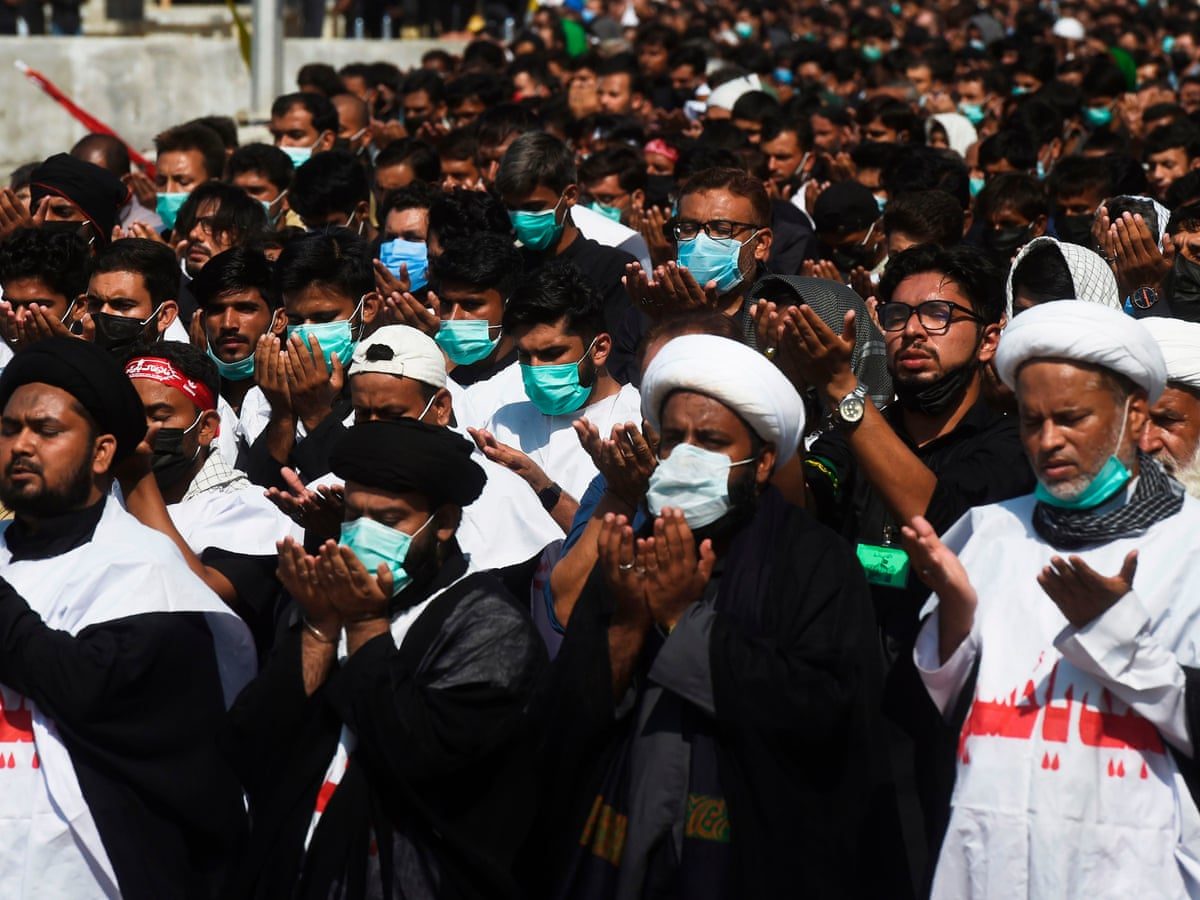
Pakistan has not seen a suicide bombing in its capital since 2016. That changed in November 2025, when an attacker killed 12 outside an Islamabad court. Two days ago, on February 6, 2026, a suicide bomber walked into a Shia mosque during Friday prayers and killed 31 worshippers, wounding 169 more. The attack on Khadija Tul Kubra mosque was the deadliest in Islamabad since the 2008 Marriott Hotel bombing that killed 63.

Islamic State Pakistan affiliate claimed responsibility via Amaq News Agency, naming the attacker and confirming he fired on guards before detonating. Pakistani forces arrested four suspects including an Afghan mastermind linked to ISKP during Khyber Pakhtunkhwa raids around 3am on February 7, with one security officer killed in the operation. Interior Minister Mohsin Naqvi alleged the plot was planned in Afghanistan with alleged Indian funding, amid a broader surge where Pakistan recorded over 1,700 terrorist incidents in 2025, killing nearly 4,000 people, many claimed by Tehreek-e-Taliban Pakistan.

Key Indicators

31
Killed in Islamabad mosque attack
Deadliest attack in Pakistan's capital since 2008; ISKP claimed responsibility
169
Wounded in February 6 bombing
Many remain hospitalized with critical injuries
4
Suspects arrested including mastermind
Afghan national linked to ISKP detained in KP raids on Feb 7
3,573
TTP-claimed attacks in 2025
Tehreek-e-Taliban Pakistan's reported operations for the year
~4,000
Terrorism deaths in Pakistan (2025)
From 1,709 documented terrorist incidents

Interactive

Exploring all sides of a story is often best achieved with Play.

Ever wondered what historical figures would say about today's headlines?

Sign up to generate historical perspectives on this story.

Sign Up

Debate Arena

Two rounds, two personas, one winner. You set the crossfire.

People Involved

Khawaja Muhammad Asif
Defence Minister of Pakistan (Serving as Defence Minister since 2022; leading government response)
Shehbaz Sharif
Shehbaz Sharif
Prime Minister of Pakistan (Serving as Prime Minister; condemned attack as 'cowardly act of terrorism')
Noor Wali Mehsud
Noor Wali Mehsud
Leader of Tehreek-e-Taliban Pakistan (TTP) (Internationally designated terrorist; believed operating from Afghanistan)

Organizations Involved

TE
Tehreek-e-Taliban Pakistan (TTP)
Designated Terrorist Organization
Status: Primary suspect in Islamabad mosque bombing; operating from Afghan sanctuaries

The Pakistani Taliban is a Deobandi jihadist militant organization that has killed thousands in attacks against Pakistani security forces, government targets, and religious minorities.

IS
Islamic State Khorasan Province (ISKP)
Designated Terrorist Organization
Status: Claimed responsibility for Islamabad mosque bombing via Amaq News Agency; Pakistani authorities arrested alleged mastermind (Afghan national) and facilitators in KP raids

The Islamic State's regional affiliate has conducted mass-casualty attacks against Shia Muslims in Pakistan, Afghanistan, Iran, and Russia.

Timeline

  1. Pakistan arrests 4 suspects including ISKP-linked Afghan mastermind

    Investigation

    Interior Minister Mohsin Naqvi announces arrests during KP raids in Nowshera and elsewhere; one police sub-inspector killed. Suspects linked to ISKP which claimed attack via Amaq.

  2. Suicide bomber kills 31 at Islamabad Shia mosque

    Attack

    A suicide bomber attacks Khadija Tul Kubra mosque in Islamabad's Tarlai Kalan area during Friday prayers. Security guards attempt to intercept attacker, who opens fire before detonating explosives. At least 31 killed and 169 wounded.

  3. Pakistan identifies Afghan national as court bomber

    Investigation

    Interior Minister Mohsin Naqvi announces the court suicide bomber was an Afghan national. Four TTP-linked militants subsequently arrested.

  4. Islamabad court suicide bombing kills 12

    Attack

    A suicide bomber detonates explosives outside the District Judicial Complex in Islamabad's G-11 sector, killing 12 and injuring 36. The deadliest attack in the capital in nearly a decade.

  5. Pakistan-Afghanistan agree to ceasefire

    Diplomatic

    After talks mediated by Qatar and Turkey, Pakistan and Afghanistan agree to ceasefire. Afghan government pledges to halt support for TTP.

  6. Pakistan launches Operation Khyber Storm

    Military

    Pakistan conducts airstrikes in Kabul, Khost, Jalalabad, and Paktika, targeting TTP leader Noor Wali Mehsud and militant sanctuaries inside Afghanistan.

  7. Parachinar mosque attack kills 22

    Attack

    Attackers target a Shia mosque in Parachinar city, Khyber Pakhtunkhwa province, killing 22 people and wounding dozens.

  8. Kurram death toll reaches 130

    Violence

    Sectarian violence in northwest Pakistan's Kurram district claims at least 130 lives over several days of sustained fighting.

  9. Convoy ambush kills 54 Shia Muslims in Kurram

    Attack

    Armed assailants ambush a convoy of Shia Muslims in Kurram district, killing 54 and injuring 86. Subsequent clashes result in over 300 shops and 100 homes burned.

  10. Sectarian tensions flare in Kurram district

    Escalation

    Violence between Shia and Sunni tribes erupts over a land dispute in Khyber Pakhtunkhwa province, beginning a sustained wave of sectarian attacks.

Scenarios

1

TTP Claims Attack, Pakistan Retaliates Against Afghan Targets

Discussed by: The Diplomat, National Interest, and regional security analysts tracking Pakistan-Afghanistan tensions

If TTP or an affiliated faction claims responsibility, Pakistan likely escalates cross-border operations against militant sanctuaries in Afghanistan. The October 2025 precedent of Operation Khyber Storm demonstrates willingness to strike inside Afghan territory. This could collapse the fragile Qatar-brokered ceasefire and trigger direct confrontation with the Taliban government, which denies harboring militants but has shown limited capacity or willingness to act against them.

2

ISKP Responsibility Triggers Multi-Front Pressure

Discussed by: International Crisis Group, Soufan Center, and terrorism researchers monitoring Islamic State expansion

If Islamic State Khorasan Province is identified as the perpetrator, it would represent a shift in the threat landscape. ISKP has conducted devastating Shia mosque attacks before, including the 2022 Peshawar bombing. This would create unusual alignment between Pakistan, the Afghan Taliban, and potentially international partners who share interest in degrading ISKP capabilities, while complicating Islamabad's narrative about Afghan-based threats.

3

Sectarian Violence Spreads to Major Cities

Discussed by: ACLED conflict researchers and Pakistani security analysts warning of mainland expansion

The Islamabad attack could serve as a catalyst for broader sectarian mobilization. Recent months have seen heightened anti-Shia protests in Karachi and Islamabad, with sectarian organizations playing active roles. Retaliatory attacks or organized violence against Sunni targets could trigger a cycle similar to Kurram district's deadly dynamics, but in densely populated urban centers with far greater potential for mass casualties.

4

Government Crackdown Achieves Temporary Suppression

Discussed by: Pakistani government officials and state-aligned commentators

Pakistan's security services conduct mass arrests, increase checkpoint operations, and deploy additional forces to protect religious sites. This suppresses immediate violence but fails to address underlying causes: militant sanctuaries in Afghanistan, weak governance in border regions, and persistent sectarian radicalization. Violence continues at elevated levels through 2026, concentrated in frontier provinces rather than the capital.

Historical Context

2008 Islamabad Marriott Hotel Bombing

September 2008

What Happened

On September 20, 2008, a suicide truck bomber detonated over 1,300 pounds of explosives outside Islamabad's Marriott Hotel, killing 54 people and injuring 266. The blast created a 24-foot-deep crater, triggered a massive fire, and was heard 15 kilometers away. Pakistani leadership had changed dinner plans at the last minute, narrowly avoiding the attack.

Outcome

Short Term

The hotel reopened within three months after rapid reconstruction. Investigations linked the attack to Tehrik-i-Taliban Pakistan affiliates operating from tribal areas.

Long Term

The bombing marked the apex of militant capability to strike Pakistan's capital and prompted major security overhauls. Until November 2025, Islamabad had not experienced another major suicide attack.

Why It's Relevant Today

The 2026 mosque bombing represents the first attack since 2008 to approach this scale in Pakistan's capital, signaling a return to levels of militant capability that security forces believed they had suppressed.

2006 Samarra Mosque Bombing (Iraq)

February 2006

What Happened

Attackers spent a night rigging the al-Askari Shrine in Samarra, Iraq, one of Shia Islam's holiest sites, before detonating explosives at dawn on February 22, 2006. The golden dome collapsed. Within days, an estimated 1,000 Iraqis were killed in retaliatory violence between Sunni and Shia communities.

Outcome

Short Term

The bombing triggered the bloodiest phase of Iraq's civil war. Tens of thousands died in sectarian massacres over the following years as Sunni and Shia militias conducted systematic killings.

Long Term

The attack demonstrated how a single strike on a religious site could catalyze sustained sectarian warfare, fundamentally reshaping Iraq's political and demographic landscape.

Why It's Relevant Today

While Pakistan's Shia minority is smaller than Iraq's plurality, the pattern of mosque attacks designed to provoke retaliatory cycles follows the same logic. Pakistani security services and religious leaders will attempt to prevent the escalation spiral that consumed Iraq.

2003 Quetta Mosque Massacre

July 2003

What Happened

On July 4, 2003, three armed men attacked the Asna Ashari Hazara Imambargah in Quetta during Friday prayers, shooting worshippers and throwing grenades before one detonated a suicide vest. Fifty-three Hazara Shia were killed and at least 65 wounded. This marked the first use of a suicide bomber in Pakistan's sectarian conflict.

Outcome

Short Term

The attack established a template for mass-casualty strikes against Shia worship spaces that would be repeated across Pakistan for two decades.

Long Term

Hazara Shia in Balochistan faced persistent targeting, with major attacks in 2013 killing over 180. Many fled to third countries, fundamentally altering the community's presence in the region.

Why It's Relevant Today

The 2003 Quetta attack introduced the tactical approach now used in Islamabad: targeting Friday prayers to maximize casualties among gathered worshippers, exploiting the predictability and vulnerability of congregational worship.

17 Sources: