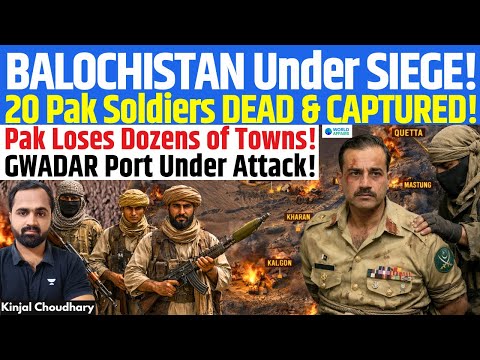
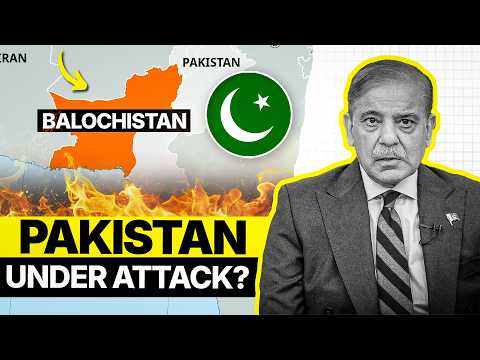
On May 24 and 25, 2026, the BLA struck Quetta on consecutive days, killing at least 53 people. A suicide car bomb detonated next to a passenger train; the following day, a car-park explosion hit the railway station.
The insurgency has expanded to sea. In April 2026, the BLA announced the Hammal Maritime Defence Force after attacking a Pakistan Coast Guard patrol boat near Gwadar, killing three sailors.
FDI into the province fell 40 percent to $808 million in the first half of fiscal year 2026 as investors pulled back.
Why it matters
The BLA's expansion to maritime warfare threatens Gwadar, China's strategic gateway, and the $62 billion investment corridor Pakistan's economy depends on.
Questions about this story
Free account needed to ask — your question is kept and asked for you right after sign-up. Answers are public.
No questions yet — be the first to ask.
Key Indicators
58+
Killed in January 2026 campaign
Final toll: 22 security personnel and 36 civilians killed across BLA's Operation Herof Phase 2 and the five-day clearance operation that followed
14
Cities attacked simultaneously
Coordinated strikes across Quetta, Mastung, Nushki, Gwadar, and ten other cities on January 31
400+
Deaths from insurgency in 2025
Pakistan Institute for Peace Studies recorded 254 attacks in 2025, up 26 percent from 2024, with more than 400 deaths
53+
Killed in twin Quetta bombings
At least 23 killed on May 24 and 30 killed on May 25 in back-to-back BLA attacks on Quetta's railway area
21 events
Latest: May 13th, 2026 · 5 months ago
Showing 8 of 21
JK to step
Tap a bar to jump to that date
Jump to
May 2026
Military Clashes in Barkhan Kill 5 Soldiers and 7 Militants
LatestMilitary
Pakistan Army and Frontier Corps units conducted a clearance operation in Barkhan district's Nosham area, killing seven militants but losing five soldiers including a field officer.
Pakistani intelligence arrested Khairun Nisa, a teenager from Turbat trained by the BLA for a suicide attack on Islamabad. Balochistan Chief Minister Sarfraz Bugti said she had been coerced after her cousin threatened to kill her father.
April 2026
Armed Attack on Mining Site in Chagai Kills 10
Attack
About 40 militants stormed a copper and gold mining site in Chagai district, killing 10 people including seven workers and three security guards. A Turkish national was among the dead; one foreign national was reportedly abducted.
BLA Launches First Maritime Attack, Announces Naval Wing
Attack
BLA fighters attacked a Pakistan Coast Guard patrol boat near Jiwani in Gwadar district, killing three sailors. Days later, the group announced the Hammal Maritime Defence Force, a formal naval unit it said would target Pakistani and Chinese maritime assets.
February 2026
Pakistan Reports Final Toll: 216 Militants Killed in Balochistan Campaign
Government Response
Pakistan's military concluded its weeklong counteroperation, reporting 216 militants killed. The BLA's attacks had left 22 security personnel and 36 civilians dead.
Abducted Deputy Commissioner Recovered by Security Forces
Government Response
Mohammad Hussain Hazara, the Deputy Commissioner of Nushki abducted during the January 31 attacks, was recovered safely by security forces in a clearance operation.
January 2026
Operation Herof Phase 2: Coordinated Attacks Across 14 Cities
Attack
BLA launched simultaneous strikes on military installations, police stations, and a prison across Balochistan, killing at least 21 people and freeing 30 inmates. Deputy Commissioner of Nushki was abducted.
August 2025
US Designates BLA as Terrorist Organization
International
The United States designated the Balochistan Liberation Army and its Majeed Brigade as Foreign Terrorist Organizations.
May 2025
Balochistan Independence Declaration
Political
Separatist leader Mir Yar Baloch declared Balochistan's independence from Pakistan, calling for United Nations peacekeepers and Indian recognition.
March 2025
Jaffar Express Train Hijacking
Attack
BLA fighters hijacked a passenger train carrying 400 people from Quetta to Peshawar. The 30-hour siege ended with military intervention; at least 26 hostages were killed.
November 2024
Pakistan Announces Military Operation
Government Response
The Apex Committee approved a comprehensive military operation against the BLA following the surge in attacks.
Quetta Railway Station Bombing
Attack
A suicide bomber killed 31 people at Quetta railway station in one of the deadliest single attacks of the insurgency.
October 2024
Karachi Airport Attack Kills Two Chinese
Attack
BLA attacked the motorway near Jinnah International Airport, killing two Chinese nationals and injuring at least ten people.
August 2024
Operation Herof Phase 1 Launched
Attack
On the anniversary of Bugti's death, the BLA launched coordinated attacks across Balochistan, killing 74 people including 14 soldiers in the largest operation since 2006.
April 2022
Female Suicide Bomber Kills Chinese at Karachi University
Attack
Shari Baloch detonated explosives near a van carrying teachers, killing three Chinese nationals. The attack marked the BLA's first female suicide bombing.
November 2018
Chinese Consulate Attack in Karachi
Attack
Majeed Brigade suicide attackers stormed the Chinese consulate, killing four people. No Chinese nationals died, but the attack signaled BLA's intent to target CPEC.
January 2011
Majeed Brigade Established
Organization
The BLA created a specialized suicide unit to conduct high-profile attacks against Pakistani security forces and strategic targets.
August 2006
Akbar Bugti Killed in Military Operation
Turning Point
The tribal leader was killed when military forces bombed a cave in Kohlu district. His death triggered the fifth and most sustained phase of insurgency.
January 2000
Balochistan Liberation Army Founded
Organization
The BLA emerged and began bombing campaigns against Pakistani authorities, reviving the separatist movement that had been dormant since the 1977 ceasefire.
January 1973
Fourth Insurgency Begins
Military
President Bhutto dismissed Balochistan's provincial government and imposed martial law. The Balochistan People's Liberation Front waged guerrilla warfare until 1977.
March 1948
Balochistan Forcibly Acceded to Pakistan
Political
The Khan of Kalat signed accession after Pakistani troops occupied the region. His brother Prince Abdul Karim launched the first insurgency in response.
Scenarios
1
Military Escalation Fails to Crush Insurgency
Likely
Discussed by: International Crisis Group, New Lines Institute, ACLED conflict analysts
Pakistan intensifies military operations using drones, aerial bombardment, and ground offensives, but fails to eliminate the BLA due to favorable terrain and local support. Enforced disappearances and civilian casualties fuel recruitment. The insurgency persists at current intensity or escalates, with periodic large-scale attacks like Operation Herof becoming annual events timed to the Bugti death anniversary.
2
CPEC Projects Suspended as China Loses Patience
Possible
Discussed by: Lowy Institute, Jamestown Foundation, Chinese foreign policy analysts
Continued attacks on Chinese nationals and CPEC infrastructure lead Beijing to pause or scale back investment. Pakistan's economic crisis deepens as Chinese funding dries up. Islamabad faces pressure to either negotiate with separatists or cede de facto control of large parts of Balochistan. China may seek alternative routes bypassing the province entirely.
3
Political Dialogue Opens Path to Autonomy
Unlikely
Discussed by: Carnegie Endowment, South Asian Voices, former Pakistani diplomats
A new government or external pressure forces Islamabad to pursue genuine political dialogue with Baloch leaders. Negotiations address grievances including resource revenue sharing, military presence reduction, and political autonomy. The BLA fractures between hardliners and those willing to negotiate. Violence decreases but does not end entirely, as splinter groups reject any settlement short of independence.
4
Regional Spillover Draws Iran and Afghanistan
Possible
Discussed by: National Interest, Council on Foreign Relations, regional security analysts
The insurgency spreads across borders as Baloch populations in Iran's Sistan-Baluchestan and Afghanistan become involved. Cross-border strikes—like Iran's 2024 missiles into Pakistan—recur. Regional powers face pressure to cooperate on counterinsurgency but may instead support rival factions, turning Balochistan into a proxy battlefield.
5
BLA Maritime Campaign Disrupts Gwadar Port Operations
Possible
Resolves by Apr 30, 2027
Discussed by: Maritime security analysts at Lowy Institute, Chinese shipping companies operating CPEC routes
The BLA's first coast guard attack in April 2026 and the launch of the Hammal Maritime Defence Force mark a new operational domain. If the group succeeds in targeting commercial shipping or port facilities at Gwadar, it would threaten the main endpoint of CPEC and undermine China's rationale for continued investment. Pakistan has no established counterinsurgency doctrine for maritime threats in the Arabian Sea.
Historical Context
3 moments from history that rhyme with this story — and how they unfolded.
1 of 3
1994-2009
Chechnya Wars (1994-2009)
Chechen separatists declared independence from Russia in 1991 after the Soviet collapse. Russia fought two brutal wars to reassert control—losing the first in 1996 but winning the second through massive force, including the destruction of Grozny. An estimated 25,000-50,000 civilians died. The insurgency evolved from secular nationalism to Islamist militancy with foreign fighter involvement.
Then
Russia installed a loyal strongman, Ramzan Kadyrov, and granted Chechnya significant autonomy within the Russian Federation in exchange for an end to armed resistance.
Now
The insurgency mutated into a broader North Caucasus Islamic movement that continued attacks through 2017. Heavy-handed tactics created lasting resentment and radicalized survivors, though open warfare ended.
Why this matters now
Both conflicts feature resource-rich regions seeking independence from larger states, ethnic populations with distinct identities, and governments that prioritize military solutions over political dialogue. Pakistan's approach mirrors Russia's—but without Moscow's overwhelming force advantage.
2 of 3
1983-2009
Sri Lanka's Defeat of Tamil Tigers (1983-2009)
The Liberation Tigers of Tamil Eelam fought for an independent Tamil homeland in northern Sri Lanka for 26 years. The LTTE pioneered suicide bombing and controlled significant territory. The government's final offensive in 2009 killed an estimated 40,000 civilians but militarily destroyed the insurgency.
Then
Sri Lanka declared total military victory in May 2009 after killing LTTE leader Velupillai Prabhakaran. The Tamil population in the north faced severe humanitarian crisis.
Now
No major armed insurgency has resumed, but Tamil political grievances remain largely unaddressed. The victory came at enormous human cost and international condemnation, leaving questions about whether the underlying conflict was resolved or merely suppressed.
Why this matters now
Pakistan's military strategy echoes Sri Lanka's—seeking decisive defeat rather than negotiated settlement. However, Balochistan's terrain (desert and mountains vs. jungle) and proximity to hostile borders (Afghanistan, Iran) make a Sri Lanka-style total victory far more difficult.
3 of 3
1989-present
Kashmir Insurgency (1989-present)
An armed insurgency erupted in Indian-administered Kashmir in 1989 after decades of political alienation and a disputed 1987 election. What began as local secular nationalism was transformed by Pakistani support into a more Islamist-oriented conflict with foreign fighters. India deployed massive security forces and imposed periodic lockdowns.
Then
Violence peaked in the 1990s-2000s with thousands killed annually. India's 2019 revocation of Kashmir's autonomy triggered renewed tensions and a security crackdown.
Now
Despite 35 years of conflict, neither military suppression nor political concessions have ended the insurgency. The conflict persists at lower intensity with periodic flare-ups, demonstrating the difficulty of resolving identity-based insurgencies through force alone.
Why this matters now
Like Balochistan, Kashmir features a population with distinct identity seeking self-determination, allegations of external state support for insurgents, and cycles of repression that radicalize new generations. Both suggest insurgencies rooted in identity and grievance cannot be militarily eliminated without addressing root causes.