
Perplexity and Nvidia launch Portable Computer, a fully local AI agent
New CapabilitiesAgentic workloads run on the user's own GPU, with zero token costs for local work
2 days ago: Perplexity and Nvidia launch Portable ComputerNew here? Follow stories to track developments over time. Create a free account to get updates when stories you care about change.
Overview
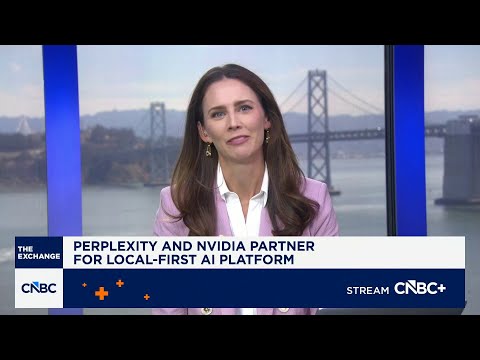
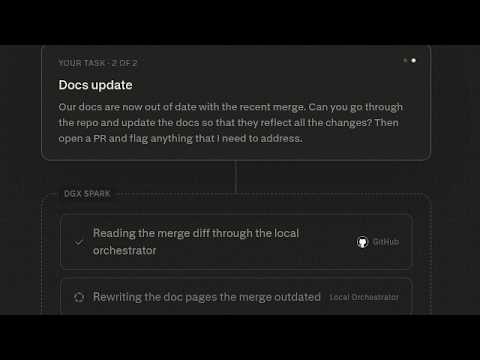
Updated YesterdayPerplexity launched Portable Computer on Tuesday, a version of its agentic Computer platform that runs entirely on a user's own hardware. Work completed locally costs no tokens, and no data leaves the machine unless the user approves a specific cloud step.
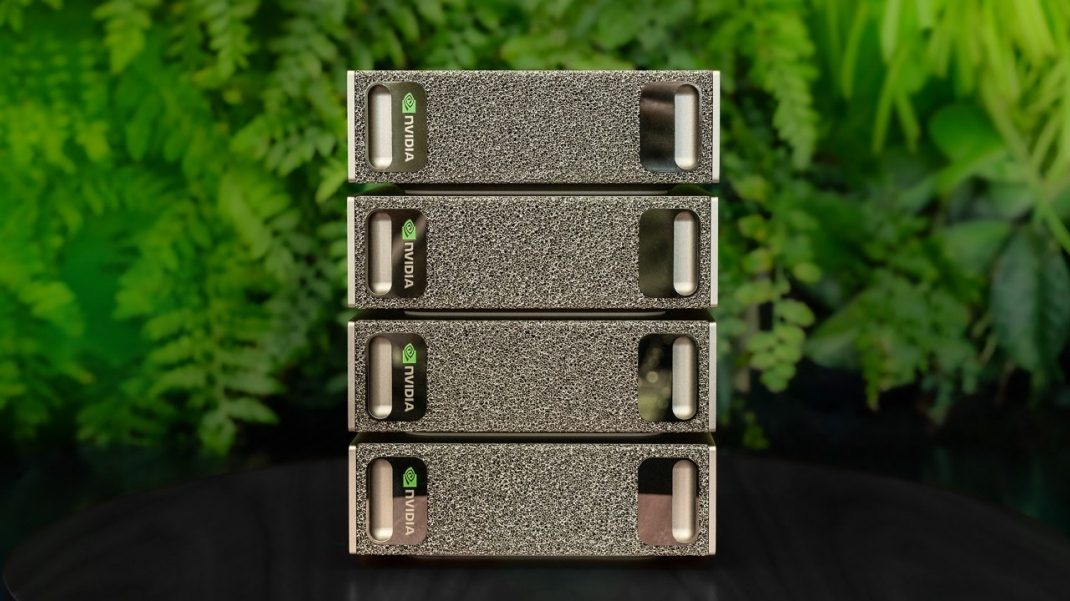
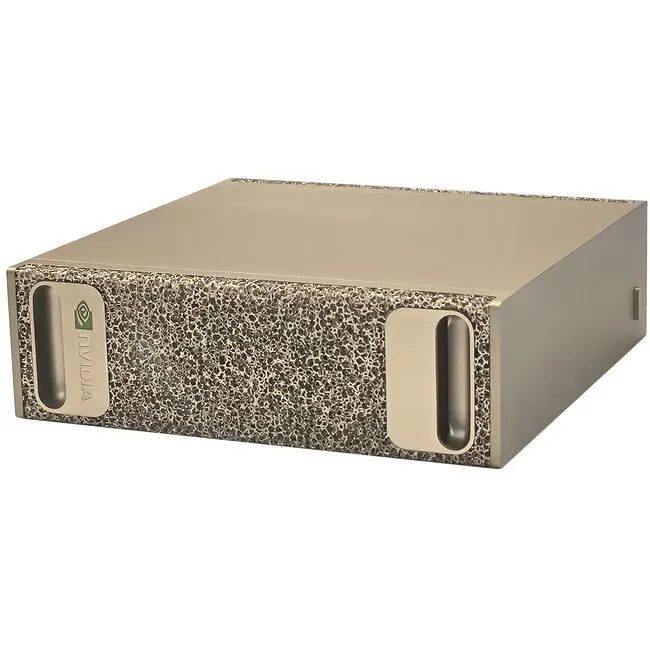
Built with Nvidia, the launch is among the most aggressive attempts to move AI agent workloads off the cloud and onto local devices. It starts on Nvidia's DGX Spark desktop supercomputer and Linux machines with RTX GPUs holding at least 24GB of memory. Windows support arrives in September.
Portable Computer ships to Pro, Max, and enterprise subscribers, with plans starting at $20 per month on top of whatever hardware the user already owns. The economic shift is direct: the per-token cloud billing model gives way to hardware ownership for the bulk of everyday agent tasks.
Why it matters
Enterprises can run AI agents on their own hardware, keeping data local and cutting per-token cloud costs on local steps.
Questions about this story
Free account needed to ask — your question is kept and asked for you right after sign-up. Answers are public.
No questions yet — be the first to ask.
Key Indicators
Voices
Curated perspectives — historical figures and your fellow readers.
Play
Exploring all sides of a story is often best achieved with Play.
Higher or Lower
A number from this story, against one from elsewhere in the news — guess which is bigger, then keep the chain going. 5 rounds, 3 strikes; a miss costs a strike and resets your streak.
Keyboard: ↓/L lower · ↑/H higher
0 points — sign up to put that on the leaderboard.
Connections
Sixteen names from the news. Find the four hidden groups of four. Four mistakes max.
Sign up to keep a daily streak — a new puzzle lands every day.
Exit debate?
Your progress in this debate will be lost.
- 1 Two AI personas square off on this story.
- 2 You predict who'll win each round — correct picks earn XP.
- 3 One crossfire question is yours to fire. Pick it carefully.
Couldn't generate a topic
Select Your Champions
Choose one persona for each side of the debate
DEBATE TOPIC
Choose personas with different perspectives for a more dynamic debate.
Select debater for this side:
No debate personas available right now.
Select debater for this side:
No debate personas available right now.
Who's Got This Round?
Make your prediction before the referee scores
The referee scores both sides on
Round Results
Set the Crossfire
Pick the question both personas must answer in the final round
Debate Oracle! You called every round!
Sharp Instincts! You know your debaters!
The Coin Flip Strategist! Perfectly balanced!
The Contrarian! Bold predictions!
Inverse Genius! Try betting the opposite next time!
XP Breakdown
Prediction History
People Involved
Organizations Involved
AI search company expanding into agentic computing with cloud and local products.
Dominant AI chipmaker supplying GPUs and the DGX Spark desktop AI computer.
Timeline
-
Perplexity and Nvidia launch Portable Computer
Latest Product launchLocal-first AI agent runs on Nvidia DGX Spark and Linux machines with 24GB+ RTX GPUs. Zero token cost for local work; cloud escalation requires per-step approval.
Historical Context
2 moments from history that rhyme with this story — and how they unfolded.
IBM PC 5150 (1981)
IBM released the 5150, bringing computing to offices and homes. For two decades, computing had run on centralized mainframes operated by specialists in climate-controlled rooms. The PC put that power on individual desks for roughly $1,565.
PC clones flooded the market within a few years, and personal computing became the dominant paradigm.
The shift from centralized to local computing created the software economy built around Microsoft and Intel, reshaping the entire industry.
Portable Computer moves AI agents from cloud data centers to local hardware, a similar architectural reversal. Where the PC made computing local, this makes AI agent execution local, with the cloud reserved for hard cases.
Meta releases Llama (2023)
Meta released Llama, an open-weight large language model that researchers could run on their own hardware. Before Llama, frontier models ran almost exclusively in cloud data centers with per-token API pricing.
Open-weight models created an ecosystem of local inference, privacy-focused deployments, and cheap fine-tuning.
The open-model movement established that useful models could run without cloud infrastructure, enabling the hardware requirements market Portable Computer now targets.
Portable Computer builds directly on this foundation, using Qwen 3.8 27B and Perplexity's post-trained PPLX variant. Without open-weight models, local agent execution at this scale would not exist.
