



Pull to refresh
Logo
Jamaican court blocks access limits at Little Dunn's River

Jamaican court blocks access limits at Little Dunn's River

Rule Changes

A parish court injunction pauses state restrictions while campaigners challenge the 1956 Beach Control Act

Overview

Updated 1 hour ago

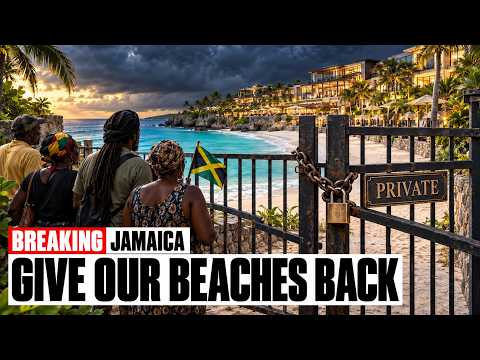
On October 1, a parish court in St Ann's Bay ordered Jamaica's Urban Development Corporation to stop restricting access to Little Dunn's River. The order covers the beach, the river, the waterfalls and the routes people use to reach them, and it holds while a 2023 lawsuit proceeds.

The case turns on a colonial-era law. The 1956 Beach Control Act put the foreshore and seabed in state hands, and successive governments have used it to limit entry and lease coastline to hotel developers. JABBEM and 10 individual plaintiffs argue that generations of public use created a customary right of access the state cannot simply cancel.

Why it matters

If Jamaican courts recognize customary beach access, the 1956 law that let hotels fence off coastlines could start to give way.

Questions about this story

Free account needed to ask — your question is kept and asked for you right after sign-up. Answers are public.

No questions yet — be the first to ask.

Key Indicators

1956
Year the Beach Control Act passed
The law placed Jamaica's foreshore and seabed under state ownership.
>99%
Share of well-known beaches controlled by resorts and private compounds
Figure reported by Air Mail in its October 2026 investigation of Jamaica's coastline.
10
Individual plaintiffs in the Little Dunn's River case
They joined JABBEM in the 2023 claim.
~200,000
Jamaicans whose main income is tourism
Figure cited by Environment Minister Matthew Samuda in defending access controls.
Nov 30, 2026
Next scheduled court date
The case is due back in St Ann's Bay Parish Court.

Voices

Curated perspectives — historical figures and your fellow readers.

Sign up to generate historical perspectives on this story.

People Involved

Organizations Involved

Timeline

1956 November 2026

7 events Latest: Today
Tap a bar to jump to that date
  1. Case returns to court

    Upcoming Hearing

    The Little Dunn's River claim is scheduled to come back before St Ann's Bay Parish Court.

  2. Government says it will appeal beach ruling

    Today Statement

    Environment Minister Matthew Samuda defends access controls, saying they protect tourism investment and communities.

  3. JABBEM founded

    Organization

    Immunologist Devon Taylor launches the Jamaica Beach Birthright Environmental Movement.

  4. Residents tear down fence at Mammee Bay

    Protest

    Locals locked out by a fence and armed guards pulled it down; concrete walls appeared after Covid restrictions.

  5. Beach Control Act gives state the foreshore

    Law

    The colonial-era law placed Jamaica's foreshore and seabed under state ownership, letting governments restrict access and lease coastline.

Scenarios

1

Court recognizes customary right of access at Little Dunn's River

Possible Resolves by Q2 2027

Discussed by: JABBEM; The Guardian; Jamaica Gleaner

The parish court, or a higher court on appeal, accepts that generations of public use create a legal right to reach the beach and river. That would make the injunction permanent at this site and give other access campaigns a template.

2

Government appeal lifts the injunction and restores restrictions

Possible Resolves by Q2 2027

Discussed by: Government of Jamaica; UDC lawyers

The government and the UDC have both signaled appeals. If an appellate court stays or overturns the October order, the state can resume limiting entry while the underlying claim continues.

3

Parliament repeals or rewrites the Beach Control Act

Unlikely Resolves by End of 2028

Discussed by: JABBEM; Jamaican beach access campaigners

JABBEM's wider goal is legislative, not just legal. Repeal or substantial amendment would remove the state's power to restrict access and lease coastline as the 1956 law allows. No bill has been reported.

4

Settlement keeps fees but widens public entry

Uncertain Resolves by End of 2027

Discussed by: No named party has proposed this publicly

The two sides could agree on managed access with agreed rules, preserving some revenue for the state while ending the blanket restrictions. Nothing in the record shows such talks.

Historical Context

2 moments from history that rhyme with this story — and how they unfolded.

1892

Illinois Central Railroad v. Illinois (1892)

The Illinois legislature had granted the Illinois Central Railroad title to a large stretch of submerged land along Chicago's lakefront. The U.S. Supreme Court held the grant invalid, ruling that the state holds submerged lands in trust for the public and cannot give them away wholesale.

Then

The railroad lost its claim to the lakebed.

Now

The decision became the foundation of the public trust doctrine in U.S. law, cited when governments try to transfer waterfront to private owners.

Why this matters now

It is the clearest precedent for the idea JABBEM is pressing: that a state's ownership of the shore comes with an obligation to keep it publicly usable.

2004-2011

New Zealand Foreshore and Seabed Act (2004)

After a court suggested Maori groups could claim customary title to the foreshore, New Zealand's government legislated to declare the Crown the owner of the foreshore and seabed. The move prompted large protests and a lengthy political fight.

Then

The Act passed, but the backlash helped launch the Maori Party.

Now

The law was repealed in 2011 and replaced with a framework that allows customary title claims to be tested in court.

Why this matters now

It shows how quickly a state's claim to the shore can become a national political fight, and that legislated ownership is not always permanent.

Sources

(6)