



Pull to refresh
Logo
City of Hope unveils plug-and-play CAR T cells that adapt as tumors mutate

City of Hope unveils plug-and-play CAR T cells that adapt as tumors mutate

New Capabilities

A molecular docking port on engineered T cells accepts new instructions after infusion, with two Phase I trials in development

Yesterday: MeCAR T study published; trials announced

Overview

Updated 1 hour ago

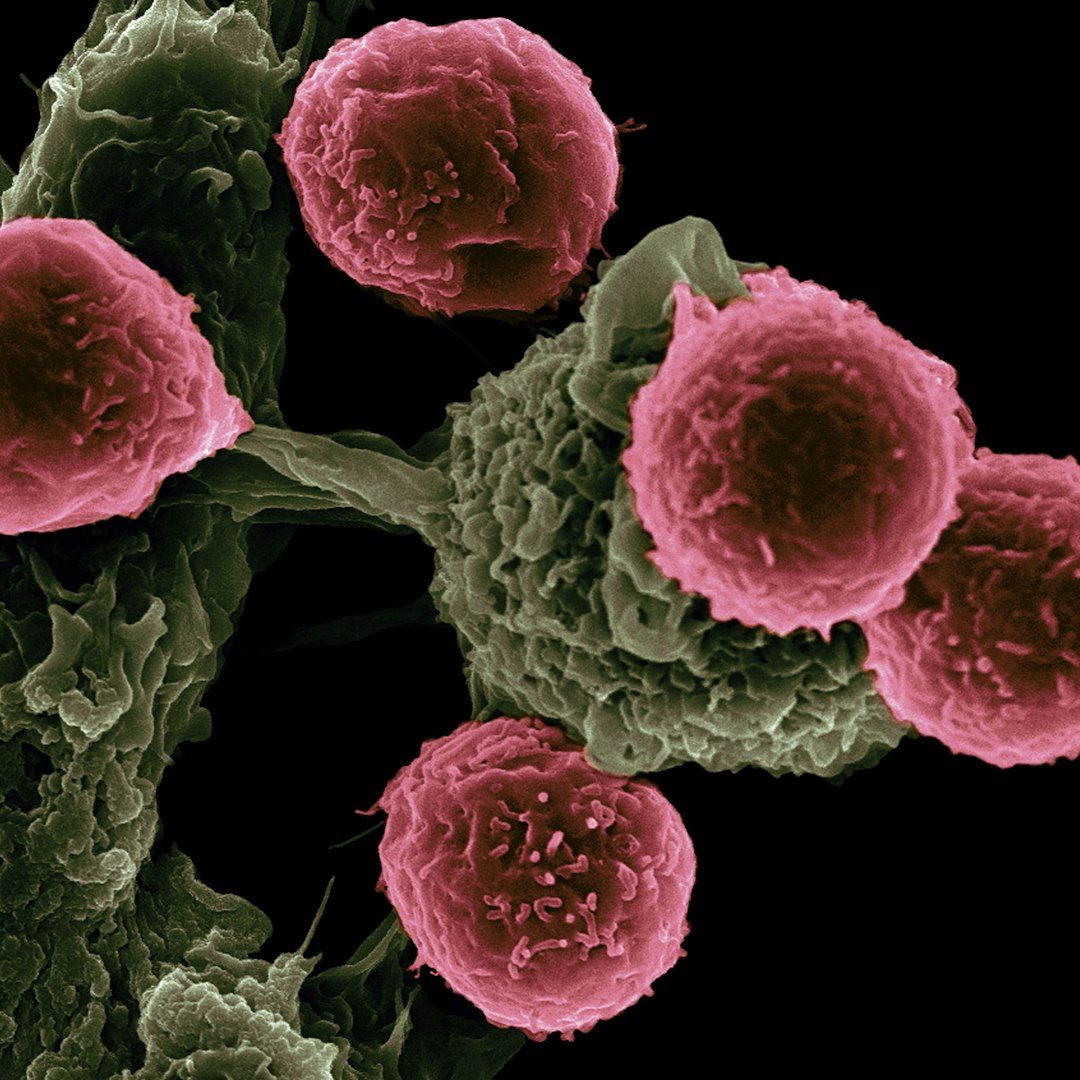
CAR T cells can cure some blood cancers, but doctors can't adjust them once they're infused. City of Hope researchers just showed a way to keep them programmable, using a molecular docking port that accepts new instructions after the cells are in the body.

The platform, called meCAR T, lets researchers attach tracking agents, growth factors, and antibodies that redirect cells at new tumor targets. It's designed around tumor heterogeneity, the way cancer cells mutate and escape. Two Phase I trials are in development: solid tumors and acute myeloid leukemia.

Why it matters

If meCAR T works in people, doctors could retarget immune cells as tumors mutate — without the weeks-long process of manufacturing new cells.

Questions about this story

Free account needed to ask — your question is kept and asked for you right after sign-up. Answers are public.

No questions yet — be the first to ask.

Key Indicators

2
Phase I clinical trials in development
One for solid tumors, one for acute myeloid leukemia; both announced with the study.
3
Add-on capabilities demonstrated preclinically
Tracking via fluorescent agents, expansion via IL-15, and retargeting via antibodies.

Voices

Curated perspectives — historical figures and your fellow readers.

Ever wondered what historical figures would say about today's headlines?

Sign up to generate historical perspectives on this story.

People Involved

Organizations Involved

Timeline

April 2026 September 2026

2 events Latest: Yesterday
  1. MeCAR T study published; trials announced

    Latest Publication

    Peer-reviewed study appears in Cancer Immunology Research; City of Hope reveals two Phase I trials in development.

  2. MeCAR T study preprint posted

    Publication

    Early version of the meditope-enabled CAR T study posted on bioRxiv.

Scenarios

1

meCAR T reaches first-in-human trials

Likely Resolves by End of 2027

Discussed by: City of Hope (stated plans)

City of Hope says it's developing two Phase I trials, one for solid tumors and one for acute myeloid leukemia. If the trials clear regulatory review and enroll their first patients, the platform moves from bench to bedside. The team is already designing the studies, so a launch within 18 months is plausible.

2

Pharma company licenses the meditope platform

Possible Resolves by End of 2027

Discussed by: Industry observers (not publicly named in study coverage)

The meditope docking system could work with any antibody-based CAR, not just HER2-directed cells. If the preclinical data hold up, a pharmaceutical partner may license the platform for its own CAR T pipeline. The modular design is the kind of feature larger drugmakers often seek for platform deals.

3

Clinical launch slips past 2028

Possible Resolves by Q2 2028

Discussed by: Counterfactual to City of Hope's stated plans

CAR T manufacturing is complex, and regulatory review timelines are uncertain. Resource constraints at City of Hope or unexpected preclinical safety findings could delay trial launches. This scenario resolves if no meCAR T trial is recruiting by mid-2028.

Historical Context

3 moments from history that rhyme with this story — and how they unfolded.

December 2014

Blincyto approval (2014)

The FDA approved blinatumomab (Blincyto) in December 2014, the first bispecific T-cell engager. The drug links T cells to leukemia cells with a single engineered antibody, redirecting immune killing without ex vivo cell engineering.

Then

Blincyto gave patients with relapsed acute lymphoblastic leukemia a new option and showed adapter molecules can redirect T cells safely.

Now

Adapter approaches proved powerful but short-lived; Blincyto requires continuous infusion, limiting its practicality.

Why this matters now

Demonstrates the appeal and limits of adapter-based T-cell redirection, a cousin of the meditope approach that keeps CAR T cells in the body and updates them on demand.

August 2017

FDA approves first CAR T therapy (2017)

In August 2017, the FDA approved Kymriah (tisagenlecleucel) for children and young adults with relapsed B-cell acute lymphoblastic leukemia. It was the first gene therapy engineered from a patient's own T cells to attack cancer.

Then

Kymriah produced response rates above 80% in pivotal trials and opened the door to a wave of CAR T approvals.

Now

CAR T became a standard option for certain blood cancers, but solid tumors proved far harder to crack because of antigen heterogeneity and the tumor microenvironment.

Why this matters now

Shows the baseline meCAR T builds on, and the solid tumor limits the platform is designed to address.

March 2021

First BCMA CAR T approval (2021)

The FDA approved Abecma (idecabtagene vicleucel) in March 2021, the first CAR T therapy for multiple myeloma. It targets BCMA, a protein on myeloma cells, expanding CAR T beyond the CD19 target.

Then

Gave myeloma patients a new treatment line after multiple relapses.

Now

Showed the field's path forward is building new CARs for new targets, each requiring a full manufacturing cycle.

Why this matters now

Contrasts with meCAR T's approach: instead of building a different CAR for each target, meditope switches targets with adapter molecules on the same cell.

Sources

(6)