


Pull to refresh
Logo
Exome study of 1.4 million people links 207 genes to height

Exome study of 1.4 million people links 207 genes to height

New Capabilities

Singleton loss-of-function variants in 17 of those genes move adult height by about nine centimetres per copy, roughly 52 times the effect of a typical common variant.

Overview

Updated 51 minutes ago

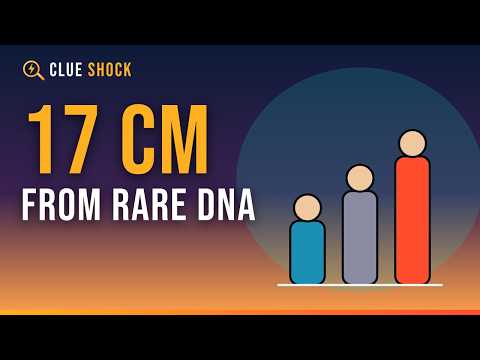
One broken copy of a single gene can change an adult's height by 17 centimetres. A study of 1,450,633 sequenced exomes, published in Nature on 25 November 2026, found 17 genes where a single non-working copy shifts height by an average of 8.92 centimetres.

Across the full set, the team implicated 207 height-associated genes, 98% of which held up in a further 624,567 people. The 17 loss-of-function genes sit at the extreme: their per-allele effects run about 52 times larger than a typical common variant's 0.17 centimetres. Six of them make carriers taller, and only one of those six had a documented stature or skeletal growth syndrome.

Why it matters

Rare variants with effects this large could sharpen height prediction and give families with unexplained short stature a genetic answer.

Questions about this story

Free account needed to ask — your question is kept and asked for you right after sign-up. Answers are public.

No questions yet — be the first to ask.

Key Indicators

1,450,633
People whose exomes were analysed
Twelve cohorts contributed DNA and adult height measurements to the combined analysis.
207
Height-associated genes identified
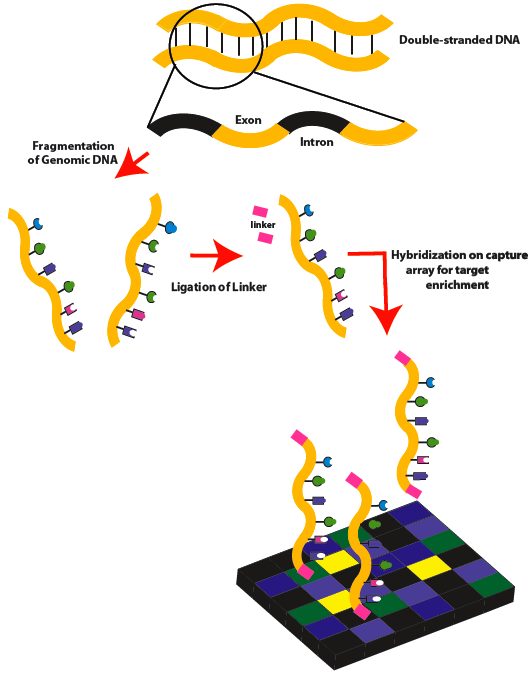
The gene set came from burden tests and non-burden tests on rare coding variants.
17
Genes with singleton loss-of-function effects
Eleven of these genes lower height; six raise it.
52×
Effect size versus an average common variant
Per gene, the rare variants were 14 to 78 times larger than the average genome-wide association signal.
8.92 cm
Mean absolute effect per allele
The range runs from a 16.6 cm reduction for ACAN carriers to an 11.1 cm increase for FBN1 carriers.
98%
Share of genes that replicated
Replication used 624,567 additional individuals from six cohorts.

Voices

Curated perspectives — historical figures and your fellow readers.

Sign up to generate historical perspectives on this story.

People Involved

Organizations Involved

Timeline

1886 November 2026

5 events Latest: 2 days ago
Tap a bar to jump to that date
  1. Nature publishes the peer-reviewed study

    Latest Publication

    207 genes are reported, including 17 where one non-working copy shifts height by up to 17 cm.

  2. Exome analysis posted as a preprint

    Research

    The unreviewed manuscript appears on medRxiv with the same 1.4-million-person design.

  3. Height GWAS reaches 5.3 million people

    Research

    12,111 common variants are found, explaining 40% of height variance in European-ancestry groups.

  4. First genome-wide association study of height

    Research

    Common variants are linked to height, each with an effect under one centimetre.

  5. Height described as a heritable trait

    Research

    Quantitative genetics takes adult height as one of its first model traits.

Scenarios

1

Clinical labs begin reporting the large-effect height genes

Possible Resolves by Nov 25, 2027

Discussed by: The study authors, who argue the results bear on clinical evaluation of short stature; no professional genetics body has issued guidance yet.

The 17 singleton loss-of-function genes behave like Mendelian findings: one copy, one large effect. If clinical geneticists accept them, sequencing labs could flag carriers when a child is referred for unexplained short or tall stature. The barrier is evidence standards, not biology. A single cohort, however large, is usually not enough to make a gene reportable, and six of the genes lack any documented skeletal syndrome.

2

One of the new height genes becomes a drug target

Unlikely Resolves by Nov 25, 2029

Discussed by: The study authors, who frame the gene set as a route to drug target prioritisation.

Large-effect human genetics is the standard starting point for target selection, because a variant that shifts a trait for a lifetime mimics a drug's effect. The new genes, particularly TET1, DTL and IGF2BP2, have effect sizes comparable to known Mendelian height genes without an associated syndrome. Turning that into a therapy means years of work on mechanism, and most genetically validated targets never reach a trial.

3

Rare variants earn a place in height prediction scores

Possible Resolves by Nov 25, 2028

Discussed by: The study authors, who tested whether rare protein-altering variation adds to genetic height prediction in a 242,679-person subset.

Common-variant scores already separate the top 1% of people from the bottom 1% by about 19 centimetres, which is close to what a single singleton loss-of-function variant does. The open question is whether adding rare variants to a score captures more of the 80–90% of height variation that is heritable. Any gain would need to hold in an independent cohort before it counts.

Historical Context

3 moments from history that rhyme with this story — and how they unfolded.

1886

Height becomes a model trait (1886)

Researchers studying heredity noticed that tall parents tend to have children closer to the average height, and treated adult height as a measurable, inherited trait. That observation gave quantitative genetics its first working example.

Then

Height became the standard test case for statistical models of inheritance.

Now

More than a century later it is still the trait geneticists reach for first, because it is easy to measure and highly heritable.

Why this matters now

The new exome study is the latest step in a 140-year effort to explain a trait everyone can measure and no one could fully map.

2007

First height GWAS (2007)

Genome-wide association studies began scanning hundreds of thousands of common DNA variants across large groups of people. The first height results identified common variants with effects well under one centimetre each.

Then

The findings confirmed that height is polygenic, spread across many small-effect variants.

Now

Because most of those variants sit outside protein-coding regions, linking them to specific genes and mechanisms proved slow.

Why this matters now

This is the gap the new study attacks: sequencing protein-coding DNA points directly at genes, not just at statistical signals.

2022

The 5.3-million-person height GWAS (2022)

A genome-wide association study of 5.3 million people identified 12,111 independent variants associated with height. Together they accounted for 40% of height variance in people of European descent.

Then

It set the benchmark for what common variation alone could explain about height.

Now

The remaining variance, plus the difficulty of assigning non-coding variants to genes, pushed the field toward sequencing.

Why this matters now

The new study conditioned its rare-variant tests on common signals like these, so the results are independent of the GWAS catalogue.

Sources

(6)