



Pull to refresh
Logo
Rostelecom launches TEA NEXT trans-Eurasian fiber-optic line

Rostelecom launches TEA NEXT trans-Eurasian fiber-optic line

Built World

11,000 km terrestrial cable links Europe and Asia with 65 ms latency

Today: Rostelecom launches TEA NEXT at Digital Solutions forum

Overview

Updated 1 hour ago

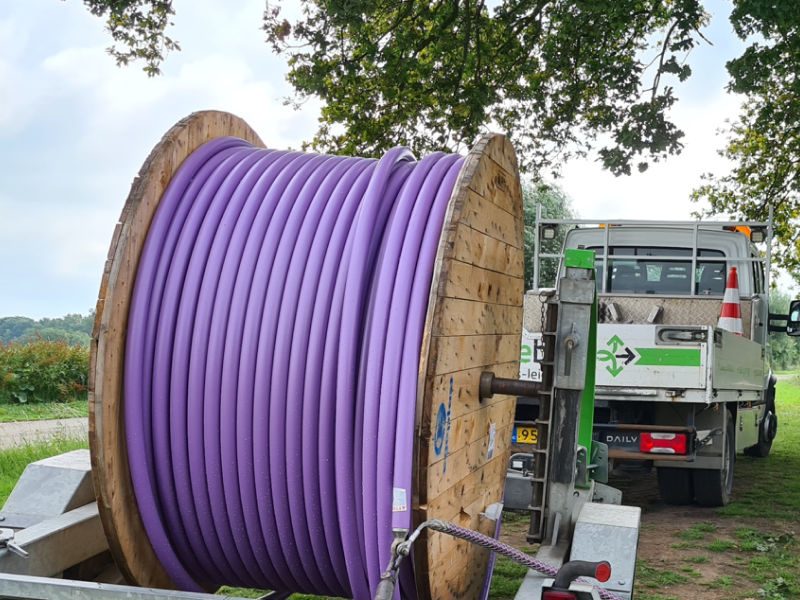
Rostelecom switched on TEA NEXT, an 11,000 km fiber-optic line spanning Russia from the Baltic to the Pacific, at a Moscow forum on October 6. The project took six years and 17.6 billion rubles to build.

The line gives Russia a new role in global data transit. Its capacity reaches 1 petabit per second with signal latency under 65 milliseconds, both ahead of submarine alternatives.

Why it matters

A faster terrestrial route between Europe and Asia could pull international data traffic off submarine cables and through Russia.

Questions about this story

Free account needed to ask — your question is kept and asked for you right after sign-up. Answers are public.

No questions yet — be the first to ask.

Key Indicators

11,000 km
Line length
TEA NEXT spans Russia from west to east with exits to the Mongolia and China borders.
96
Dark fibers
Unlit optical fibers available for lease to operators and OTT companies.
17.6B RUB
Capital expenditure
Rostelecom's investment in building TEA NEXT.
1 Pbps
Maximum capacity
Depends on DWDM technology used; ranges from 384 Tbps to over 1 Pbps.
65 ms
Signal latency
Round-trip delay on the Moscow-Kyakhta route, under half that of submarine cables.

Voices

Curated perspectives — historical figures and your fellow readers.

Ever wondered what historical figures would say about today's headlines?

Sign up to generate historical perspectives on this story.

People Involved

Organizations Involved

Timeline

June 2020 October 2026

5 events Latest: Today
Tap a bar to jump to that date
  1. Rostelecom launches TEA NEXT at Digital Solutions forum

    Today Launch

    The line enters service in the presence of Prime Minister Mikhail Mishustin. First customers are Russian operators; interest reported from China, Mongolia, and CIS countries.

  2. Oseevsky says TEA NEXT launch planned for spring-summer 2026

    Statement

    Rostelecom's president says construction is finishing and test operation should begin in the first half of 2026.

  3. Rostelecom signs 24.4 billion ruble loan with VEB.RF and Alfa-Bank

    Financing

    Syndicated loan secured under Russia's Factory of Project Financing program, with a term of up to 10.5 years.

  4. Rostelecom and Alfa-Bank agree to partner on TEA NEXT

    Partnership

    The two companies announce a partnership for the TEA NEXT project financing.

  5. Rostelecom founds Atlas LLC to build TEA NEXT

    Project Start

    Rostelecom creates a special-purpose company to own and operate the trans-Eurasian fiber line.

Scenarios

1

TEA NEXT wins major international transit contracts

Likely Resolves by Oct 6, 2027

Discussed by: Interfax reports interest from operators in China, Mongolia, and CIS countries

Chinese and Mongolian operators sign dark fiber leases on TEA NEXT, making it a genuine Europe-Asia transit route. Rostelecom says it already sees strong interest from international operators and global OTT companies.

2

Rostelecom extends TEA NEXT to Vladivostok and Hong Kong

Possible Resolves by Oct 6, 2028

Discussed by: Oseevsky's statements at the launch forum

Rostelecom proceeds with the announced Vladivostok extension and studies a submarine cable to Hong Kong, connecting to the major trans-China route. Oseevsky said the company is 'thinking about' the submarine cable.

3

A Western OTT company leases TEA NEXT capacity

Unlikely Resolves by Oct 6, 2027

Discussed by: The sanctions context makes this unlikely but notable

Despite sanctions, a major Western OTT company (Google, Meta, Amazon, Microsoft) leases dark fiber on TEA NEXT for Europe-Asia traffic, signaling the route's commercial viability beyond Russia's allies.

Historical Context

2 moments from history that rhyme with this story — and how they unfolded.

1891-1916

Trans-Siberian Railway (1891-1916)

Russia built the world's longest railway, connecting Moscow to Vladivostok over roughly 9,000 km. It cut Europe-to-Pacific travel from months to about two weeks and opened Siberia to settlement.

Then

The railway made Russia the land bridge between Europe and East Asia, shifting trade and migration patterns across the continent.

Now

It remains Russia's main east-west transport artery more than a century later.

Why this matters now

TEA NEXT applies the same geography to data, routing Europe-Asia traffic over land instead of around the continent by sea.

1858-1866

First Transatlantic Telegraph Cable (1858-1866)

The first transatlantic telegraph cable, laid in 1858, carried messages for three weeks before failing. A second attempt in 1866 succeeded and permanently connected Europe and North America.

Then

Cut transatlantic message time from weeks, by ship, to minutes.

Now

Established submarine cables as the backbone of international communication, a dominance that persists today.

Why this matters now

TEA NEXT challenges that submarine dominance for Europe-Asia traffic, offering a terrestrial alternative with lower latency.

Sources

(10)