


Pull to refresh
Logo
Sudan's war shifts to long-range drones and the power grid

Sudan's war shifts to long-range drones and the power grid

Force in Play

RSF strikes around Khartoum kill four and damage a UN building, as Sudan says the drones were launched from Ethiopia

Overview

Updated 31 minutes ago

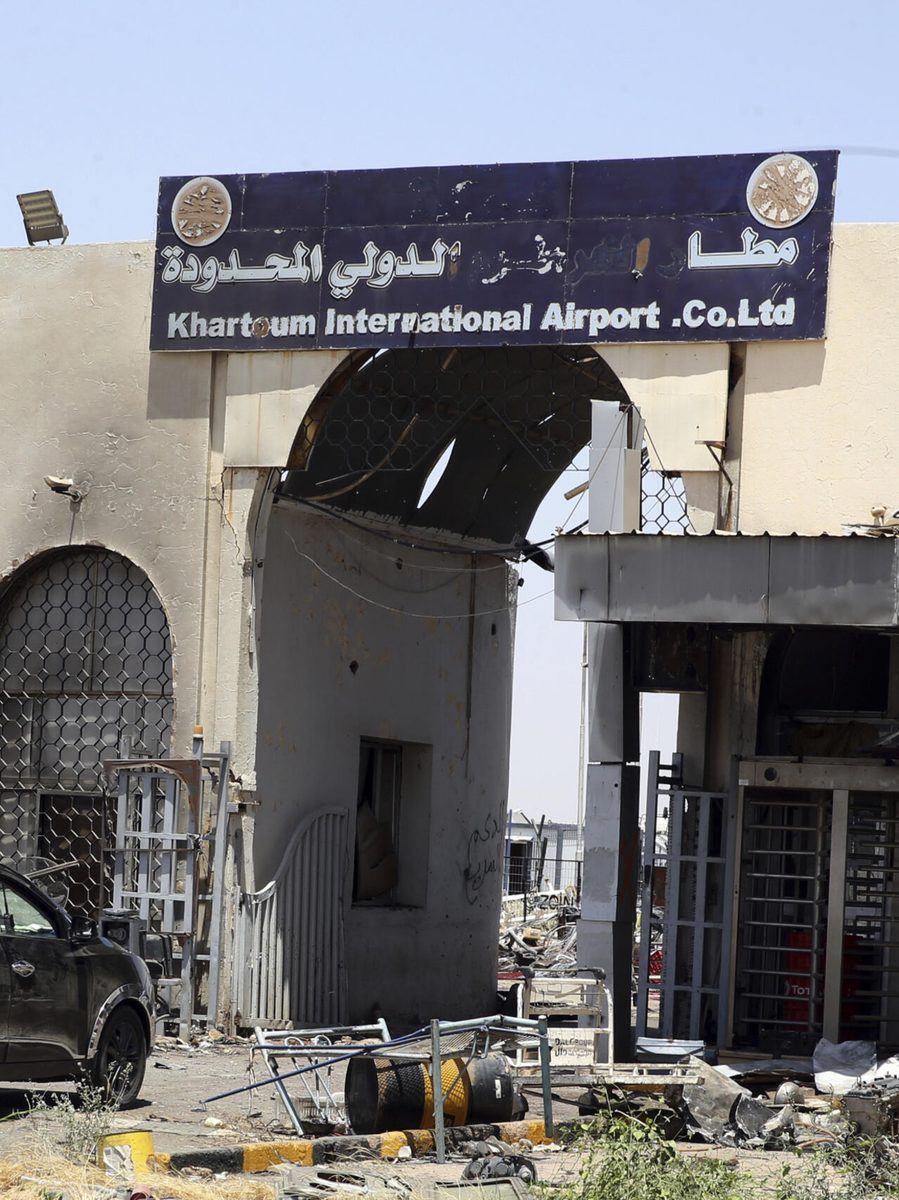
Four people were killed before dawn on Sunday when drones hit homes in Omdurman and in Jebel Aulia, south of Khartoum. One drone damaged a United Nations building while staff were inside. Sudanese air defences fired at aircraft reportedly heading for government buildings and the capital's airport.

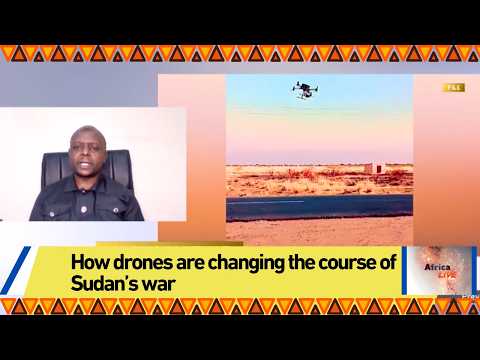
The strike belongs to a campaign that has changed what drones do in this war. The Rapid Support Forces now send them hundreds of kilometres to knock out power stations, fuel depots and airports, rather than hitting positions at the front. Sudan says some of those drones launch from Ethiopian territory, a claim Ethiopia has denied and that has not been independently verified.

Why it matters

Drone strikes now kill more Sudanese civilians than any other weapon, and the fight is spreading toward Ethiopia's border.

Questions about this story

Free account needed to ask — your question is kept and asked for you right after sign-up. Answers are public.

No questions yet — be the first to ask.

Key Indicators

1,100+
People killed by drones in the first half of 2026
United Nations tally covering January to June 2026.
15
Power stations hit in October 2026
UNICEF counted up to 15 strikes on the grid in a single month.
1,500 km
Longest drone range reported
UNICEF says some drones have travelled this far to reach a target.
60%
Rise in average monthly RSF drone strikes
Increase since June 2026 compared with earlier periods, per the Critical Threats Project.
13 million
People displaced by the war
Displacement figure reported alongside the November 22 strikes.

Voices

Curated perspectives — historical figures and your fellow readers.

Sign up to generate historical perspectives on this story.

People Involved

Organizations Involved

Timeline

April 2023 November 2026

9 events Latest: Today
Tap a bar to jump to that date
  1. Drones kill four and damage a UN building in Khartoum

    Today Attack

    Strikes hit homes in Omdurman and Jebel Aulia as air defences engage drones reportedly heading for the airport and government buildings. A UN building was damaged while staff were inside.

  2. Sudan takes its case to the UN and African Union

    Diplomacy

    Khartoum asks the Security Council and the African Union's Peace and Security Council to address alleged drone launches from Ethiopian territory.

  3. Campaign against fuel and power opens

    Escalation

    RSF drones strike fuel depots at al Rahad, starting a nationwide run on power stations and fuel facilities.

  4. Up to 15 power stations hit in a single month

    Infrastructure

    UNICEF says no day in the last week of October passed without a drone strike on a Sudanese power station.

  5. Drone strikes get more frequent and more deadly

    Escalation

    Average monthly RSF drone strikes rise about 60 percent, and they kill more people than in earlier periods.

  6. First drone strike on Port Sudan

    Conflict

    RSF drones hit the airport, fuel facilities and a power station in the army's de facto capital.

  7. Army retakes Khartoum

    Conflict

    The army regains the capital; UN premises there were not reported hit again until November 2026.

  8. RSF starts using drones

    Conflict

    The paramilitary force begins drone attack campaigns against territory held by the army.

  9. Sudan's army and RSF go to war

    Conflict

    Fighting between the Sudanese Armed Forces and the Rapid Support Forces begins, setting off a war that has displaced 13 million people.

Scenarios

1

Sudan severs diplomatic ties with Ethiopia over drone launches

Possible Resolves by Q1 2027

Discussed by: Al Jazeera, citing Sudanese border affairs specialist Abdul Kareem Al-Almin Ahmed

Khartoum has already taken its complaint to the UN Security Council and the African Union. If another strike is traced to Ethiopian territory, or if documentation emerges, voices inside the army demanding a formal rupture could win. The measurable step would be recalling Sudan's ambassador or declaring Ethiopia a hostile state, which would put two of the Horn's largest armies on a war footing while both are already stretched.

2

Drone pressure pushes the two sides into ceasefire talks

Uncertain Resolves by Q2 2027

Discussed by: ACLED, in its analysis of the RSF's infrastructure campaign

ACLED reads the strikes on power stations partly as leverage: with the RSF losing ground and struggling to supply its forces, hitting the grid may be meant to push the army toward negotiations. A ceasefire would need a mediator both sides accept and a monitoring mechanism, neither of which exists now. Talks could also start and collapse, which is why the criteria require formal negotiations rather than exploratory meetings.

3

Security Council names Ethiopia in a statement on RSF drones

Unlikely Resolves by Jan 31, 2027

Discussed by: Al Jazeera's reporting on Sudan's Security Council complaint

Sudan has formally asked the Security Council to address alleged launches from Bahir Dar. Ethiopia denies the claim, and no independent verification has been published. The Council has been divided on Sudan throughout the war, so even a presidential statement naming Ethiopia would be a significant step. A resolution with teeth, such as sanctions or a monitoring mission, is a further remove.

Historical Context

3 moments from history that rhyme with this story — and how they unfolded.

April 2019 – October 2020

Libya's proxy drone war (2019–2020)

Khalifa Haftar's Libyan National Army marched on Tripoli, and the conflict became a showcase for armed drones supplied from abroad: the United Arab Emirates backed Haftar, Turkey backed the Tripoli government. Drone strikes hit supply convoys, airbases and hospitals. Turkish drone support helped break Haftar's offensive in 2020.

Then

A ceasefire in October 2020 froze the front lines and led to a transitional government.

Now

The political process stalled, the ceasefire held unevenly, and foreign patrons kept their footholds.

Why this matters now

Sudan's war follows the same logic: outside supply lines determine who can fly drones, and drones produce stalemate rather than a clean victory.

September – November 2020

Nagorno-Karabakh (2020)

In a 44-day war, Azerbaijani forces used Turkish Bayraktar TB2 drones and Israeli loitering munitions to destroy Armenian tanks, artillery and air defences. Ground fighting followed the drones, and Armenia lost control of large areas it had held since the 1990s.

Then

A Russian-brokered ceasefire froze the new front line and deployed peacekeepers.

Now

The war became the standard case study for how drones let a better-equipped army dismantle a dug-in opponent.

Why this matters now

Sudan's army holds the cities but cannot stop aircraft arriving from hundreds of kilometres away, the same asymmetry that decided Karabakh.

2012 and 2022 onward

Rwanda, M23 and cross-border sanctuary in eastern Congo (2012; 2022–)

The M23 rebellion twice seized territory in eastern Democratic Republic of Congo. UN expert panels documented Rwandan troops fighting alongside the militia and supplying it, while Rwanda denied involvement. The border gave the militia somewhere to regroup that Congo's army could not strike without widening the war.

Then

M23 took the regional capitals of Goma and Bukavu in 2025, and a US-brokered peace deal was signed later that year.

Now

The conflict remained unresolved because the militia's rear bases across the border were never removed.

Why this matters now

Sudan's accusation that RSF drones launch from Bahir Dar is the same problem: a non-state force using a neighbour's territory that the army cannot easily attack.

Sources

(11)