Anchor

Bank of Russia now supervises licensed exchanges, brokers, and digital depositories
Yesterday: Crypto law takes effectNew here? Follow stories to track developments over time. Create a free account to get updates when stories you care about change.
Overview
Updated 3 hours agoRussian investors can now buy Bitcoin, Ether, and Tether's USDT through state-licensed platforms. Federal Law No. 282-FZ, which took effect September 1, puts crypto trading, custody, and cross-border settlements under Bank of Russia supervision for the first time.
The framework adds digital depositories (ownership registries) and recognizes crypto as property with court protection, even if never declared to tax authorities. Domestic crypto payments stay banned, but cross-border settlements for trade contracts are explicitly permitted. That channel gives Russian firms a licensed route around payment frictions tied to sanctions.
Why it matters
Russian businesses and investors now have a licensed, court-protected channel to hold and move crypto, including cross-border settlements that bypass sanction-related payment frictions.
Questions about this story
Free account needed to ask — your question is kept and asked for you right after sign-up. Answers are public.
No questions yet — be the first to ask.
Key Indicators
300,000 rubles (~$3,700)
Annual purchase cap for non-qualified investors
Retail investors must pass a suitability test and can buy at most this much eligible crypto per licensed platform per year.
3
Cryptocurrencies proposed for regulated trading
The Bank of Russia proposed Bitcoin, Ether, and Tether's USDT as eligible assets for licensed platforms.
December 1, 2026
Sberbank's planned launch date
Russia's largest bank says crypto trading infrastructure and a digital depository will be ready by then.
July 1, 2027
End of licensing transition period
Market participants have until this date to obtain licenses and bring operations into compliance.
Related Media
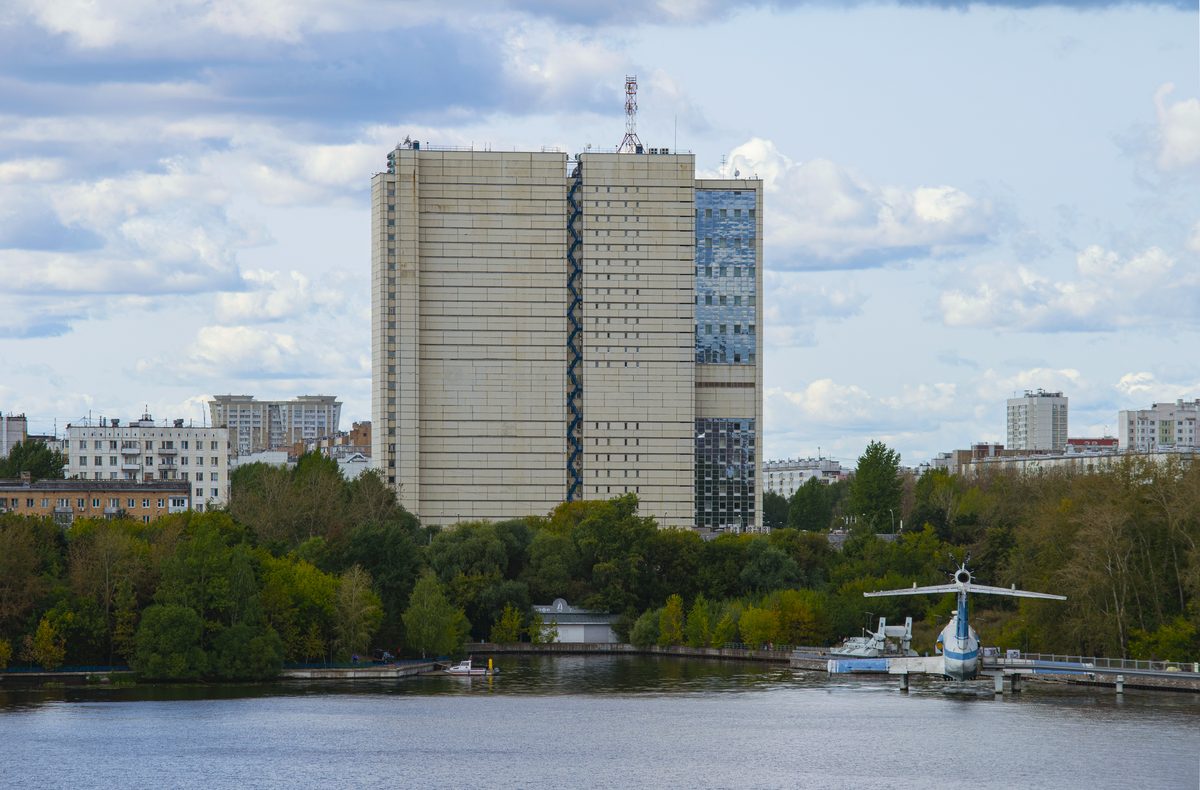
The main computing center of the Central Bank of Russia (September 2020)-1

SberBank Russia - Сбербанк
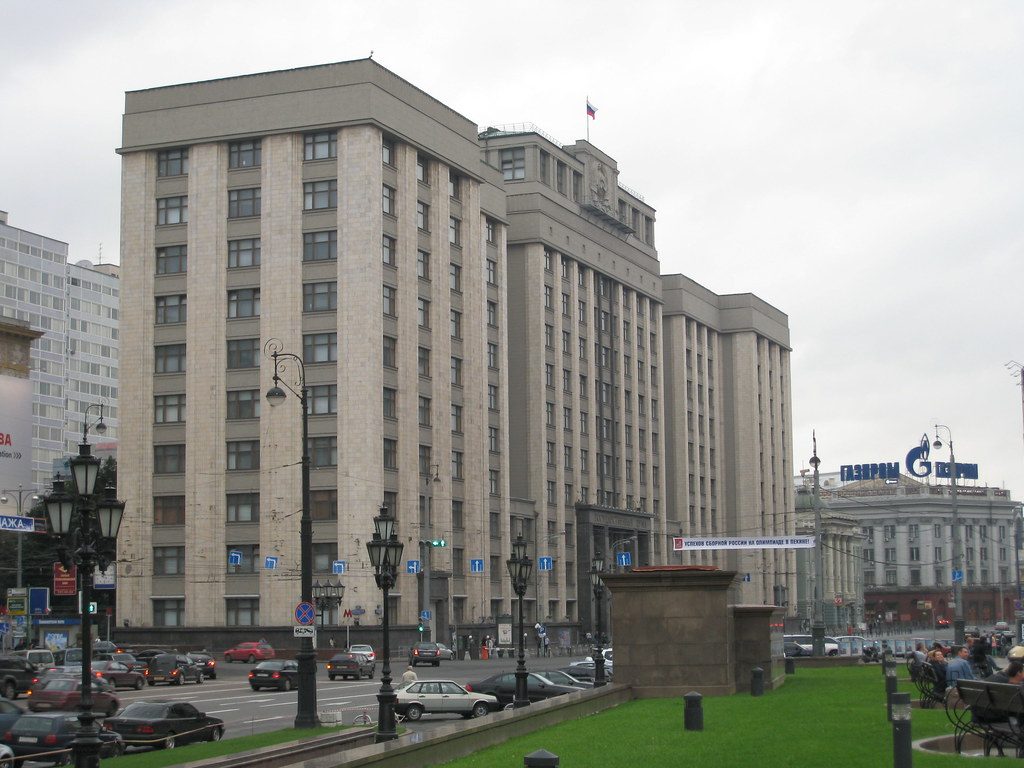
The State Duma of Russia
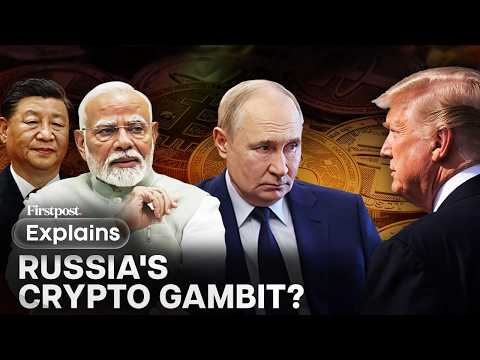
8.9K views
8:01
Russia's New Crypto Law: What It Means for India, China & US ...
Firstpost

1.4K views
4:19
Russia Passes Landmark Crypto Law, Bitcoin Slides Ahead of ...
NDTV Profit
Images from Openverse under Creative Commons licenses. Videos from YouTube.
Voices
Curated perspectives — historical figures and your fellow readers.
Play
Exploring all sides of a story is often best achieved with Play.
Most of these play right now — no account needed. Sign up to save scores, keep a streak, and unlock Debate and Predict.
Log in
Sign Up
Higher or Lower
A number from this story, against one from elsewhere in the news — guess which is bigger, then keep the chain going. 5 rounds, 3 strikes; a miss costs a strike and resets your streak.
Example
Anchor
EU tariff revenue
$52B
Big for this kind of number
Mystery
Pentagon AI contract
?
Round 1
Streak: 0
Mystery
?
Keyboard: ↓/L lower · ↑/H higher
0 pts
Best streak: 0 · Rounds: 0
0 points — sign up to put that on the leaderboard.
Now try on this story
Connections
Sixteen names from the news. Find the four hidden groups of four. Four mistakes max.
Loading today's puzzle…
0/4 groups
Mistakes
Sign up to keep a daily streak — a new puzzle lands every day.
Now try on this story
Exit debate?
Your progress in this debate will be lost.
How it works
- 1 Two AI personas square off on this story.
- 2 You predict who'll win each round — correct picks earn XP.
- 3 One crossfire question is yours to fire. Pick it carefully.
Couldn't generate a topic
Select Your Champions
Choose one persona for each side of the debate
DEBATE TOPIC
Choose personas with different perspectives for a more dynamic debate.
SIDE A (PRO)
Select debater for this side:
No debate personas available right now.
SIDE B (CON)
Select debater for this side:
No debate personas available right now.
VS
Get ready to make your prediction...
Round of
Claim
Evidence
Stakes
Crossfire Answer
Closing Statement
Claim
Evidence
Stakes
Crossfire Answer
Closing Statement
Your Crossfire Question
Generating arguments...
Who's Got This Round?
Make your prediction before the referee scores
The referee scores both sides on
Correct predictions earn +20 XP
· Press 1 or 2 to pick
Evidence
40%
Logic
30%
Detail
20%
Style
10%
Round Results
Your Pick
Not this time
(%)
Overall Score
/10
Your Pick
Not this time
(%)
Overall Score
/10
Set the Crossfire
Pick the question both personas must answer in the final round
Crafting crossfire questions...
Choosing a question earns +10 XP crossfire bonus
🏆
Total XP Earned
Cred Change
Predictions
Debate Oracle! You called every round!
Sharp Instincts! You know your debaters!
The Coin Flip Strategist! Perfectly balanced!
The Contrarian! Bold predictions!
Inverse Genius! Try betting the opposite next time!
XP Breakdown
Base completion
+20 XP
Rounds played ( rounds x 5 XP)
+ XP
Correct predictions ( correct x 20 XP)
+ XP
Crossfire bonus
+10 XP
Accuracy
%
Prediction History
Round
You picked:
✓
✗
Now try on this story
Keep debating to level up your credibility and unlock achievements
People Involved
Organizations Involved
Bank of Russia
Central bank and financial regulator
Supervises the regulated crypto market
Russia's central bank, now the regulator of licensed crypto trading, custody, and settlement.
State Duma
Lower house of Russia's Federal Assembly
Passed the crypto framework in July 2026
Russia's parliament, which approved Federal Law No. 282-FZ in second and third readings.
Sberbank
State-owned bank
Preparing crypto trading and digital depository services
Russia's largest bank, planning to launch crypto trading infrastructure and a digital depository by December 1, 2026.
Alfa-Bank
Private bank
Launched crypto custody and trading services
Russia's largest private bank, which launched crypto custody and trading services as the framework took shape.
Timeline
July 2026 September 2027
7 events
Latest: Yesterday
Tap a bar to jump to that date
-
Technical digital asset rules take effect
Upcoming Rule ChangeProvisions on digital financial asset issuance, nominal holders, and depositories begin.
-
Licensing transition period ends
Upcoming MilestoneMarket participants must hold licenses; nonresident depository rules take effect.
-
Sberbank launch target
Upcoming MilestoneSberbank plans to have crypto trading infrastructure and a digital depository ready.
-
Crypto law takes effect
Latest LegalLicensed crypto trading, custody, and cross-border settlements begin under Bank of Russia supervision.
-
Qualified investor rules eased
Rule ChangeRussia lets investors gain qualified status via an approved financial knowledge test.
-
Putin signs crypto law
LegislativePresident signs Federal Law No. 282-FZ, completing the legislative process.
-
State Duma passes crypto framework
LegislativeDuma approves Federal Law No. 282-FZ in second and third readings.
Historical Context
3 moments from history that rhyme with this story — and how they unfolded.
July 2020 – January 2021
Russia's digital financial assets law (2020)
Russia's first law on digital financial assets created rules for tokenized securities but excluded cryptocurrencies like Bitcoin from legal circulation. Putin signed it in July 2020; it took effect in January 2021.
Then
Russian companies could issue digital financial assets on approved platforms, but Bitcoin and other crypto stayed in a legal gray zone.
Now
The law set the precedent that Russia would regulate digital assets through the Bank of Russia rather than ban them, a path the 2026 framework extends.
Why this matters now
The 2026 law is the second stage of the same approach: first tokenized securities, now cryptocurrencies themselves.
September 2021
China's crypto crackdown (2021)
China's central bank declared all cryptocurrency transactions illegal, ordering exchanges and mining operations to shut down. The ban came after years of warnings and pushed miners and trading volume out of the country.
Then
Chinese exchanges closed or moved offshore; Bitcoin's price dropped sharply in the weeks after the announcement.
Now
China's mainland remains closed to crypto trading, making it the clearest example of a total ban.
Why this matters now
Beijing chose prohibition; Moscow chose licensed integration. Russia's law is the opposite policy answer to the same question about state control over crypto.
January 2024
US SEC approves spot Bitcoin ETFs (2024)
The US Securities and Exchange Commission approved 11 spot Bitcoin exchange-traded funds after a decade of rejections. The funds let mainstream investors buy Bitcoin through regulated brokers and custodians.
Then
The ETFs drew billions in net inflows within months, and Bitcoin reached record prices in early 2024.
Now
The approval established a template for treating crypto as a regulated asset class inside existing financial infrastructure.
Why this matters now
Like Russia's law, the ETF approval moved crypto from gray-market exchanges into licensed financial rails. The US worked through existing brokers; Russia is building new licensed exchanges and depositories.
Sources
(7)Related Stories
EU extends Russia sanctions to offshore crypto platforms
Rule Changes
Updated 7 days ago
Russia’s central bank goes to court against Euroclear, opening a new front in the frozen-reserves war
Rule Changes
Updated May 15
Judge rules crypto protocols can be money transmitters without controlling funds
Rule Changes
Updated 2 days ago
Russia removes major computer brands from parallel imports list
Rule Changes
Updated May 27
Ukraine's economic counteroffensive against Russian war machine
Rule Changes
Updated May 27
SEC draws a hard line on ultra–leveraged stock and crypto ETFs
Rule Changes
Updated May 10